 Photo: Bryan Conley
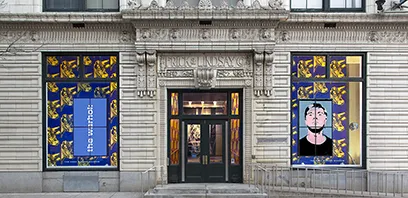
The Andy Warhol Museum was just 3 years old when Ben Harrison began working in the museum’s education department.
The then-23-year-old from Meadville, Pennsylvania, wasn’t the most obvious fit for an art museum. He’d just graduated from Fredonia University with a degree in media studies and minors in music and anthropology, and he’d moved to Pittsburgh to pursue a music career in a band.
“I came to know Andy Warhol in high school because of his affiliation with the Velvet Underground,” Harrison recalls. “They kind of changed my life … and by affiliation, there’s Andy Warhol as their manager and a producer.”
Even though he lacked art museum experience, Harrison arrived at the right time. The Warhol was developing more dynamic and interactive programming as it shifted its mission to be “More Than A Museum.” Harrison’s passion for the Velvet Underground was in line with then-museum director Tom Sokolowski’s more expansive vision: regular live music that both explored Warhol’s involvement with rock bands and also attracted repeat visitors for concerts.
The program Harrison developed became known as Sound Series. Now in its 22nd year, Sound Series has attracted internationally recognized musical artists like Vampire Weekend, Nick Cave, and Yo La Tengo, as well as classical quartets and experimental sound artists.
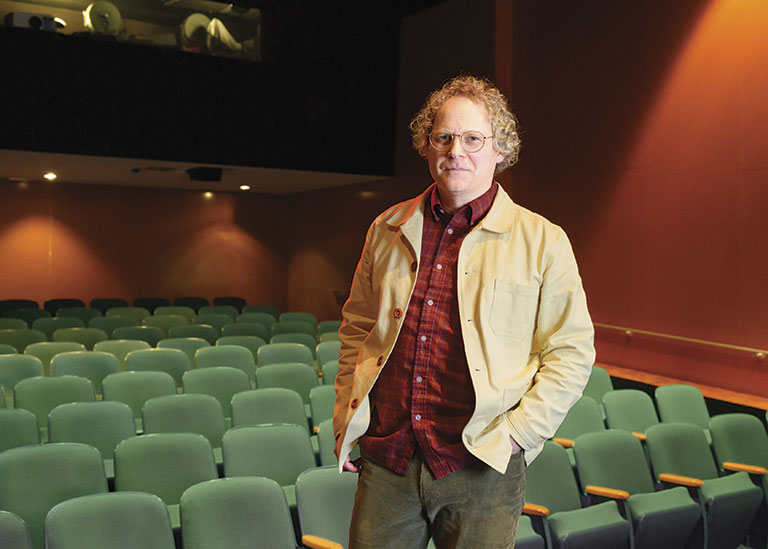
Harrison’s purview reaches across all live art performances at The Warhol, and he is a singer and guitarist in his own right, recording music through his side project, Stutter Steps. Sitting inside The Warhol’s intimate 130-seat theater, Harrison reflected on nearly three decades at The Warhol, many memorable performances, and how Sound Series continues to serve the museum’s mission.
Q: When you arrived at The Warhol, art museums weren’t obvious hosts for live music. Why did you believe this would work?
A: I thought it would work here because of Andy Warhol’s affiliation with music. Tom Sokolowski and I would talk a lot about the permissive spirit and the multidisciplinary nature of Warhol’s Factory—poetry reading over here, a film being made over there, the Velvet Underground playing in the background. That’s the spirit of what we should be about.
Q: Is there a performance that really sticks out?
A: Vampire Weekend when they were literally just emerging on their first tour [in 2008]. I just remember them being really excited to be here. And weeks later, they were on Saturday Night Live. We would joke that it was their 15 minutes before fame. It was special to have them here in our theater when, a few months later, they were in venues triple the size.
Q: What do you think The Warhol offers as a performance venue that other more typical spaces don’t?
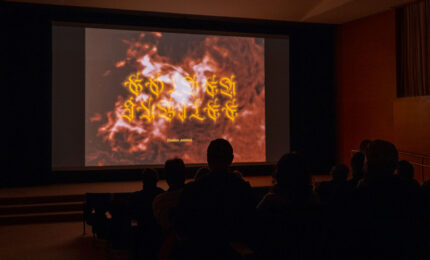
A: We are really fortunate to have a space like The Warhol theater that is just so acoustically sound. The room is so immediate and intimate. There’s no fourth wall between the artists and the audience. You can hear every little note in detail. We also do performances in the entrance space. I think it’s become probably our most popular space. That space just kind of exudes Warhol, with the silver brick and the Warhol Marilyn blow-up photo. You just feel like you’re in a factory-esque space, which I think artists and audiences really like.
Q: Is there an artist that you geeked out over being able to work with?
A: I didn’t get to do a concert with Lou Reed, but I got to work with him on an exhibition here. It was his landscape photography of cityscapes of New York. He did a poetry reading in here [The Warhol theater] where he essentially read the lyrics to Songs for Drella, which was pretty magical. It was terrifying, but kind of amazing at the same time.
Q: How has your own experience as a performer informed how you work with bands?
A: You hear stories from bands when they come in, and they’re usually not shy to share what it’s been like on the road. I’ve also had some unpleasant experiences [as a performer] and I think I can empathize. I know they’ve spent seven hours in a Sprinter van with a close group of people, and they show up at 4 o’clock, and perform at 8, sell their merchandise, and hopefully sleep in a hotel room. Then they get up and do it again the next day. It is a grind. We want to open our door and greet them with a handshake, look them in the eye, and just say, “We want to make this as easy for you as possible. What do you need? Let’s get it done together.”
Q: How will having The Factory, the new creative arts space planned to open across the street in the next few years, affect music programming at The Warhol?
A: The long-term planning and vision around the new creative arts center includes building on our over 20-year history of performing arts programming, including the Sound Series, as well as film screenings, archival installations, and education events. With this purpose-built space, we also look forward to increased opportunities for community collaborations to further contribute to the arts ecosystem of Pittsburgh. It’s an exciting time for our neighborhood development, including the adjacent riverfront, both Downtown and the North Shore.