Every May, kids begin counting down to what is arguably the most exciting day of the year.
Schoooooool’s out for summer!
Exciting as it is, summer vacation also presents a conundrum for families who want their children to enjoy a much-deserved break that is also enriching. The answer, for many, is summer camp at Carnegie Museums.
“We often hear from camp families that campers and their grown-ups look forward to their museum summer each year,” says Breann Thompson, associate director of learning and community programs at Carnegie Museum of Natural History. “They know there’s going to be so much learning, but without the direct stress and pressure that exists in school.”
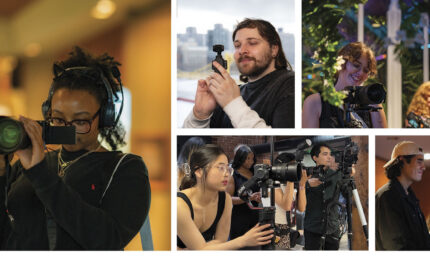
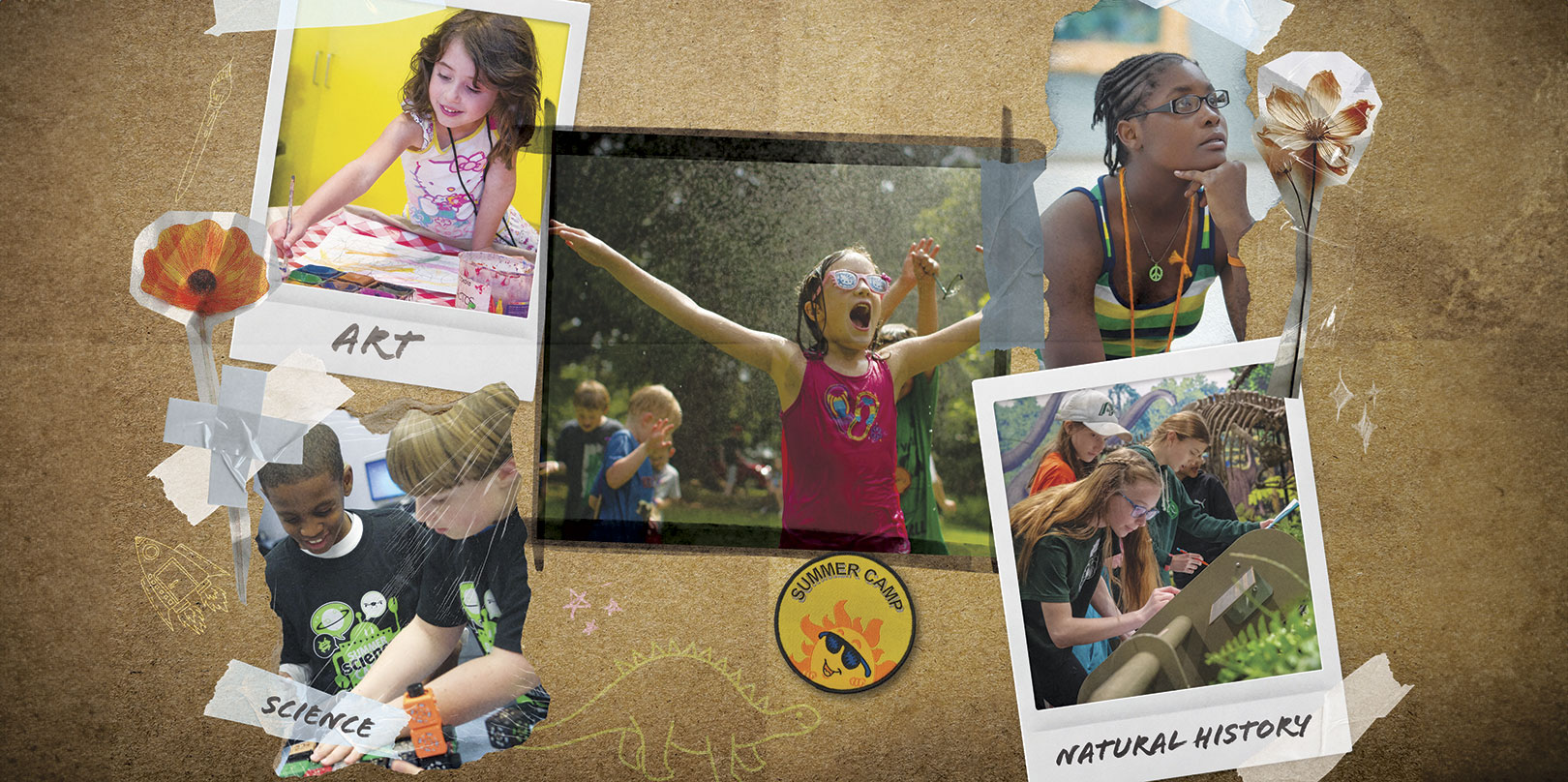
Every year, more than 2,000 young people enjoy summer camp programs at Carnegie Museums of Art and Natural History, Kamin Science Center, and Powdermill Nature Reserve.
The topics are as diverse as the kids who enjoy them—from learning the physics of roller coasters at Kennywood to trapping bugs in Panther Hollow; from studying the stars in astronomy camp to dressing like stars in fashion camp.
This summer, Carnegie Museums will be offering nearly 100 unique learning experiences through which kids will engage with nature, art, science, and each other. The camps bring together children with shared affinities, fostering friendships and sparking curiosity that can even lead to lifelong pursuits, including academic and career paths.
Carnegie magazine spoke with several former campers for whom the experience proved revelatory. Each person stayed connected with the museums long after they aged out of camp—through volunteering, conducting research, or employment. Here are their reflections, told in their own words and edited for length and clarity.
Museum of Natural History
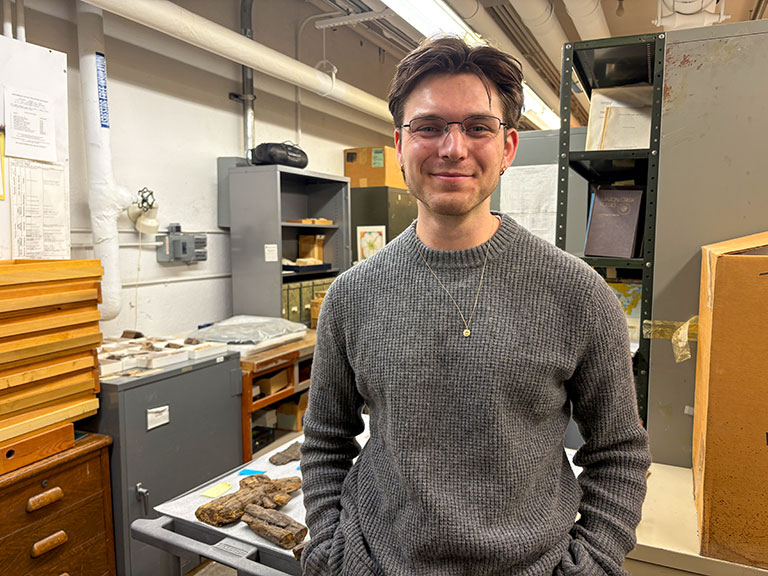
Wray Jones grew up in Shaler, Pennsylvania, and is a doctoral candidate in the Department of Geosciences at Baylor University. He attended Carnegie Museums camps until the age of 13, and returned as a teen volunteer at Carnegie Museum of Natural History’s camps. He is now conducting research for his doctoral program in partnership with the museum’s paleobotanical collections.
One of the main camps I remember being in was Eco Adventure. I was 8 years old. I remember going to set pitfall traps down in Panther Hollow. We would get a little cup, go dig in the mud, and then we caught frogs. It was awesome. I think one of the main reasons that I really liked that specific experience is because I got to spend time outside.
I think the camps do a really fantastic job of fostering curiosity. As a teen volunteer, I was careful to never tell a kid that they had a bad idea and that they shouldn’t do it. Instead, I’d say, “I love where your head is at! Let’s see what else we can come up with together.” It’s a rephrasing of the thinking process.
When I was in my first year at the University of Pittsburgh, I was a camp educator, and there were three boys who had just enrolled in a veterinary camp. They were from South Korea, and they didn’t speak much English. I spent part of the week teaching myself Korean vocabulary. I learned a few words so that I could explain what we were doing and why we were doing it. And then, when we were leaving at the end of the week, we said goodbye to each other through broken English and Korean. I cried. By the end of it, they did get something out of it. They were engaged in what we were doing.
The camps influenced me to this day. I’m here visiting Pittsburgh [in December 2025] to work in the collections. Deep down, I want to go into museum work. As a camper, being able to see all of the collections has influenced my goals in life—to want to work in an environment where I get to go behind the scenes every single day and do cool stuff.
Museum of Art
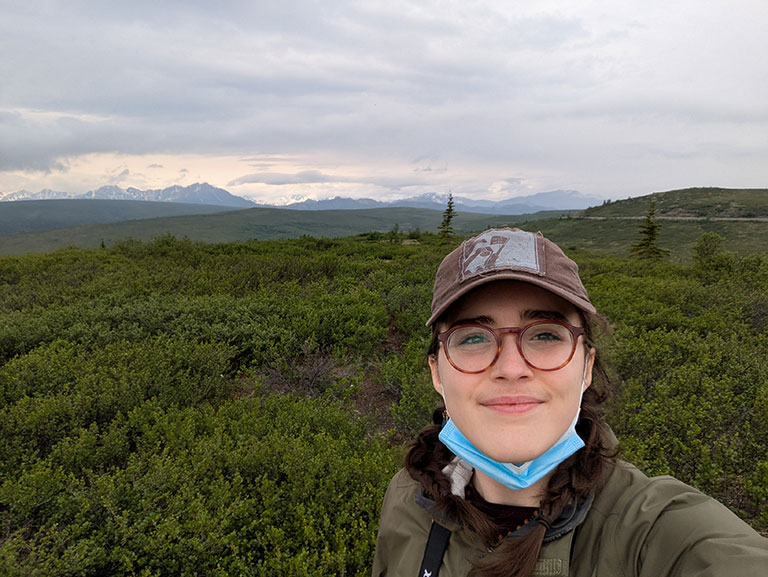
Clover (or Chloe) Brown is a transportation engineer living in Boston. A native of Plum Borough, Brown attended summer camps at Carnegie Museum of Art throughout elementary school. Brown returned years later to work as a camp counselor when they were studying civil engineering at Carnegie Mellon University.
I was very into art as a kid. I spent most of my free time drawing, and had notebooks full of things I would draw in class. I designed a lot of characters and I’d draw myself as characters in TV shows I liked. There was one year where I did an architecture camp that was building your dream house. I was just so excited to have a room for every single hobby in my house. I really liked mapping it out and then making something three-dimensional. I think my house had a hundred rooms in it!
I struggled with making friends at school, but I think having an affinity group of people like in the camps helps. I worked for the summer camps right after my sophomore year of college, and I wanted to make sure the kids had fun like I did. I really wanted them to feel comfortable, to feel like they got to achieve something during that week and remember the camps in a good way.
I think if you’re able to do multiple camps, do one or two with subject matter that you know you’re going to like, and then try to do one or two with subject matter you’ve never heard of before. Using these camps as an opportunity to explore is a really great opportunity. For parents, I’d say let your kids do the silly camp or the messy camp, or the one that doesn’t quite seem like it makes sense, but they’re really excited about. Definitely let them go all in.
The museum has just served as such a formative space for me in so many ways as a camper, as a visitor, and then as an educator. And despite the fact that I am no longer working in art or in museums, I don’t think I’d be in the same place that I am today without it. I’m really happy that I was able to become so involved in a space that was so comforting and formative to me as a child.
KAMIN SCIENCE CENTER
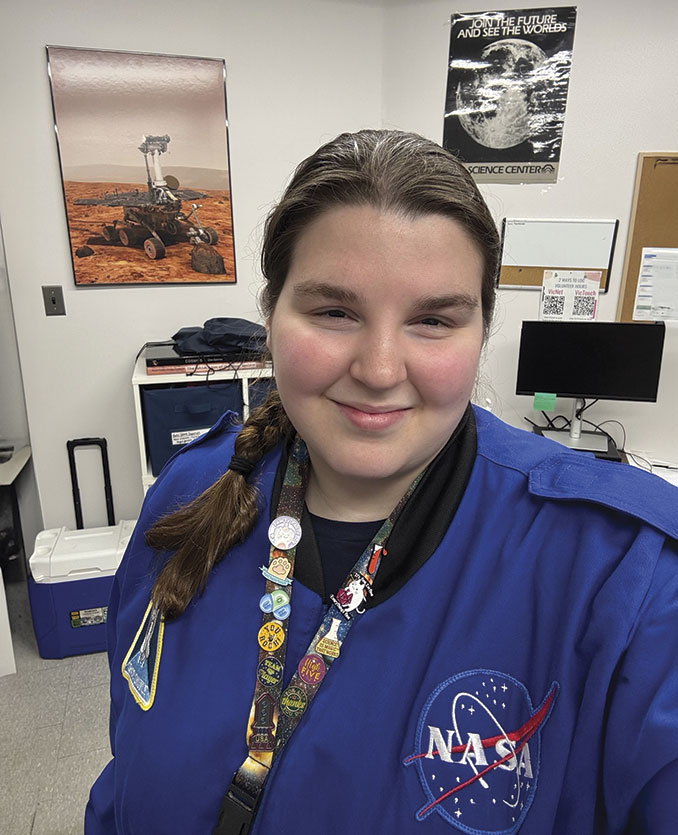
Aubree Peterson-Spanard is a presenter at Kamin Science Center’s Buhl Planetarium. She graduated in 2025 with a bachelor’s degree from Youngstown State University, where she studied astronomy and museum studies. She grew up in the Morningside neighborhood of Pittsburgh and attended camps at the Science Center.
I’ve always known that I loved astronomy. I have a vision impairment where I’m very sensitive to bright light, particularly sunlight. I remember looking up at the stars as a kid, probably 4 or 5 years old, and I was like, “Hey, I saw a couple more stars than I did three nights ago. My vision must be getting better.” With astronomy, I realized very early on you don’t need perfect vision to see through a telescope. You don’t need perfect vision to be able to study space. That helped to catapult me into this field.
Some of the camps that didn’t even cover astronomy would still go to the planetarium shows once a week. A big part of a lot of the planetarium shows was when they zoom out from Earth. That definitely stuck with me. I would say to people when I would travel or talk to family, “I don’t know what the name of this show is, but they zoom out to the ends of the universe and they really show you how small we are and it’s so cool! You should go check it out.” I was advertising for the planetarium before I even worked here.
We want parents and the campers to know that these camps are not school. It’s still going to be very educational, but it’s a fun way of learning. They say that it takes a village to raise a kid. We can be part of that village, even just within the Science Center, and help to foster a child’s learning. I think it’s amazing that anyone can come out of the camps and say, “I want to do this. I want to come back and be on the other side of this.”
Powdermill Nature Reserve
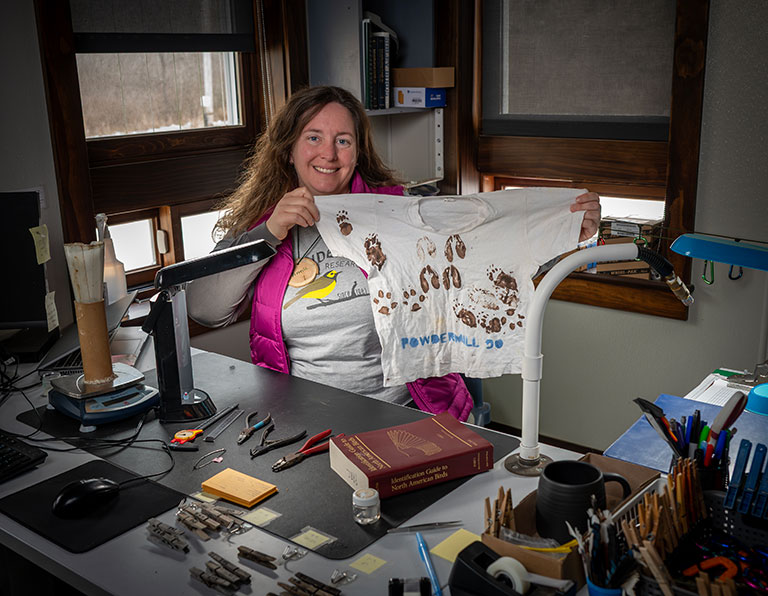 Photo: John Schisler
Annie Lindsay is the bird-banding program manager at Powdermill Nature Reserve, a position she has held since 2019. But Lindsay has a lifelong relationship with Powdermill, having served in other research and volunteer capacities for nearly three decades. The Ligonier, Pennsylvania, native, who has a PhD in biology with an ecology focus from the University of Toledo, attended summer camp at Powdermill in the early 1990s, an experience that shaped her academic path and career as a naturalist.
I love being in the woods. And Powdermill camp was all nature. I very specifically have this memory where the camp counselor was holding two plants with paper towels that each had three leaves. One was poison ivy, and I think the other was raspberry. They were trying to get us to recognize poison ivy so we didn’t get into it. I was the only one in the class that knew!
Powdermill’s bird banders would come up to the nature center with some birds to give us a banding demonstration, which I always thought was pretty cool. Just knowing that there were people that did wildlife work out in nature was always in the back of my mind.
When I was in high school, I started volunteering with Joe Merritt, the Powdermill director and a mammalogist who did small mammal research—trap, tag, release. At that same time, the bird banders were color banding Louisiana waterthrushes along Powdermill’s streams as part of a project to compare reproductive success along pristine streams versus those impacted by acid mine drainage. They said, “While you’re out there doing your mammal traps, please keep your eyes open for a color-banded bird.” I thought, well, this is pretty interesting. And I started volunteering at the banding lab.
I really think it did help me get into my master’s program at Ohio State, and many years later into my PhD program, because I was working with Powdermill’s bird-banding data. And now, it’s a great place to work. It’s funny for me to come back home to Ligonier because it’s a small town. But because of Powdermill’s reputation, especially with the bird-banding program, I wanted to be part of that.
If kids are interested in wildlife and nature, and just natural places, I think this is the place to come and learn. That hands-on aspect, working with wildlife and nature and seeing real science in action, distinguishes our camps.
Learn more and register here for 2026 Summer Camps: