On a warm June evening, about 70 residents from across Allegheny County packed a public office building in Downtown Pittsburgh to learn more about what their elected officials planned to do about climate change.
The county was seeking input on its first-ever Climate Action Plan, which when unveiled this November will lay out strategies to eliminate millions of tons of carbon dioxide and other greenhouse gases emitted locally into the atmosphere each year.
But conversations about climate change can be politically charged, emotional, and complicated by scientific jargon. And so, county officials turned to Carnegie Museum of Natural History, where staff have years of experience talking about this issue within the museum and, increasingly, outside in other community settings.
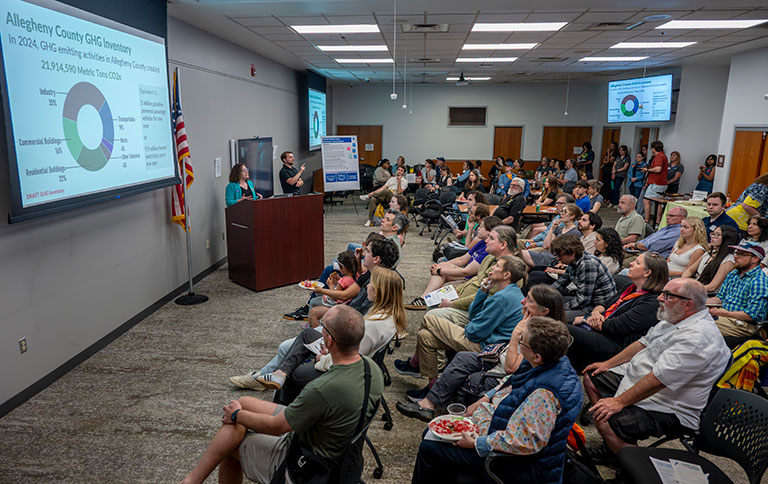 Photo: John Schisler
“One of the hard things about talking about climate change is that a lot of folks are either resistant to discussions around it or they just don’t connect with it,” says Brittany Prischak, director of the county’s Department of Sustainability. “The Museum of Natural History is helping us take the language of climate change and bring it to regular folks.”
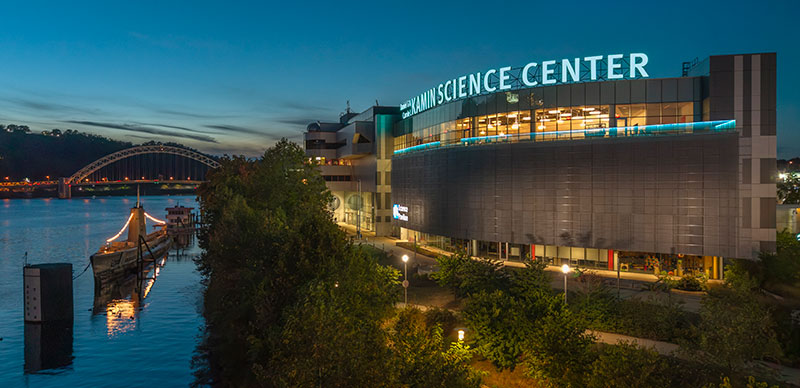
As the museum’s curator of Anthropocene studies, Nicole Heller has spent her career researching the impact that humans are having on the planet. And in recent years, she’s also worked to understand how to better communicate those ideas to the public. For over a decade, the Museum of Natural History has made it a priority to converse with residents about climate change outside the museum’s walls. Across town on the North Shore, its sister museum, Kamin Science Center, aims to be a town square for community dialogue on the science behind climate change and other issues.
I think museums are seen as trusted sources of information because they are embedded in communities, they work with communities, but they also put careful research into everything they do.
Mandi Lyon, program manager for schools and groups, Carnegie Museum of Natural History
In a polarized cultural and political climate, museums are one of the few institutions that have maintained a high level of trust among the public. According to the National Awareness, Attitudes, and Usage Study, an overwhelming majority of Americans—76%—consider museums to be trustworthy institutions, more than daily newspapers (60%), nongovernmental organizations (60%), and the federal government (54%).
“I think museums are seen as trusted sources of information because they are embedded in communities, they work with communities, but they also put careful research into everything they do,” says Mandi Lyon, program manager for schools and groups at Carnegie Museum of Natural History.
Education and Outreach
Since its inception, the Museum of Natural History has been a place for researchers to advance their understanding of the natural world and convey that work through exhibitions and programming.
Heller’s research has informed several exhibitions—notably We Are Nature: Living in the Anthropocene, which opened in 2017, and a follow up to that exhibition several years ago, We Are Nature: A New Natural History, with each highlighting humans’ role as an integral part of nature.
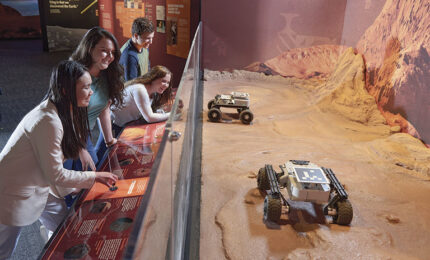
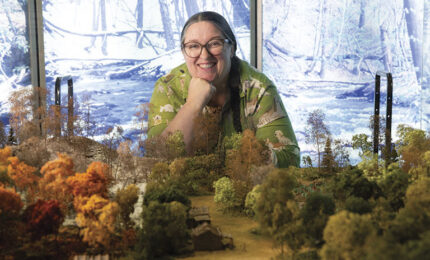
In May, Kamin Science Center unveiled Our Place in a Changing Climate, an exhibition that connects concepts around climate change with actual examples from western Pennsylvania. The exhibition is the proof of concept for the Science Center’s Rapid Science Engagement Initiative (RSEI)—a pilot program created to move the museum toward being more responsive to current science topics that affect daily life. Surveys and discussions with visitors and community members identified climate change as the No. 1 science topic of interest, so the Science Center chose it as the focus of the first RSEI exhibition, which occupies part of the third floor.
“If you show how it’s affecting our own communities—weather patterns, daily life—it brings it home,” explains Kim Amey, chief of staff at the Science Center. “It becomes more relevant.”
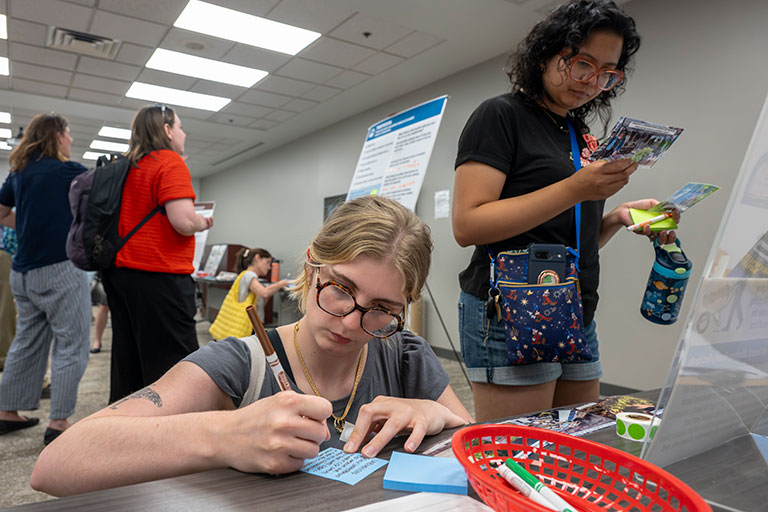 Photo: John SChisler
The museums are going out into communities as well to engage the public on climate change issues. Science Center staff have developed live programming at community events, using interactive tools like a giant Jenga tower as an analog for the energy demands of artificial intelligence data centers. Meanwhile, the Museum of Natural History’s partnership with the county builds on more than a decade of research through two grant-funded initiatives—Climate and Urban Systems Partnership, and the related-program Climate and Rural Systems Partnership—in which Heller and her colleagues went out into both rural and urban areas of western Pennsylvania to develop better strategies for having these discussions.
They learned that it’s not enough to share information on what we know about climate change—it requires listening, too. Doing so creates a conversation—not a science lecture—and prevents emotions, such as anger, from getting in the way of learning.
“I can have a dialogue where I can share my expertise, but it’s a two-way conversation,” Heller says. “I can share my expertise in a way that’s relevant to what this person really cares about.”
Genuine Conversations
Heller and Lyon are now sharing those lessons learned with county staff as they go out into communities over the next few months to collect feedback on the Climate Action Plan.
At the county’s June event, one strategy is simply to collect public thoughts on climate change first, before engaging in conversation. Around the room, attendees wrote their ideas on sticky notes and placed them on posters that showed goals to fight global climate change in particular sectors, such as transportation, electricity, and buildings.
Hana Uman, who serves on the board of Grow Pittsburgh, an organization supporting local food initiatives such as community gardens, was among many people who wanted to encourage more composting.
“We have so much vacant land,” Uman told Heller. “Composting is not expensive, and food waste is the No. 1 material that goes into our waste stream.”
Heller nodded, listening intently, then handed her a sticky note and encouraged her to explain more.
She wasn’t the only person concerned about food waste. Other notes questioned how the county could “ease the permitting process for composters” and adopt “policies that require composting and recycling.”
We want to be a supportive partner so that the other community groups and government partners can be successful in their work. And that’s really this notion of collaborative leadership.
Nicole Heller , curator of Anthropocene Studies, Carnegie Museum of Natural History
Emily Steinberg, who recently graduated from Chatham University with a degree in environmental science, wrote about her concerns for both food waste and plastic waste. But she had trouble identifying the most appropriate poster for it because each topic was isolated, without space to explore their intersections. She wanted to talk with someone about it. So, Steinberg told Heller that the county should look at the United Nations’ Sustainable Development Goals as an example of a more integrated, connected set of environmental goals.
“All these different systems—transportation and our electricity, waste and food systems—are interconnected,” Steinberg says.
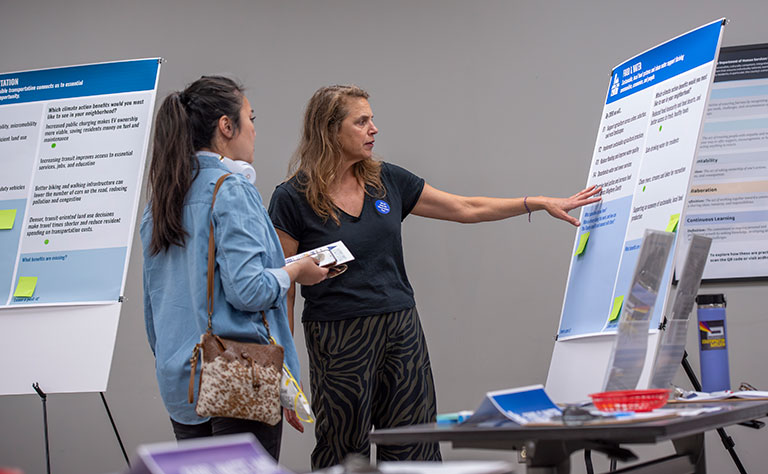 Photo: John SChisler
Heller listened, nodding in agreement. As an ecologist, Heller studies the connections among all life-forms and systems. Showing the intersections of the problems communities face, from environmental hazards to social welfare issues, might help many residents connect the dots, Heller notes. So, she shared Steinberg’s feedback with county officials in a debrief meeting afterward.
“We want to be a supportive partner so that the other community groups and government partners can be successful in their work,” Heller says. “And that’s really this notion of collaborative leadership.”
Updating Infrastructure to Meet the Moment
Carnegie Museums is also working to reduce its own footprint on the environment.
Commercial buildings were responsible for 16% of all carbon emissions in Allegheny County in 2024, according to the county’s inventory. Recent technological advancements have helped improve energy efficiency in buildings. Still, there are barriers to retrofitting older buildings to meet the highest environmental standards. New building construction gives designers the greatest breadth of control over their environmental impact, says Melissa Simonetti, director of construction and project management for Carnegie Museums.
“A lot of those green initiatives have to be baked in at the start of design,” Simonetti explains.
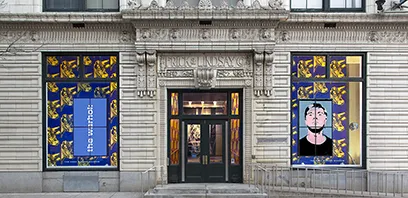
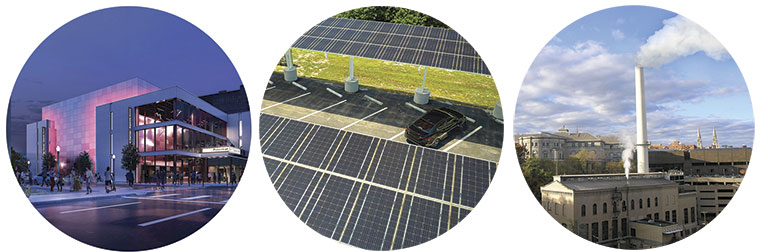
The Andy Warhol Museum is making sustainability a central focus for its own Pop District expansion plans. Slated to open in 2028, The Warhol’s new Creative Arts Center will house a 900-seat performance venue, and planners are working with architects, engineers, and a sustainability consultant to make it eligible for a LEED Silver eco-friendly rating. The building will include local, high-quality materials and landscaping composed of native and regional plants, according to the museum’s planning summary.
The LEED (Leadership in Energy and Environmental Design) process, developed by the U.S. Green Building Council, is one of the foremost green building rating systems. It considers factors such as energy use, water efficiency, indoor air quality, and materials. While buildings must acquire 40 points under this system to become “LEED Certified,” LEED Silver requires at least 10 extra points.
Nearby, the Science Center’s PPG Science Pavilion is certified LEED Gold. Built in 2018, the four-story, 48,000-square-foot expansion earned more than 60 points toward certification for features such as an energy-efficient building envelope and low-flow plumbing fixtures.
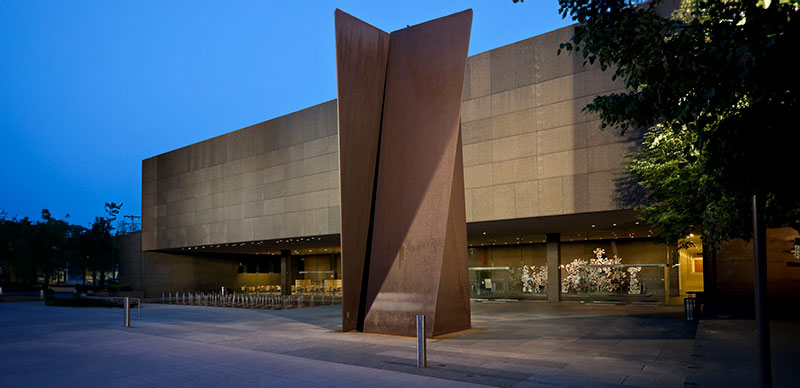
The Science Center is now designing a new sustainable infrastructure for its North Lot. A photovoltaic canopy with 1,600 solar panels will cover most of the surface. Next to it, a science park with no admission cost will help the Science Center present science content to more community members, while also introducing green space into a landscape that is mostly asphalt. Adding greenery to dense concentrations of pavement, buildings, and other surfaces helps to combat the urban heat island effect, according to the U.S. Environmental Protection Agency.
The solar panels will help power the museum, saving an estimated $20,000 per month in electricity costs and reducing the Science Center’s carbon emissions by 1,000 metric tons per year, explains Jason Brown, Henry Buhl, Jr., director of Kamin Science Center and vice president of Carnegie Museums.
“It’s not just one part of our mission. It’s education. It’s technology, It’s futuristic thinking. And it’s sustainability,” Brown says. “We should be a model for how technology can function for the benefit of humanity.”
Brown notes that information about how the solar panels function and what they achieve will be an important addition on-site. He hopes Science Center visitors will be inspired to pursue renewable energy in their homes and businesses.
“The worst thing we can do is tell people a problem and not give them ideas or hope on how they can be a part of addressing it,” Brown says.
Modernizing Carnegie Museums’ historic Oakland campus presents a whole different challenge, particularly in the original part of the building that dates back 131 years, Simonetti notes. Still, she says incremental changes have helped reduce its energy usage. Energy-efficient LED lights have replaced incandescent bulbs, and building insulation has been improved to save energy.
In 2009, the Bellefield Boiler Plant (commonly known as “The Cloud Factory”), a central steam plant that provides heat and hot water to much of the Oakland neighborhood, was converted from coal to natural gas, reducing emissions by almost two-thirds, according to an inventory submitted to the federal government. Natural gas contributes to climate change, but at a lower rate than coal.
Facility managers at Carnegie Museums continue to work toward fully transitioning to renewable energy, but some obstacles have slowed progress.
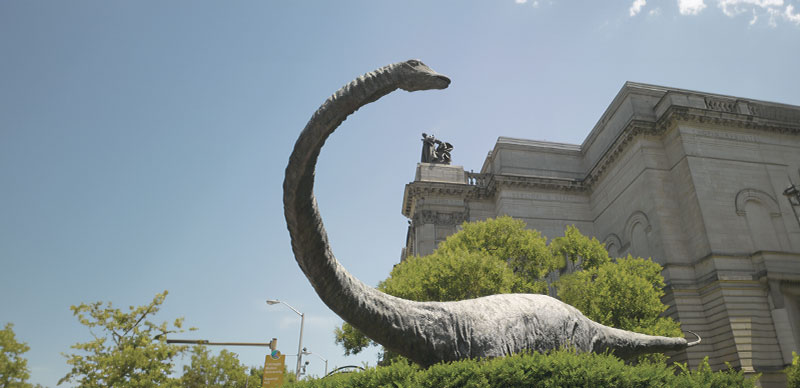
In their current form, available solar panels were too heavy to place on the roof of the century-old Museum of Natural History, explains Tony Young, chair of the operating committee for the Bellefield Boiler Plant and former vice president of facilities, planning, and operations for Carnegie Museums. Another idea—purchasing renewable energy credits—did not come to fruition after several private energy-generation projects failed to secure approvals and connect to Pennsylvania’s energy grid, he explains.
As technology improves and the region collectively develops more ways for businesses and institutions to reduce their emissions, leaders at Carnegie Museums say more progress should be expected.“We want to be here for the next generation, so it’s important to integrate modern climate controls, sustainable building tech, and energy-efficient systems when we can,” says Simonetti.
Collectively, these investments in infrastructure, exhibitions, partnerships, and public outreach tell a story of the many ways museums can and should be a leader in addressing global issues at a time when political strife has stalled progress.
Heller says she wants to continue working with the county on other climate-related initiatives, and encourages other institutions to join them. “Part of what motivates me to build these civic partnerships is the opportunity to put a spotlight on the work and help people be informed about what is really happening in our community.” she says. “I think that’s a really important role for a museum.”