Sanchayan Ghosh’s artwork took shape the moment he arrived at the steps of Children’s Museum of Pittsburgh.
Ghosh traveled halfway around the world from Santiniketan, India, last June to visit Pittsburgh after being invited to be part of the 59th iteration of the Carnegie International, the longest-running exhibition of international art in North America. As Carnegie Museum of Art prepared for this year’s International, its curators had asked Ghosh to produce an installation that would take the International outside the museum’s walls.
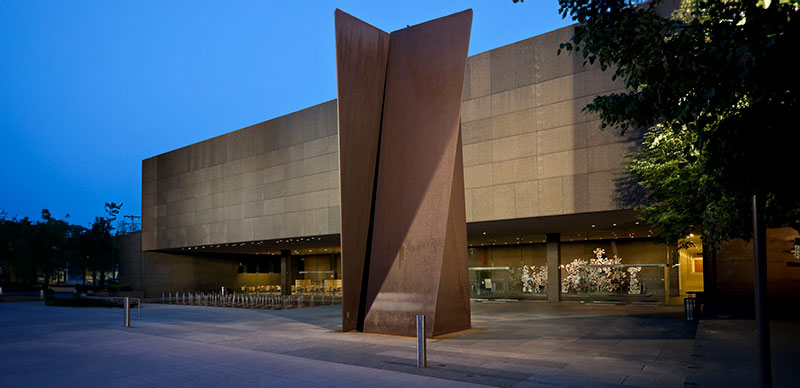
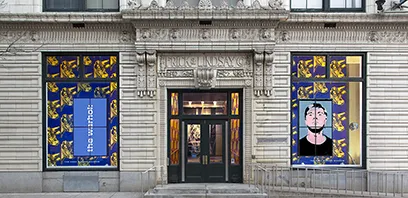
As he approached the Children’s Museum, Ghosh was struck by the stately facade of the former Allegheny Post Office, built on the North Side in 1897 and later converted to house the Children’s Museum, which is unaffiliated with Carnegie Museums. He immediately recalled The Post Office, a 1912 play by the Bengali polymath Rabindranath Tagore, who founded Kala Bhavana, the fine-arts institute where Ghosh trained and now teaches. In the play, an ailing, homebound boy watches through his window as the post office is built, fantasizing about the places where its letters might reach.
Ghosh began to consider how ideas are shared and the way people engage with the world. And it inspired him to develop an installation that explores how children and their families understand notions of home.
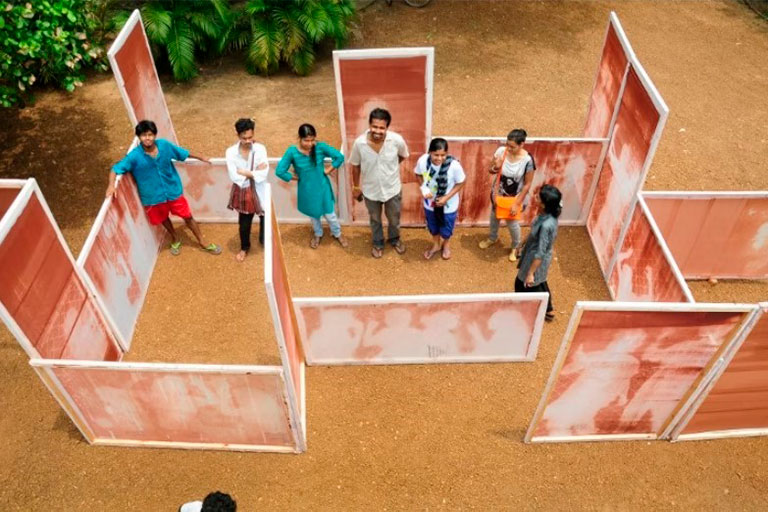
“The idea of home can be quite layered,” he says, “and it’s not fixed in a certain interiority. It’s also about mobility.”
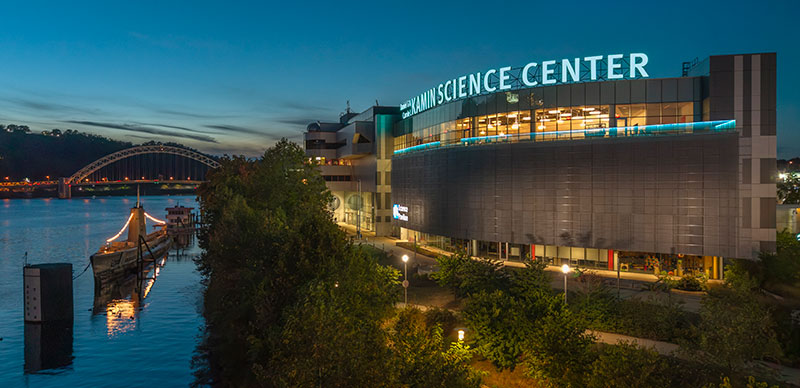
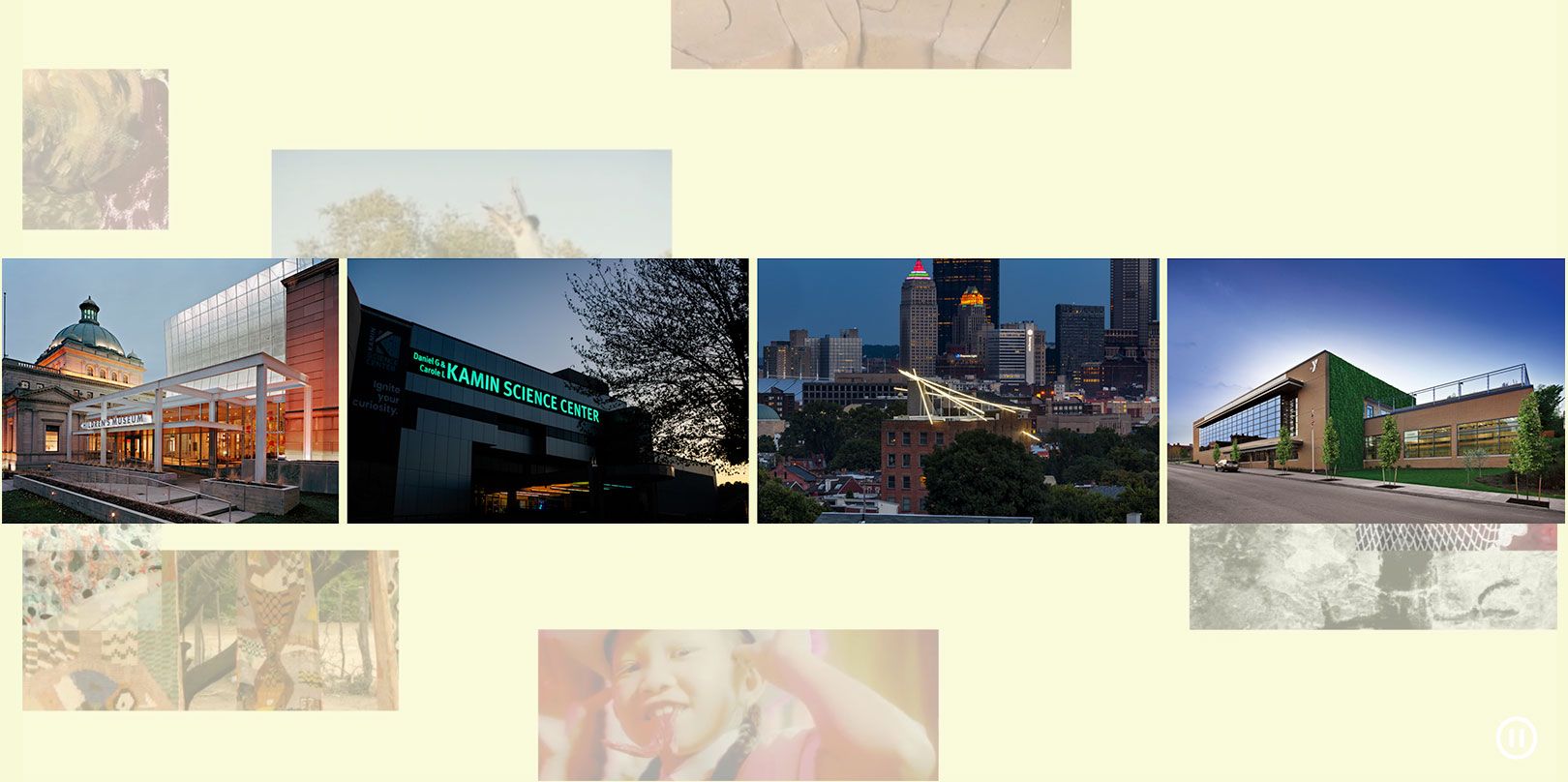
The as-yet-unnamed installation is one of several pieces the Museum of Art commissioned for the 59th International and presented in collaboration with local organizations, including the Mattress Factory and Kamin Science Center on the North Side, and the Thelma Lovette YMCA in the Hill District. These co-works will be on display at scheduled times throughout the exhibition, which runs May 2 to Jan. 2, 2027.
When it debuts in May, Ghosh’s work will feature 20 life-size “shadow-cast” images made in workshops with local families during a three-week residency at the Children’s Museum in October. These silkscreen photographic exposures will be framed within several three-dimensional geometric steel structures, stacked on the museum steps at odd angles. The sculpture will be filled with connections to the city’s history, including the screenprints of Andy Warhol. Ghosh hopes it sparks conversation among visitors.
“At its core, [the museum] is all about these encounters where something new or different can happen,” he says.
For Liz Park, who is co-curating the International with Ryan Inouye and Danielle A. Jackson, the exhibition is a chance to reimagine the museum—spatially, architecturally, and conceptually—and in so doing strengthen connections with Pittsburgh communities.
“We have to think about the museum as a place for people, not just artworks,” says Park, the Museum of Art’s Richard Armstrong Curator of Contemporary Art. “When we bring in artworks and art objects, we’re also bringing in people and the relationships these individuals have with us, with one another, with their own respective communities. That fundamentally shifts our understanding of the possibilities of a museum.”
The 58th Carnegie International in 2022 also made forays into the city, including a James “Yaya” Hough mural that still stands in the Hill District. But this year’s iteration pushes community partnerships further, treating them as pillars of the larger exhibition, Inouye says. The reason, he notes, is straightforward: “to value, recognize, and acknowledge the work people are already doing in their respective communities so we can plug into that, draw attention to it, and build on it.”
“We have to think about the museum as a place for people, not just artworks. When we bring in artworks and art objects, we’re also bringing in people and the relationships these individuals have with us, with one another, with their own respective communities.”
Liz Park, Carnegie Museum of Art’s Richard Armstrong Curator of Contemporary Art
Carnegie Museums and other cultural institutions in recent years have sought to engage with their audiences differently, spurring them to look beyond their own footprint and meet people on their own terms. For the 59th International, that means carrying the exhibition outside the Museum of Art and into the wider community, including a planetarium on the North Shore and a YMCA in the Hill District.
“Pulling [audiences] into the project in different ways is a way of acknowledging people as part of your community, engaging with what they do, and letting what they do be in dialogue with what’s happening in contemporary art and within museums,” Inouye says. “It’s a way for museums to connect with culture.”
Amplifying Local Culture
Like Ghosh’s installation, the other commissioned off-site works were informed by the Museum of Art’s partner institutions—their physical spaces and their raison d’être.
“They’ve been doing the work to build a cultural infrastructure, so we were intentional about acknowledging that and amplifying what they have already been doing,” Park says.
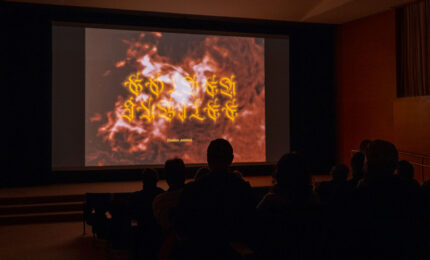
The work of Beacon, New York-based Torkwase Dyson explores the intersection of ecology, infrastructure, and architecture, and her project for the 59th International takes as its starting point the seabeds of the Caribbean. As a scuba diver, she wanted a way to help audiences comprehend the enormity of the underwater apparatus used for oil and gas extraction. She found her answer in Kamin Science Center’s Buhl Planetarium, which will present an animation that begins from the ocean depths. The domed planetarium and its powerful combination of high-resolution image and booming sound will help immerse visitors in the art.
“We’re not always privy to the experience of what’s happening underwater,” Park says. “This is where the tool of the planetarium can be useful to [Dyson’s] artistic practice, to bring us to a space that is not part of our visible experience of the world.”
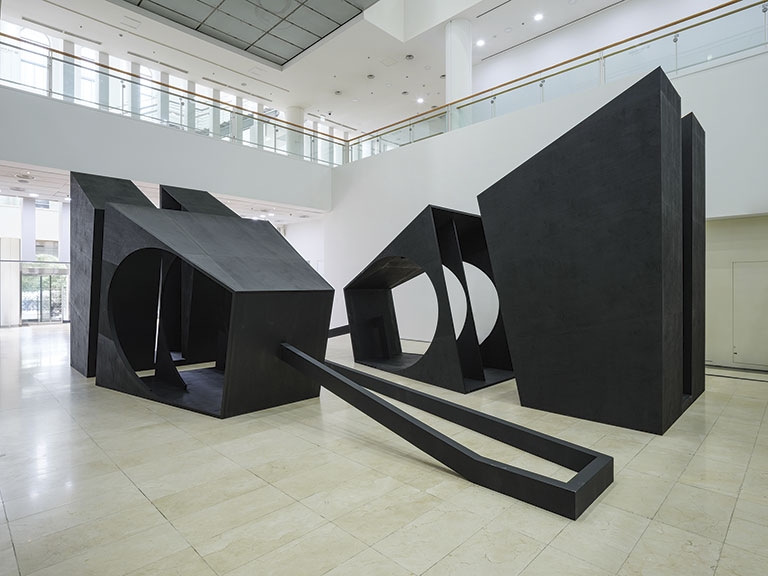
Amanda Iwaniec, the Science Center’s director of theater experiences, is working with Park and Dyson to ensure the artist’s vision harnesses the full strength of the planetarium’s technical capacity. With 10 projectors and a complex digital infrastructure, the back-end work is critical “for being one with the art,” she says.
An artistic exploration of underwater oil and gas extraction isn’t an obvious fit for a planetarium typically focused on gazing at the heavens, Iwaniec admits, but the collaboration helps break down preconceived barriers between art and science.
“It’s a reminder that the museums can grow with you,” she says. “You don’t have to be a certain age or demographic to appreciate or enjoy art. Art and science are for everyone.”
Live Performance
The International will make an uncommon push into live performance in Pittsburgh’s Hill District. The museum will present Be Holding, a collaborative work created by director/artist Brooke O’Harra, composer Tyshawn Sorey, and new music ensemble Yarn/Wire, and inspired by a book-length poem by Ross Gay. In the poem, Gay uses basketball legend Julius Erving’s iconic moment of graceful athleticism in the 1980 NBA Finals to meditate on Black life, movement, and beauty.
Performances during the exhibition’s opening weekend will feature music from Sorey and Yarn/Wire, accompanied by dance students from Pittsburgh Public Schools. Kristen Lippert, healthy living program director for the YMCA of Greater Pittsburgh, says the performance bridges the often distinct worlds of art and athletics. “The curators were sincere partners with the community,” Lippert says, and she’s eager to see what will emerge from the International’s expanded presence.
“It will touch a lot more people that way,” she says.
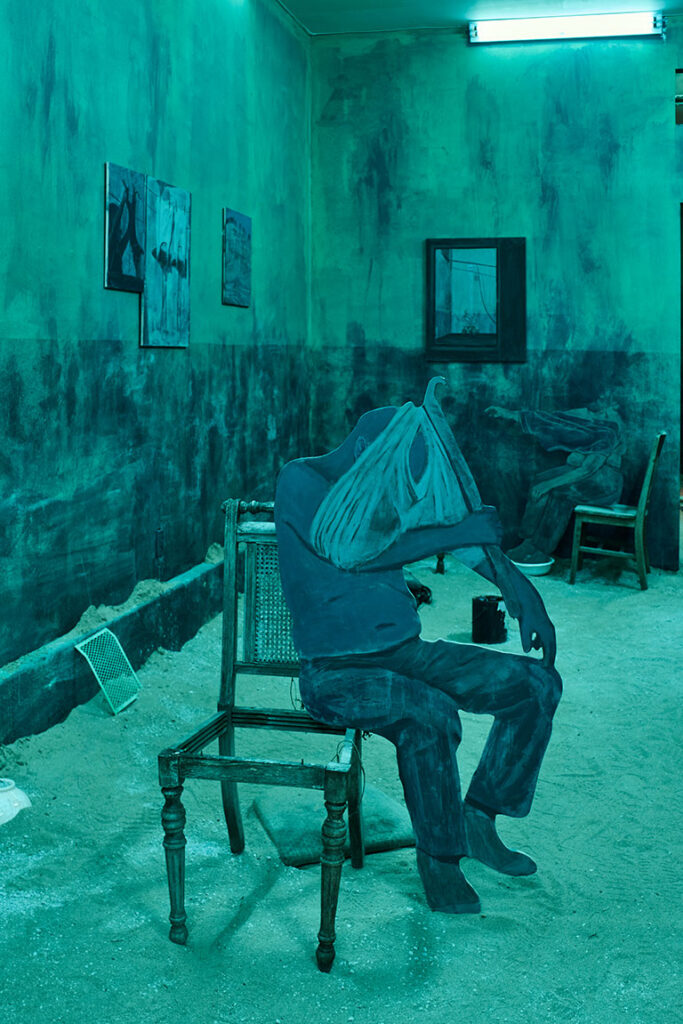
The 59th International also includes a partnership with another Pittsburgh institution known for its contemporary installation art. At the Mattress Factory, Peruvian artists Arturo Kameya and Claudia Martínez Garay will transform a former row home owned by the North Side museum into an exploration of Peru’s sociocultural history. The artists visited Pittsburgh last October to see the converted gallery space on Sampsonia Way, which opened in 2013 and is one of three historic buildings that comprise the Mattress Factory. Their installation will examine Indigenous histories and mythic narratives using a blend of video, sound, textile, and sculpture, all unfolding as visitors move through the house’s three floors.
“We’re always trying to question how we engage with different audiences and find new ways to connect with people coming from all these different places. Art—especially contemporary art—can often seem very inaccessible.”
Danny Bracken, Mattress Factory’s curator and director of exhibitions
Danny Bracken, Mattress Factory’s curator and director of exhibitions, says the unconventional presentation—far removed from the typical white-walled gallery space— serves the aim of this year’s International to expand its reach and welcome the perspectives of local collaborators.
“We’re always trying to question how we engage with different audiences and find new ways to connect with people coming from all these different places,” Bracken says. “Art—especially contemporary art—can often seem very inaccessible.”
Bracken says the artists and Jackson, one of the International’s co-curators, worked closely with the Mattress Factory to develop an intimate understanding of the residential site.
“You can’t really come into this space and just drop something in,” Bracken says. “There has to be some sort of conversation with the space that it’s being exhibited in.”
Engaging Communities
During two visits to Pittsburgh, Ghosh learned about the city’s culture and history by touring the Museum of Art and The Andy Warhol Museum, the Nationality Rooms in the University of Pittsburgh’s Cathedral of Learning, and some of the neighborhoods photographed by Charles “Teenie” Harris. He met with residents and local artists, then brought those experiences with him for workshops he conducted in October 2025 at the Children’s Museum.
In one exercise, Ghosh asked children and their families to illustrate what home meant to them and what they see through their own windows, harkening back to The Post Office. The practice revealed a range of experiences, he says. One child realized she had moved so often she couldn’t draw any one home, but rather an amalgamation. A woman sketched the cross-country moves she had made, returning always to Pittsburgh.
In theater games, Ghosh helped participants physically embody some of these same ideas of home, then posed them in front of photosensitive screens to create his shadow casts.
“There’s a lot of intimacy and humor and warmth in his practice, and also a little bit of strangeness,” says Danielle Linzer, senior director of education, learning, and research at the Children’s Museum. “People responded to all of that.”
Transforming the museum into an art studio for the project presented a few challenges, Linzer says. Shadow casting requires a light-tight room, and the large-scale screens needed to be rinsed of photographic chemicals once completed. Museum staff got creative, turning a facilities closet into a washout room and blacking out a classroom for 30-second exposures. The finished product will incorporate the shadow casts, families’ drawings, and their signatures, along with an indication of how long they’ve lived in Pittsburgh.
“This isn’t anonymous,” Linzer notes. “This is a family or a person, in this place and this time.”
The result of Ghosh’s workshops is an installation made by an Indian artist but with Pittsburgh DNA—in its steel structure, in the silkscreens of Pittsburghers they hold, provided by local printmaking organization Artists Image Resource, and in its very genesis outside the Children’s Museum. For Ghosh, it’s all part of the International’s broader effort to encourage conversation about how art is made and exhibited.
“You are not just trying to reinterpret the role of the museum,” he says, “but also to activate the city as a certain kind of encounter and meeting point.”
Linzer found that the experience reinvigorated her sense of the possibility that exists when art extends beyond a museum’s walls—the possibilities explored in the upcoming International.
“Pittsburgh can be a really collaborative place when we push ourselves to break down the walls and boundaries that separate organizations, to provide really innovative and inclusive experiences for the communities we serve,” reflects Linzer. “This is a really exciting example of that.”
The 59th Carnegie International, presented by Bank of America, is made possible by leadership support from Kathe and Jim Patrinos. Major support is provided by the Carnegie International Endowment, The Fine Foundation, the Jill and Peter S. Kraus Endowment for Contemporary Art, and the Carnegie Luminaries.Significant support is provided by The Andy Warhol Foundation for the Visual Arts, the Susan J. and Martin G. McGuinn Exhibition Fund, Henry L. Hillman Foundation, and the Keystone Members of the Carnegie International. Generous support is provided by Allegheny Regional Asset District, E. Rhodes & Leona B. Carpenter Foundation, Jacques and Natasha Gelman Foundation, National Center for Art Research, Japan, the Louisa S. Rosenthal Family Fund, Buchanan, Carnegie Mellon University, the Office for Contemporary Art Norway, and the Friends of the Carnegie International.Additional support is provided by Jane A. and Alan G. Lehman Foundation, Royal Norwegian Consulate General in New York, Giant Eagle Foundation, P. J. Dick Incorporated, Henry John Simonds Foundation, The Irving and Aaronel deRoy Gruber Foundation, Morby Family Charitable Foundation, UPMC Health Plan, Volpatt Construction, and the Fans of the Carnegie International. Major support for education and public programs is provided by The Heinz Endowments and the School Museum Fund, The Hees Family. Carnegie Museum of Art’s exhibition program is supported by the Carnegie Museum of Art Exhibition Fund, The Fellows of Carnegie Museum of Art, and the Carnegie Collective. Carnegie Museum of Art publications are supported by the Beal Publications Fund. Support for the exhibition catalogue has been provided by GRAY Chicago | New York, Taka Ishii Gallery, Luisa Strina Gallery, Proyectos Ultravioleta, Tina Kim Gallery, whistle, 56 Henry, Galeria Campeche, Hollybush Gardens London, Galerie Isabella Bortolozzi Berlin, Ota Fine Arts (Tokyo / Singapore / Shanghai), and Barbara Wien gallery and art bookshop. Carnegie Museum of Art is supported by Allegheny Regional Asset District and Helen Frankenthaler Foundation. (Reflects contributions as of Feb. 1, 2026)