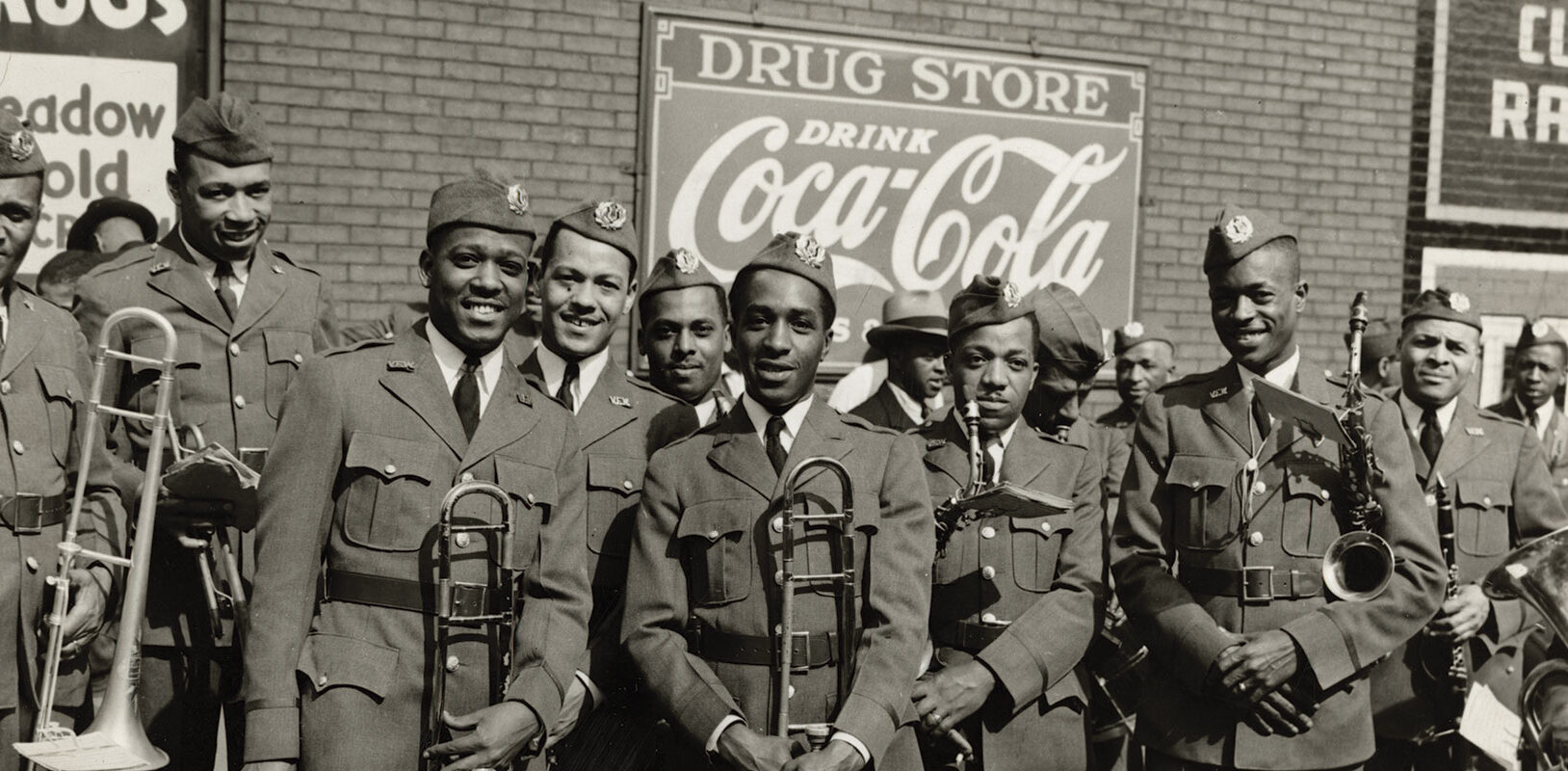
During pivotal decades of social change and racial segregation in the United States, Black photojournalists made it their mission to record the wholeness and humanity of Black life—the mundane, the magical, the meaningful.
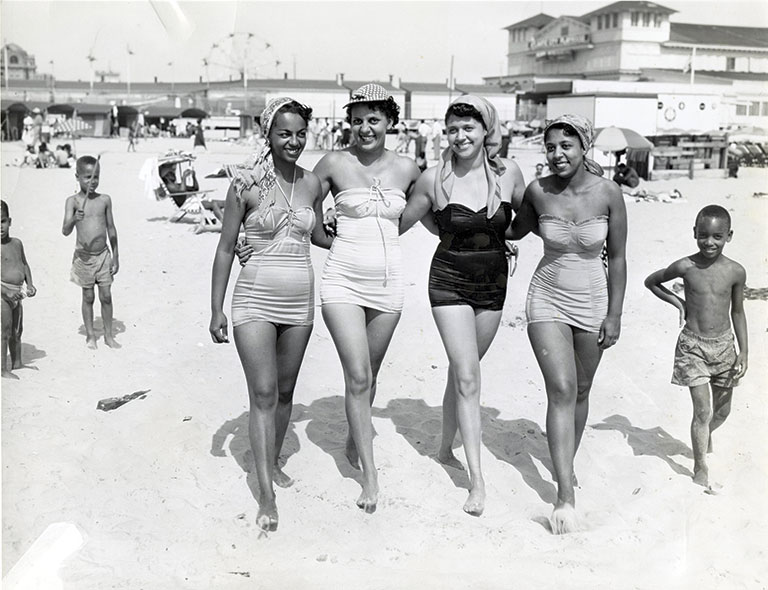
Think of John W. Mosley’s 1950s photograph for the Black-owned Philadelphia Tribune that features four Black women in bathing suits posing on New Jersey’s “Chicken Bone Beach,” one of many images the Philadelphia-based Mosley made of the segregated section of Atlantic City’s beachfront. His images provided a glimpse of the leisure and the joy Black people found in their communities.
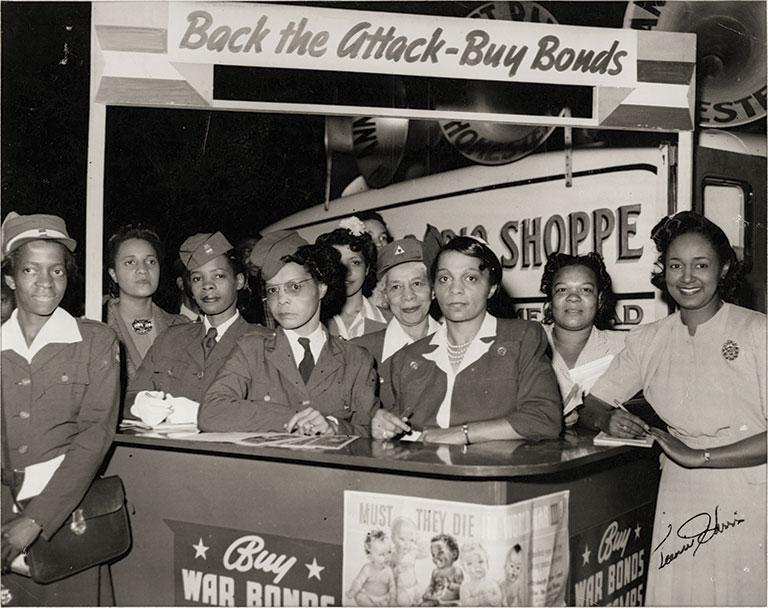
On a sunny day in 1945, the Pittsburgh Courier’s ace photographer Charles “Teenie” Harris captured several Black women looking cheerful and smart in their military uniforms, as they sold war bonds from a street corner stand in Homestead.
Four decades later in Pittsburgh, Bruce Talamon photographed the activist and 1984 presidential candidate Jesse Jackson holding a little boy on his lap while having breakfast in a white family’s kitchen. Jackson had slept over at the family’s home as part of several overnight stays planned with voters during his campaign.
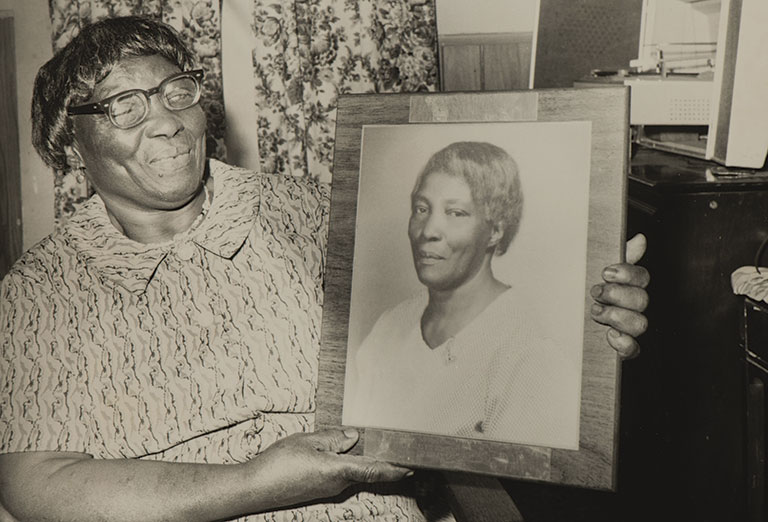
And because of photographer A.B. Bell, readers of the Black-owned Dallas Post-Tribune in 1976 could see the pride on the face of Mrs. Claudia Mae Wilborn, a Dallas resident, as she received a “Bicentennial Grandmother” plaque presented to her by her children and grandchildren.
They were all part of a broad national network of Black photojournalists who worked outside the national spotlight, facing demanding deadlines and often for low pay. Some risked their lives to tell stories. They hustled, moving between assignments and capturing shots that contradicted negative perceptions of Black communities in crisis—and that were ignored by the white press.
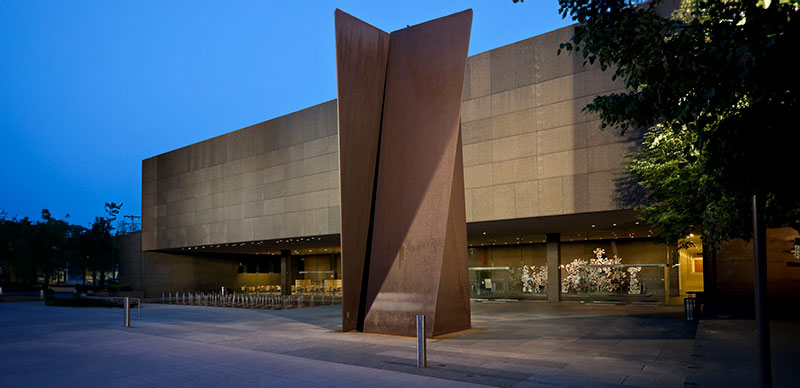
More than 250 of those photographs will be exhibited as part of Black Photojournalism, on view at Carnegie Museum of Art from September 13 through January 19, 2026. The exhibition is the first-ever examination by a museum of Black photojournalism between 1945 and 1980, says Dan Leers, the museum’s photography curator, who co-organized this exhibition with Charlene Foggie-Barnett, the Charles “Teenie” Harris community archivist. The exhibition will explore the lives, livelihood, and craft of 60 photographers who navigated living in and documenting Black America.
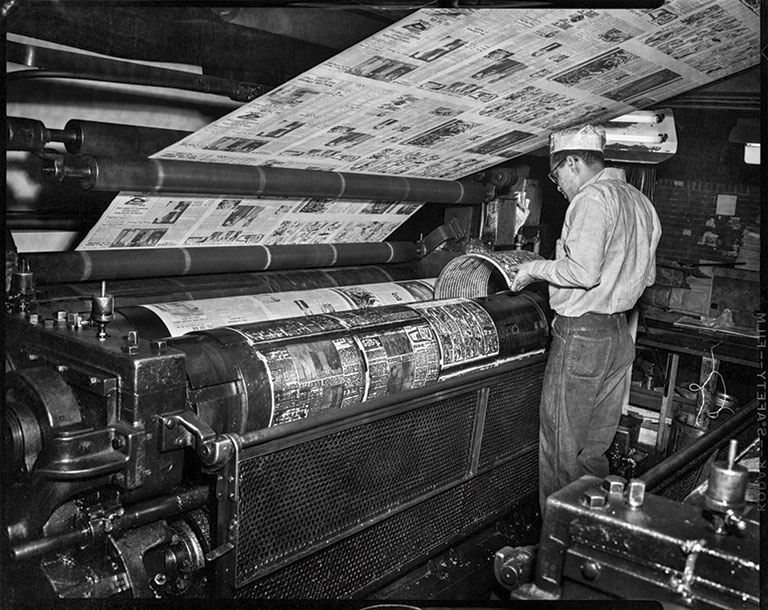
There will be an accompanying book to the exhibition, with the same name. On the cover is a 1954 Teenie Harris photograph of a Pittsburgh Courier press operator, working earnestly to print the next edition of the paper. The book will include nine more Harris photographs that the museum is eager to show to the public for the first time, Leers says. The hefty 400-page volume will feature about 200 photos, including some that won’t be in the exhibition, as well as rich essays and interviews.
“We want to emphasize in the exhibition that this history is living. But we know that the photojournalists who documented it are now into their 70s, 80s, and 90s, and a number of them have passed on. That’s why the time is now for this exhibition.”
Dan Leers, photography curator, Carnegie Museum of Art
Leers says there’s an urgent need to close the gap between what has been recorded about Black life and contributions to American history and what has been represented in mainstream media.
“We want to emphasize in the exhibition that this history is living,” Leers says. “But we know that the photojournalists who documented it are now into their 70s, 80s, and 90s, and a number of them have passed on. That’s why the time is now for this exhibition, and to draw attention to the contributions that these Black photojournalists have made to American history.”
Birth of the Black Press
Carnegie Museum of Art’s archive of more than 70,000 Charles “Teenie” Harris images was just one resource on which Leers and Foggie-Barnett relied. They scoured tens of thousands of images over the past two years and drew from archives and collections in the care of journalists, libraries, universities, museums, newspapers, and photographers. The work took them around the country.
And yet, Leers notes, this will be only a partial look at Black photojournalism in America. The exhibition will chronicle historic events and daily life in the United States from the conclusion of World War II in 1945 to the presidential campaigns of 1984, including the civil rights movements through the 1950s, ’60s, and ’70s.
“To look comprehensively at the totality of the work of these photojournalists would be vast,” he explains, adding that the decision about where to focus was influenced by history.
In the mid-1940s, as Black soldiers returned from fighting overseas only to battle racism and segregation at home, Black-owned media was on the rise. This boon provided the best starting place to explore Black photojournalism, says Leers. It was also around the time that the Pittsburgh Courier, one of the nation’s leading Black newspapers, gave Harris his start as a staff photographer.
Across the country, Black newspaper subscriptions were climbing. In November 1945, John H. Johnson’s pioneering Black-lifestyle magazine, Ebony, debuted. Just six years later, Johnson launched Jet, billed as “The Weekly Negro News Magazine.”
During the almost four-decade span covered in the exhibition, Black photojournalists were capturing it all for the Black press. They were considered lifelines and trusted news sources that transformed how Black people stayed informed, saw themselves, and viewed their communities.
Personal Portrayals
For Foggie-Barnett, this project was not only historically important but also personal. She was raised in Pittsburgh’s Hill District and Harris was a family friend, as well as the person who documented much of her growing-up years. Without Black photojournalists and the Black press, she notes, her experience and the experiences of so many Black Americans would be threatened by erasure. For more than a century, the Black press has filled the gap.
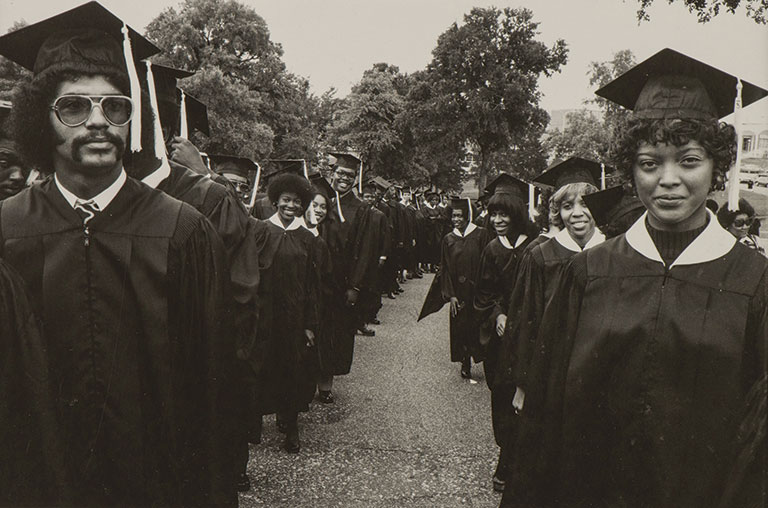
“You would never see images and read the stories of everyday Black people if it weren’t for the Black press,” she says. “You wouldn’t know that Black people were graduating from high school or going on to college and graduating with honors and organizing to uplift their communities.”
Without Black photojournalists, for example, many people would not know that Rev. Dr. Martin Luther King Jr. did more than march and preach during his short life.
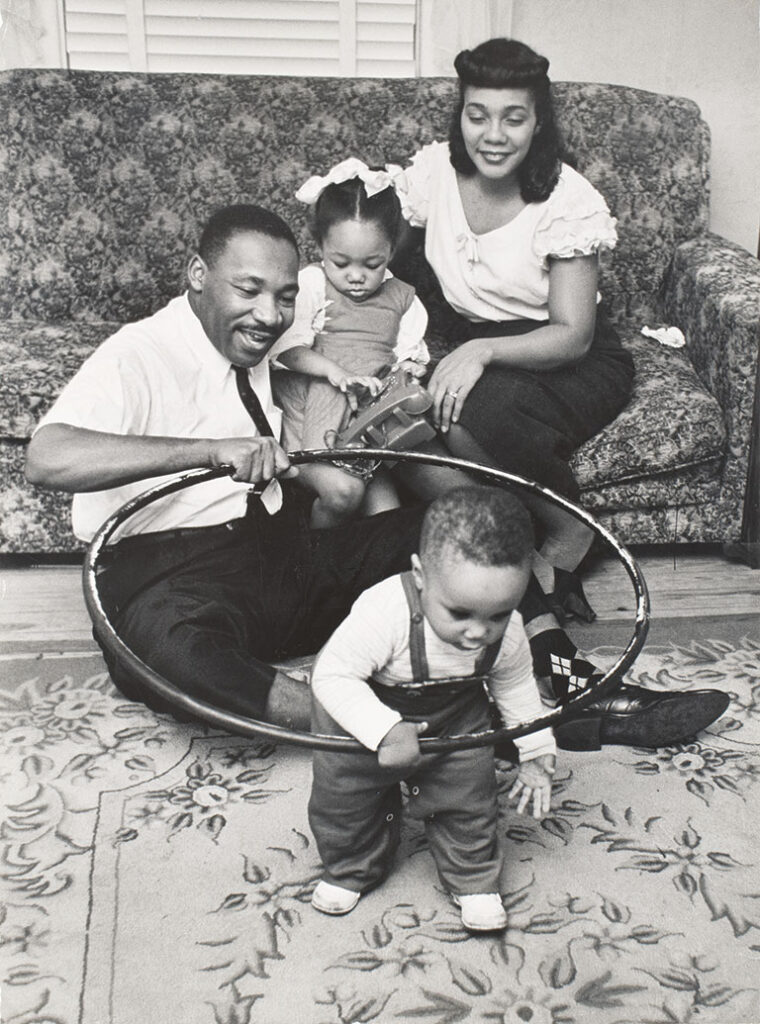
The Civil Rights icon will appear in about a half-dozen photographs in the exhibition, but don’t expect to see iconic images from his “I Have a Dream” speech or marching through Selma, Alabama. Moneta Sleet Jr., who covered many critical events in the life of King and his family, made several of the exhibition’s photographs that show King through a more vulnerable lens. In one, there’s King the attentive family man and dad frolicking on his living room floor with Yolanda and Martin Luther King III, his two oldest children. Still in his crisp shirt and tie, a happy and playful King reins in his runaway toddler with a small Hula-Hoop while wife Coretta Scott King looks on from her seat on the sofa.
In another poignant frame, Sleet invites us to gaze at a resting King. He’s on a train in a small, private sleeping car somewhere in Europe. With little light from the window in his room, King’s white shirt and cuff links are still noticeable from atop a blanket that mostly covers him up. King’s eyes are closed, and his hands are clasped on his chest, as in prayer. On that day in 1964, King was en route to receive his Nobel Peace Prize.
“You would never see images and read the stories of everyday Black people if it weren’t for the Black press. You wouldn’t know that Black people were graduating from high school or going on to college and graduating with honors and organizing to uplift their communities.”
Charlene Foggie-Barnett, the Charles “Teenie” Harris community archivist
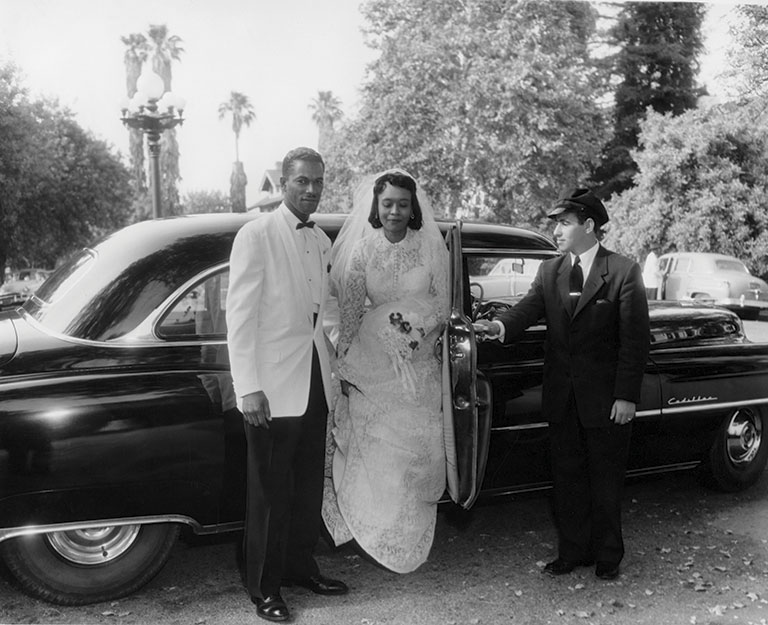
The exhibition will present many humanizing images of Black luminaries and everyday people, candid moments that can bring the viewer into intimate connection with them. They thrive and live in what Foggie-Barnett calls “a middle space” where there is power and beauty in ordinary moments.
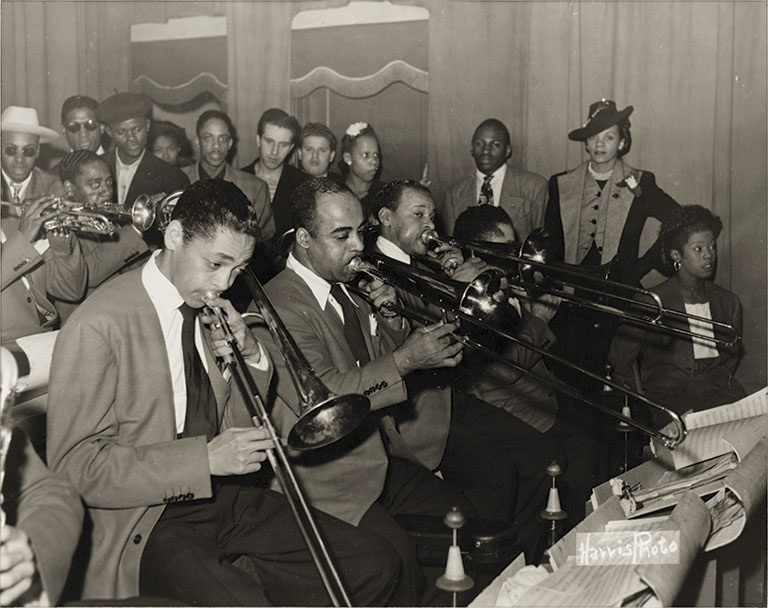
Chester Higgins Jr.’s 1969 photo titled Water Spray Dancer captures a little Black boy’s abandon and glee as he cools off in the spray of a fire hydrant outside a row of brownstones. In Ming Smith’s 1976 photograph titled Harlemite at Hotdog Stand, Harlem, NY, we gaze at a man in a dapper white summer suit and shoes as he glances at the camera. In Pittsburgh’s bustling Hill District, Harris takes us out on the town to the Hill City Auditorium (of the Savoy Ballroom) for a set with the Billy Eckstine Orchestra. Singer Sarah Vaughan is to their right, and spectators crowd around.
In her search for exhibition images, Foggie-Barnett recalls seeing “a lot of content that was just beautiful, impactful photography, even without a storyline.” Many of those images, she says, spoke to that “middle space where everyday life happens, but is least known and understood about Black people, especially by white people.”
There will be other opportunities to hear personal stories from living Black photojournalists—about 15—whose work is featured in the show. The museum will host public conversations about the Black press with national archivists, photography curators, and collectors who collaborated with Leers and Foggie-Barnett. And a podcast series will help further the conversation and engage audiences with photographers and archivists. It will be hosted by Mark Whitaker, an award-winning journalist and author of the book Smoketown: The Untold Story of the Other Great Black Renaissance.
On Location
The exhibition also will portray Black life as geographically expansive, showing the diversity of experience among different communities.
Even in a glamorous city like Las Vegas, the images reveal a vulnerability in Black icons that could only be captured by Black photojournalists. In one that Clinton Wright shot for the Black-owned Las Vegas Voice in 1965, the famed jazz singer Nancy Wilson steps outside her alluring stage persona. Wilson appears doting as she poses in a nondescript living room with three unidentified Black girls dressed in their Sunday best. In their white-gloved hands, the girls hold checks given to them as part of a fundraiser for a trip to Disney World.
From across the United States, Leers and Foggie-Barnett chose images that reflected the depth and richness of Black life in America. They bring into view the elegance of mid-century high-society balls, and the determined look of marchers in the Poor People’s Campaign in 1968. They presented the quiet beauty of Black love in the wintertime on a street in Highland Park, Michigan.
“It’s really interesting to talk about these photographers and the work they’re known for geographically,” says Leers. “For instance, if you want to know about photography and see Black life in the Las Vegas Strip, Clinton Wright is your guy. If you want to hear about photography and life in Boston, Don West is your guy.”
To understand Black life in the nation’s capital, Leers and Foggie-Barnett turned to Sharon Farmer. She was the first African American woman hired as a White House photographer during the Clinton administration, and the first woman to direct the White House Photography Office.
“As Black photojournalists, we created evidence that Black people thrived, we accomplished so much, we persisted as a people despite inequities.”
Sharon Farmer, photographer
When she was fresh out of college in 1975, Farmer got her start as a staff photographer for The Washington Afro-American newspaper. Founded in 1892, The Afro was one of the Black newspapers and magazines that transformed how people were able to access seeing themselves and their communities.
Then, like now, the family-owned paper’s mission is “providing readers with good news about the Black community not otherwise found.”
“Their mission was my mission,” Farmer exclaims when reached by phone from her home in Washington, D.C. “I was thrilled to be there.”
As a photojournalist, Farmer was aided by her intimate familiarity with the streets and wards in the majority-Black city where she grew up. On assignments, before aiming her camera, Farmer says it was important, and customary, for her to ask Black people who their leaders were and who should fill the frame.
“It was a way to give them agency and to build trust,” Farmer notes.
From there, her aim was to get the best shot “in three pictures or less.” During her three-years at The Afro, Farmer chronicled everything from the flourishing Go-go music scene that defined D.C. in the 1970s to the complex and celebratory rise of Black political leaders like Marion Barry, the grind of segregation, and everyday life in the city’s wards.
“As Black photojournalists, we created evidence that Black people thrived, we accomplished so much, we persisted as a people despite inequities,” says Farmer, who later worked as a staff photographer for The Washington Post. Today, at 74, Farmer is an independent working photographer. The Museum of Art exhibition will feature her 1980 photograph of the Black Prince Hall Freemasons, a fraternal order, in their regalia, celebrating the laying of the cornerstone at Israel Baptist Church in Washington, D.C.
‘Black culture, the richness, the love’
Further north, New York City was a growing hub for Black photographers in the 1960s, and Leers and Foggie-Barnett focused on many who lived, evolved, and made art there. For the installation, they drew from images produced by members of the influential and now legendary Kamoinge Workshop, a collective of independent Black photographers who quietly documented Black life for decades.
“Who can better talk about us than us?” proclaimed Anthony Barboza, one of the collective’s living members and original founders, in a 2020 interview with W magazine. But those assigned by mainstream media to capture elements of Black life in the 1960s were rarely Black, says Leers. That left Black photographers like Barboza on the margins, mostly shut out of galleries, shows, and the support of New York’s major museums.
So, true to the meaning of Kamoinge— “a group of people acting together”—in Kenya’s Gikuyu language, the group’s members encouraged and mentored each other, shared job leads, and nurtured their skills. And they made it their mission to tell stories about Black communities, life, and culture through their photographs.
“I worked to capture Black culture, the richness, the love. That was my incentive. It wasn’t like I was going to make money from it, or fame—not even love, because there were no shows.”
Ming Smith, Photographer
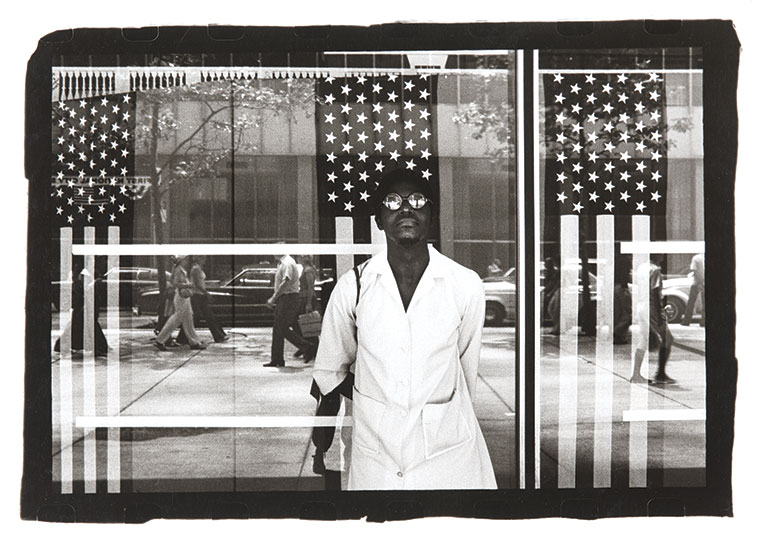
Barboza’s 1972 self-portrait will be featured in Black Photojournalism along with works from other members of the collective, including Ming Smith, Kamoinge’s first female member. Smith’s 1973 photograph titled America Seen Through Stars and Stripes will be among her works on display in the exhibition.
The first Black woman photographer to have work acquired by the Museum of Modern Art in New York City, Smith continues to document Black people and culture. In a 2019 Financial Times interview, Smith reflected on the motivation for that work and the often-harsh reality that came with it: “I worked to capture Black culture, the richness, the love. That was my incentive. It wasn’t like I was going to make money from it, or fame—not even love, because there were no shows.”
Thanks to the work of Smith and others, Leers hopes visitors leave this first-ever exploration of nearly four decades of Black photojournalism with a new appreciation of the power of photographs—“to influence and inform how we look at, appreciate, and understand a moment in history.
Black Photojournalism is presented by BNY. Major support for this exhibition has been provided by the Virginia Kaufman Endowment. Significant support for this exhibition has been provided by the Terra Foundation for American Art. Black Photojournalism has been made possible in part by a major grant from the National Endowment for the Humanities: Democracy demands wisdom. Support for this exhibition’s catalogue has been provided by Arts, Equity, & Education FundTM, the Wyeth Foundation for American Art, and John Bauerlein.