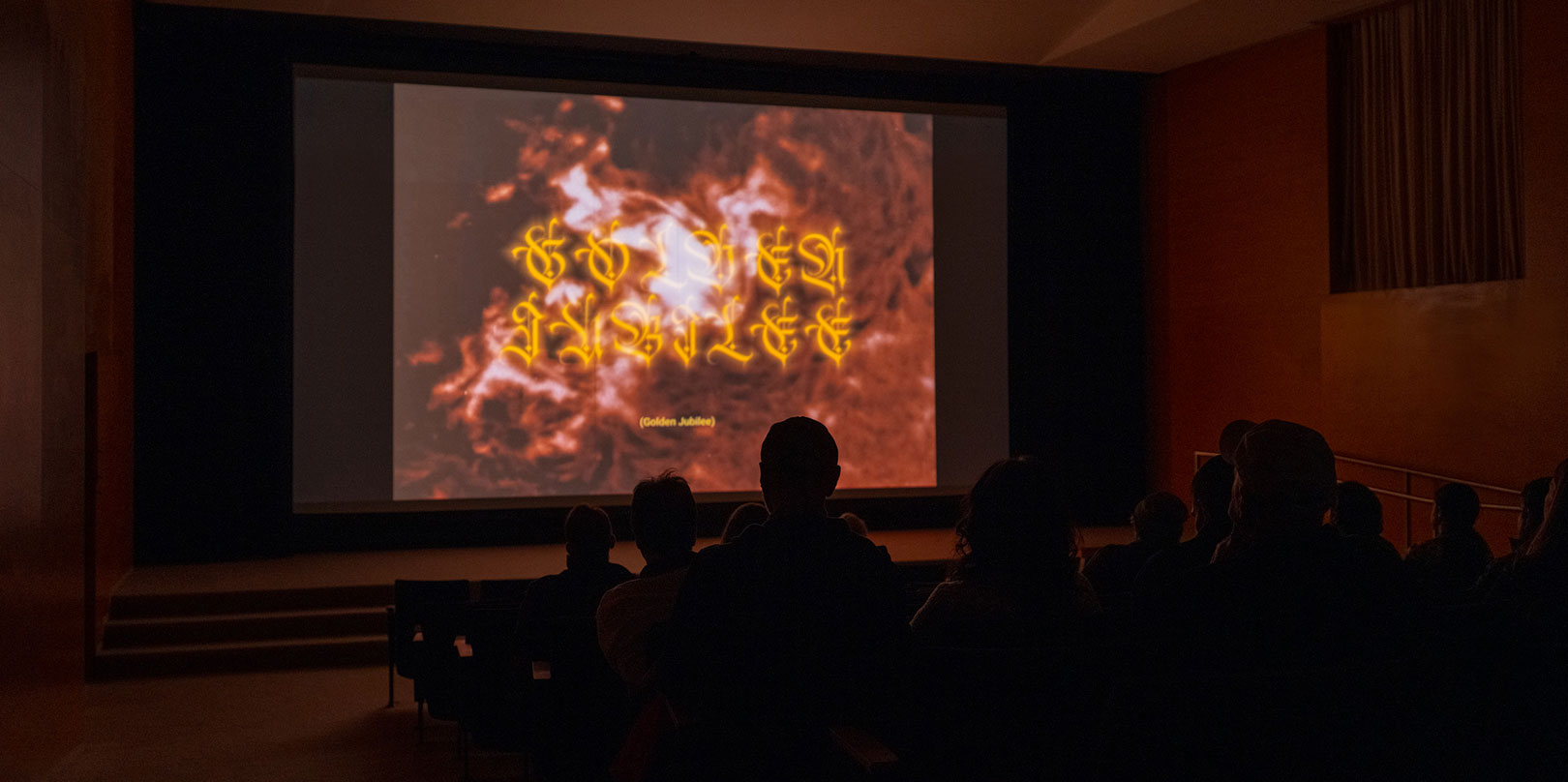
As part of this year’s Carnegie Museum of Art Film Series, coinciding with the 59th Carnegie International, the museum invited Rwandan filmmaker Kivu Ruhorahoza to engage with its theater and film collections. His selections, as he says, “document struggle and celebrate resilience, creativity, and hope”—whether that’s what’s shown on the screen or what has gone into the making of the work.
The works that he’s chosen feature stories and directors from around the globe, and span five decades of filmmaking. And though the annual Film Series is in just its fourth year, its ambitions to tell innovative, expansive stories build on a much longer film history.
Since 1970, the museum’s collection and curation of film, video, and time-based artworks have broken new ground. Indeed, the Museum of Art was one of the first American museums to create a film department. “Now, we’re at a moment of revisiting the collection, so it’s been fruitful to think about how film, video, and [related] installation work can become part of this richer, wider dialogue,” says Liz Park, Richard Armstrong Curator of Contemporary Art at the Carnegie Museum of Art.
The Film Series was begun in 2023 to be in dialogue with the museum’s collection of nearly 1,000 films and video pieces, and to hand over the reins to artists and allow them freedom to create programming that works from their point of view.
For this year’s series, Ruhorahoza has selected international films that unearth and portray complex and hidden histories of resistance, in parallel with the Carnegie International’s similar themes.
“I wanted to honor and celebrate the human spirit under immense pressure,” says Ruhorahoza. “The precariousness of employment, of housing; the fragility of negotiated peace between belligerent forces; the precariousness of health and, ultimately, of life itself. In an age marked by seemingly unstoppable forces intent on eroding human dignity, forces amplified by overwhelming technological power, and political cynicism, I wanted to celebrate stories of quiet, individual, and collective defiance.”
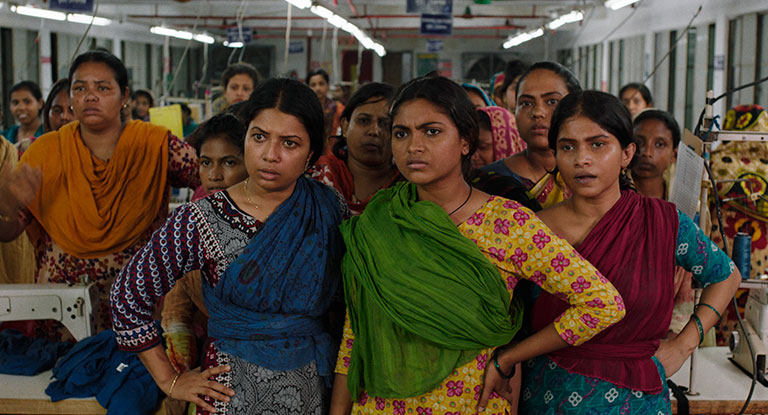
For example, Kaori Oda’s hybrid documentary Gama explores a landscape of deep historical trauma in Japan, delving into the Okinawan caves in which civilians hid from the World War II battle above—and where many of them died. Workingman’s Death by Austrian filmmaker Michael Glawogger documents hazardous labor in far-flung parts of the world: miners in Ukraine and butchers in Nigeria; Chinese steel workers and Indonesian sulfur workers. And fiction films such as Lizzie Borden’s Born in Flames and Rubaiyat Hossain’s Made in Bangladesh tell stories about disparate places in which people come together through work and community to push for transformation.
While Ruhorahoza’s series is drawn mostly from the artist’s experiences of international film rather than from Carnegie Museum of Art’s collections, his choices are in line with the common themes running through the Film Series screenings at the museum over recent years, including work, community, and experimentation—and, as Ruhorahoza puts it, “resisting amnesia.”
“These works insist on remembering,” he says. “They preserve experiences that power would often prefer to erase. They ask us not only to witness the past but to carry it forward.”
In 2023, Pittsburgh filmmaker Tony Buba curated a series of films about work, place, and social transformation. In 2024, curator and artist Astria Suparak showed dozens of films by artists from around the world, and in 2025, Garrett Bradley reimagined the museum’s collection as a rhythm alternating between “the tactile grit of our earthly condition” and something more sublime. For 2026, the selection is expansive in its international reach and resonates with the rich and diverse history of films shown at the museum.
“We’re revisiting our incredible history of film presentation at the museum,” says Park. “And there’s many ways that the museum can do that—the Film Series is just one.”
A Rich Legacy
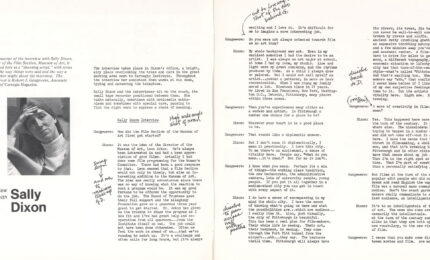
Sally Dixon knew that Pittsburgh was the right place for film in 1970 when she began the Department of Film, which remained its own entity until it was absorbed into modern and contemporary art in 2003. In 1973, Dixon remarked in an interview with Carnegie magazine that filmmakers’ “whole life is seeing. Their art, their business, is seeing. … The textures [of Pittsburgh] thrill them.”
Dixon, who died in 2019, would go on to become one of America’s most important advocates for experimental cinema and filmmakers, with a legacy that stretched far beyond Pittsburgh. In the 2022 documentary Experimental Curator: The Sally Dixon Story on PBS, film professor Ben Ogrodnik says, “Dixon is important because she’s a filmmaker-maker. … She was an enabler.” In Dixon’s obituary, Art Insider magazine referred to her as “one of the foremost voices for experimental changes in the art world,” having been one of the major forces bringing avant-garde film and video into established institutions. And that legacy was begun by her early work at the Museum of Art.
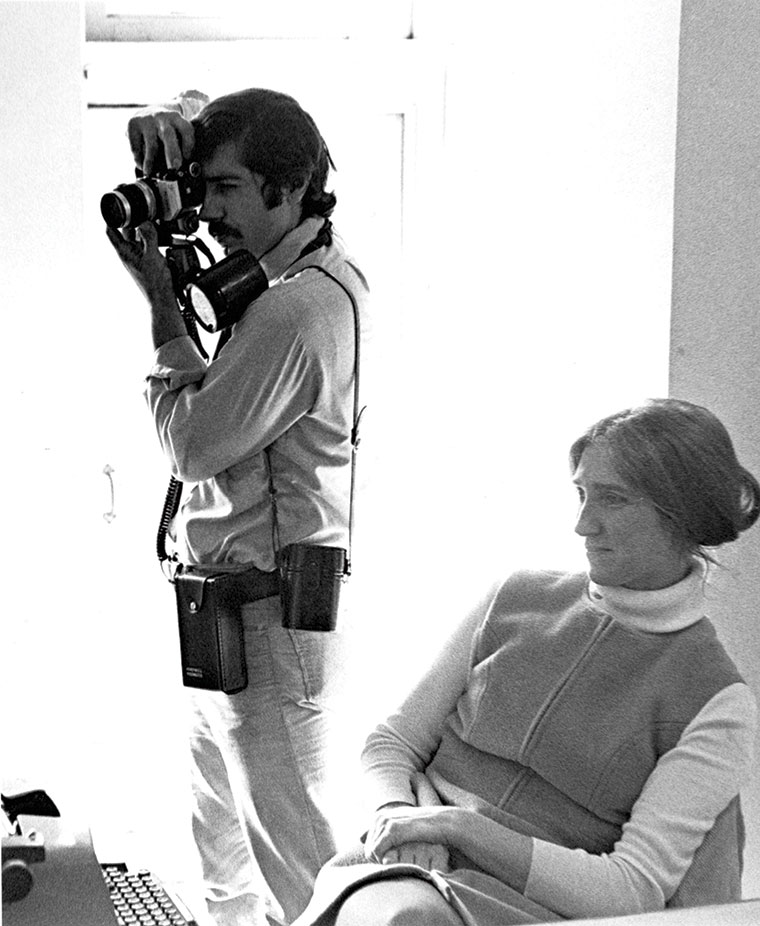
© Robert Haller. Made available by permission.
Until around 1970, avant-garde and experimental film were the purview of coastal megalopolises—the Film-Makers’ Cooperative in New York City and Canyon Cinema and Pacific Film Archive in San Francisco were all but the only major centers for experimental cinema work. But a postindustrial revolution was stirring, and between 1969 and 1972, the New York City film scene inspired a new focus on film as an experimental art form in unlikely places: the upstate New York cities of Binghamton and Buffalo, which paired faltering factory economies with booming universities, and—of course—Pittsburgh.
“The idea was really adventurous since there was no way of knowing what the reaction to such a program would be. Mr. Arkus has given me the freedom to shape the program as I see fit. … It’s difficult for me to imagine a more interesting job.”
Sally Dixon, Founder of the Museum of Art’s Department of Film, to Carnegie magazine in 1973
Dixon was one of the artists who’d fallen under the spell of New York City film missionary Jonas Mekas, founder of the Film-Makers Cooperative and, in 1970, the Anthology Film Archives. Fortunately for her, so had Leon Arkus, director of Carnegie Museum of Art. Arkus thought it was the right time and place for an official Film Section at the museum; Dixon had programmed some film events there already, and was given freedom to shape the vision for the new section—and, perhaps more importantly, a budget to make it happen.
“The idea was really adventurous since there was no way of knowing what the reaction to such a program would be,” Dixon told Carnegie magazine in 1973. “Mr. Arkus has given me the freedom to shape the program as I see fit. … It’s difficult for me to imagine a more interesting job.”
She immediately set to work creating one of the key nodes on the eastern U.S. film circuit. Dixon programmed screenings beginning with a series of seminal and avant-garde films from 1905 onward and an animation festival to coincide with the 1970 Pittsburgh International Exhibition of Contemporary Art. She also created open screenings for Pittsburgh-area filmmakers to show their work; and, most importantly, she launched a series of visiting-artist screenings and talks.
Beginning with Mekas, comprising abstract animator Robert Breer and experimentalist Stan Brakhage, the Museum of Art’s burgeoning film program brought artists to Pittsburgh whose work was important to the art form, regardless of how palatable it was to larger audiences. For example, in a 1971 letter to Dixon, filmmaker Hollis Frampton bemoans the fact that the work of colleague Ken Jacobs fell flat with the audience in Pittsburgh, saying that Jacobs’ lengthy, slow Tom, Tom the Piper’s Son “sorts the sheep from the goats. You gotta love film [underlined three times] to dig it.” (Dixon’s taste prevailed: Not only was Tom, Tom acquired by the museum for its permanent collection, it is today considered one of experimental cinema’s most important artworks and is included in the National Film Registry.)
In the Theater and Beyond It
A decade ago, former museum archivist Emily Davis worked for more than a year and a half on organizing, describing, and digitizing Carnegie Museum of Art’s time-based collection, which includes the film department’s huge archive of posters, letters, videos, and audio recordings. For her, one of the most important moments in the department’s history came in 1974. Arkus oversaw the development of the Scaife Galleries, and Dixon was able to get a purpose-built theater included for showing experimental films.
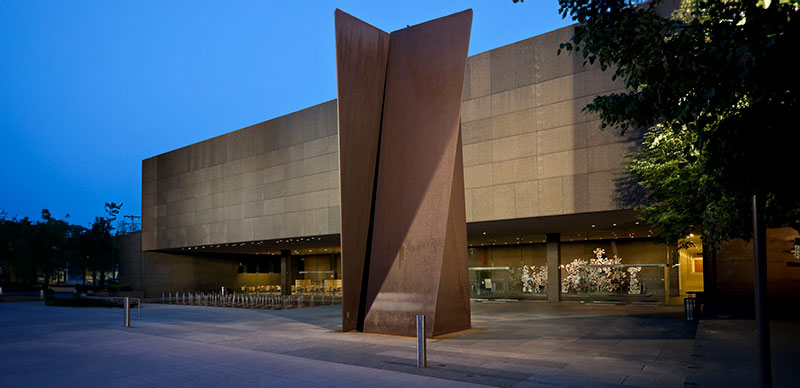
“Sally made sure that [Museum of Art] theater was perfect for the art form,” says Davis, now an archivist at Carnegie Mellon University. “From the thick velvet curtains that can change with various aspect ratios, to the booth that allowed for seamless multiprojector pieces.”’
It became a place where filmmakers, both little known and with global renown, would view and discover innovative art.
Pittsburgh’s Buba was at the start of his career when the section was building up steam. Today he’s a figure known nationally and internationally for his hard-hitting yet funny hybrid documentaries about his hometown of Braddock, Pennsylvania. But in the early 1970s, Buba was an aspiring filmmaker with little to work with.
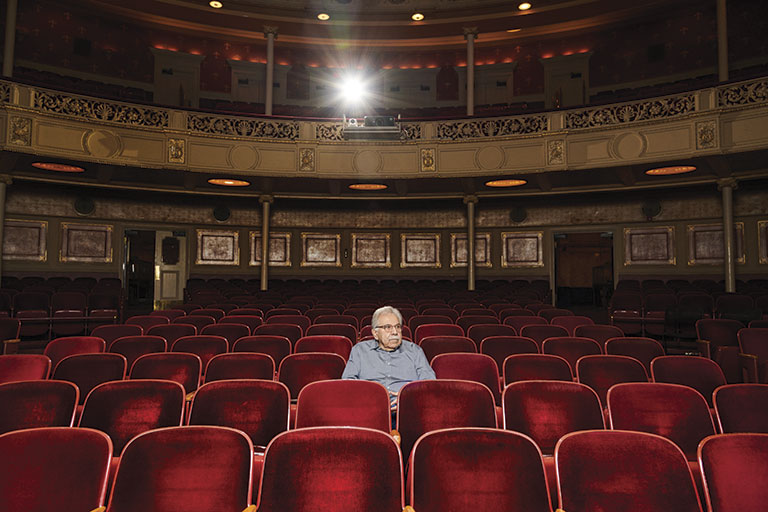 Photo: Sean Eaton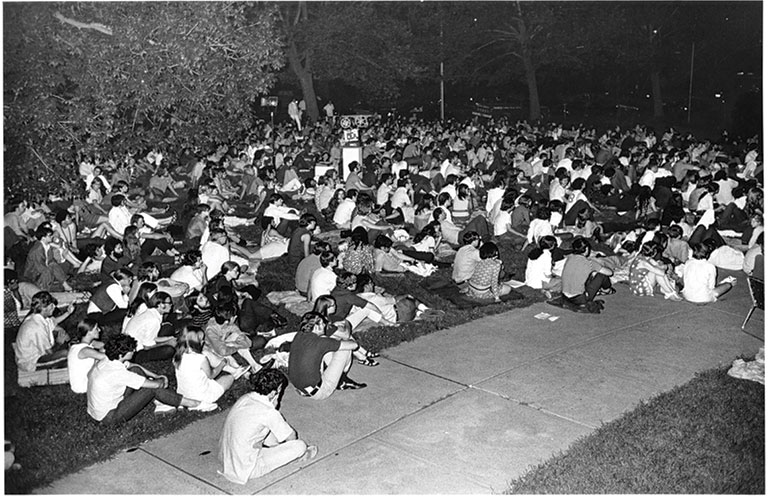
“Sally Dixon used to do a May Day screening,” says Buba, who is still making films at 82. “You’d just bring stuff up, like an open house, and I would come and show my films. But then, in 1980, Werner Herzog was there, and I get this phone call from the museum saying, ‘Hey, Herzog’s in town and wants to see local filmmakers’ films. Can you get over here?”’
The illustrious German auteur was meant to see just 5 minutes of Buba’s 25-minute Sweet Sal. But not only did he demand to finish it, he also sent Buba out to get all of his work—and took the “Bard of Braddock” to breakfast the next day.
“He was really praising my work, and then Bill [Judson, Dixon’s successor from the later 1970s onward] offered me my own screening, which ended up being incredibly successful, and it really kicked off my career on the museum circuit.”
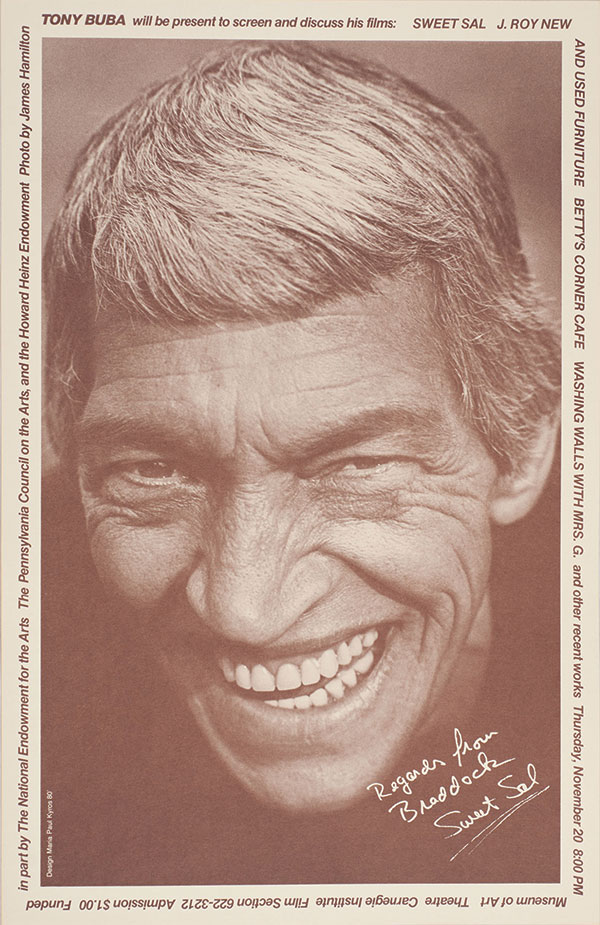
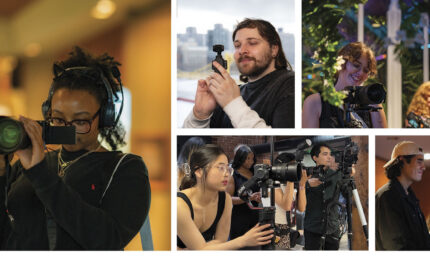
In a similar manner, today’s Film Series creates a space where filmmakers and film fans can experience works from the avant-garde to the simply little-screened; films that bring artists and artistry back to the center of screenings by giving filmmakers control over the series.
“Sally Dixon used to do a May Day screening. You’d just bring stuff up, like an open house, and I would come and show my films.”
Tony Buba, filmmaker
“Each of the filmmakers curating the series is really distinct in their style and approach,” says Park. “They bring something unique to their relationship with moving images as a resource.”
“For example, Astria Suparak screened more than 50 films over seven events, which is really ambitious,” adds Blaine Siegel, public programs manager for the museum.
Documentary shorts from the 1920s can combine with European experimentalists and Pittsburgh filmmakers from across the years.
From its establishment in the 1970s onward, the museum’s Department of Film was buying new work from independent filmmakers, establishing a collection of national prominence. Films such as Jacobs’ Tom, Tom, Brakhage’s Pittsburgh Trilogy, and Carolee Schneemann’s Fuses—among the most influential films in American experimental cinema history—are all part of the Museum of Art’s permanent collection.
The four-year-old Film Series has drawn extensively upon those pieces in the museum’s rich archive.
“We were very clear about wanting to have filmmakers who could look at our history, our collection, and also bring what they want to see to our theater,” says Park. “I think that is part of our larger ethos of really centering artists and listening to artists. In fact, in the third year, we invited Garrett Bradley, who pulled almost entirely from our collection of films and video.”
The choice of Buba to kick off the series in 2023 was in line with this idea, says Siegel.
“Having the distance now of the first three series, I almost see Tony as an artwork,” he says, referencing Buba’s status in the Pittsburgh film community and long history with the museum’s film section. “So what if an artwork from the collection came to life and chose the work that responds to them, and then that’s how the programming happened?”
Collaboration and Videos
Judson’s tenure as head of the Film Section (1975-2003) came with new ideas. Having been Dixon’s protege, he continued her work with visiting filmmakers and screenings, but expanded the project to include video. In 1981, the museum debuted its first video-specific gallery for installation works with an exhibition by Israeli video artist Buky Schwartz titled Videoconstructions. The stage was set for incorporating gallery-installed video pieces into the permanent display.
Soon the museum was at the forefront of museum exhibition of video art, a medium that, in the late 1970s and 1980s, was still finding its footing with serious art audiences and collectors. In 1988, Judson secured National Endowment for the Arts funding to create a groundbreaking exhibition of American landscape video artists, American Landscape Video: The Electronic Grove, which not only pushed the medium forward but also paved the way for an attitude of installation work that informs the new Film Series, nearly 40 years later.
Following in the footsteps of Dixon and Judson, the museum continues to commission and facilitate new work from film and video artists. In 2023, New York City-based artist Amie Siegel used recently unearthed 16 mm film from Carnegie Museum of Natural History as well as objects from the collection in a relationship born of the museum’s purchase of another of her works a decade ago.
“Amie was invited on a research trip to the museum, and she saw all these incredible reels of film documenting scientific expeditions that the Natural History Museum scientists conducted,” says Park. “She selected and digitized expedition films to create a new work called Panorama, which we showed as a Forum Series exhibition in 2023, and then acquired into our collection.”
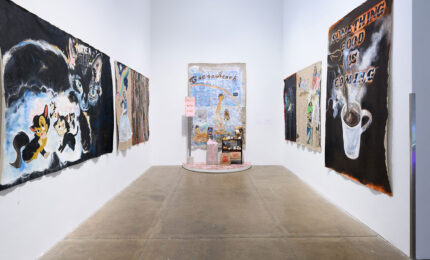
The 59th Carnegie International presents a range of time-based media. This includes Wu Tsang’s on our way to the general strike, on view in the museum’s Hall of Architecture, and Kearra Amaya Gopee’s minor demons. Both works were made specifically for the International.
The Film Series includes these kinds of works in some of its screenings, too.
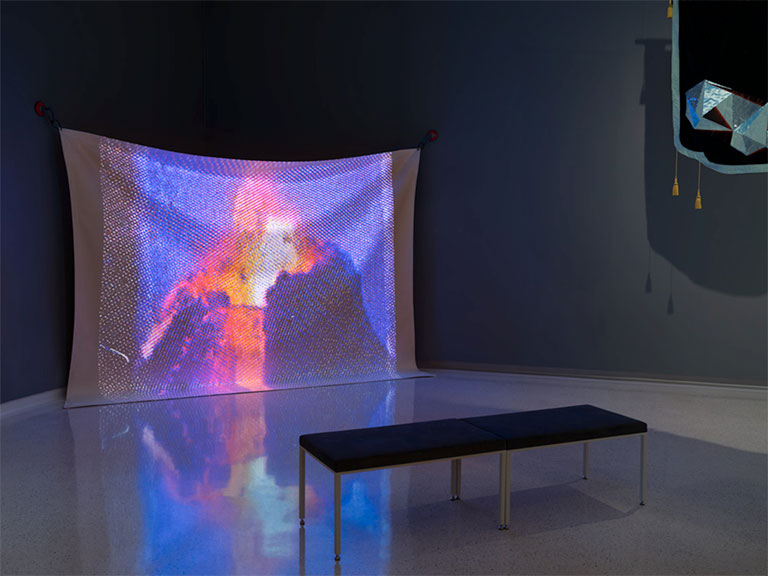
For example, as part of the 2025 series, Bradley chose to include Cauleen Smith’s installation work My Caldera. On display in the Scaife Galleries, Smith’s piece plays with the whole history of time-based artwork. It projects images of volcanoes that began life as TikTok video stills, which Smith then printed frame by frame onto 35 mm film and then rendered as 4K video. Just as Smith’s artwork demands the movement between analog and digital, its presentation cannot be in a theater.
“Our gallery attendants took everyone from the theater, moved through the museum at night in total quiet to experience the work, and then back to the theater for the other screenings,” says Siegel. “It was a discussion between us and Garrett asking, ‘How do we activate this artwork? How can we make it all part of the same series, despite being this different medium?’”
Reactivating Film
In 2003, the original film and video department was folded into the contemporary art department as part of institution-wide cost-cutting measures, leading to Judson’s departure. Its screenings and artist visits became part of a broader range of work. For Davis, the former archivist, the department and its associated screenings series were essential to Pittsburgh’s experimental film and video scene.
“The Carnegie program was at the nexus of the film scene in Pittsburgh,” says Davis. “When it shut down, it was a huge blow to Pittsburgh, but also nationally—
I’ve met programmers from all over North America who would look to Bill Judson’s work for inspiration.”
The museum’s approach to reactivating its Film Series today is simple: to continue to center the work of artists, and the ideas of artists, in both the curation and the screening of time-based artworks, at a time when film and screening options are changing rapidly.
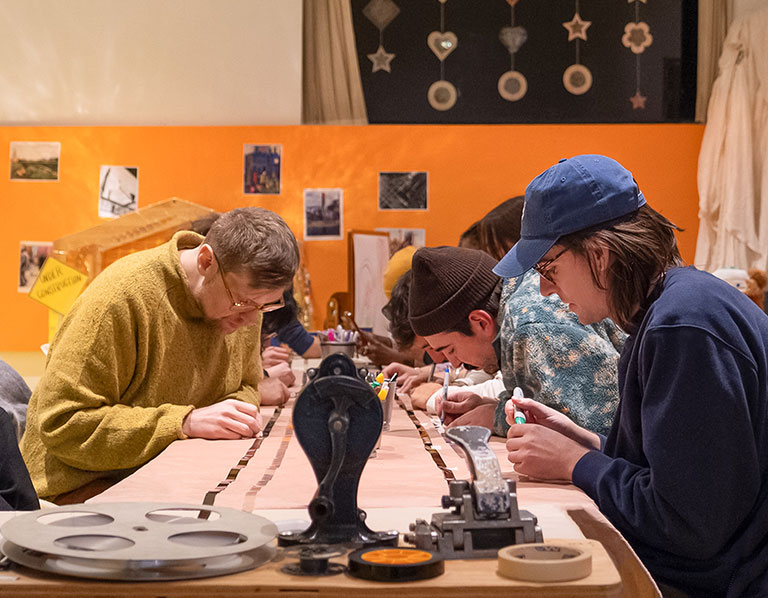
“Film, as it used to be presented, is undergoing a lot of changes,” says Park. “With streaming services and cinemas no longer being as viable of businesses, we’ve seen in Pittsburgh the closing of many venues. But there’s still a strong desire among people here to gather in person at a screening—to be part of that experience together.”
As part of the International, Ruhorahoza’s installment of the Film Series focuses on themed international films rather than on the collections of the museum.
“I wanted the program to resonate with the remarkably diverse exhibition curated by Liz Park, Ryan Inouye, and Danielle A. Jackson,” says Ruhorahoza. “Although the films were selected independently, I was struck by the many unexpected conversations that emerged between them and the exhibition. Together, they create a broader reflection on memory, resilience, and the ways artists continue to confront history and imagine different futures.”
Whether tied to the International, to the collections, or simply to the remarkable spaces and artists accessible by the museum, the Film Series helps make works that might never otherwise be screened in Pittsburgh come alive.
“Liz Park and [Blaine] Siegel—I think they wanted somebody with Pittsburgh name recognition to kick it off, and I was really excited to do it because it just fills a gap,” says Buba. “There’s so many films out there you can’t see anywhere else. Last month I went to see [West Indies: The Fugitive Slaves of Liberty] in the current series, and it was just amazing. Because without something like this, there just isn’t a lot of alternative cinema getting shown.”
Read more about Carnegie Museum of Art’s Film Series and upcoming screenings.