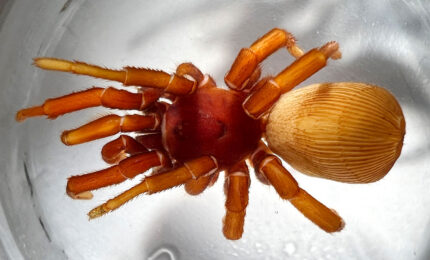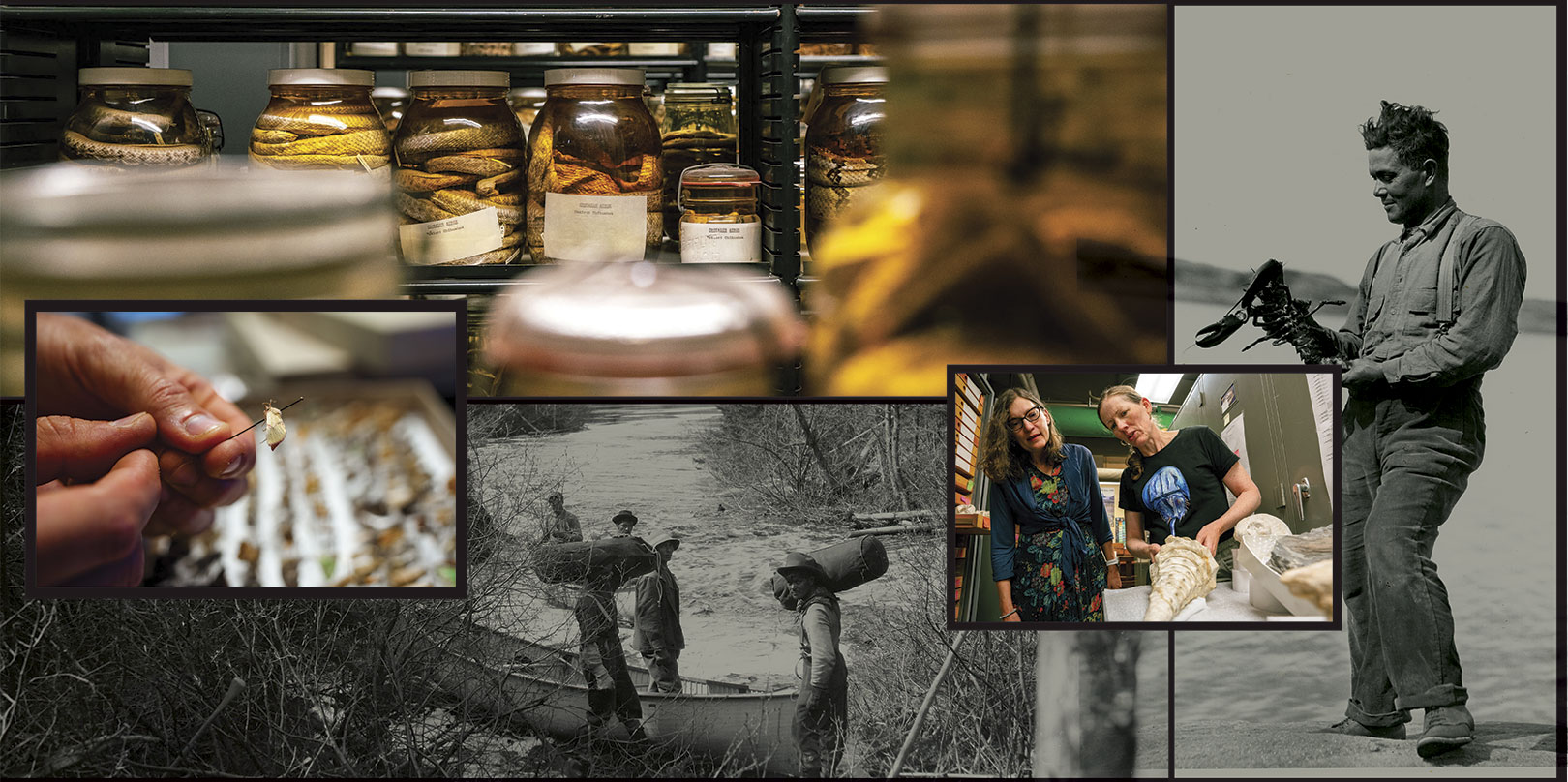
Rows of glass jars line the narrow aisles of Carnegie Museum of Natural History’s Alcohol House, holding more than 250,000 preserved specimens—frogs, snakes, salamanders, lizards, turtles, and countless others—suspended in ethanol.
For more than a century, this three-story research collection of preserved reptiles and amphibians operated largely behind the scenes, tended by scientists and curators facilitating generations of research. The shelves stretch endlessly, each jar a record of amphibian and reptile life at a specific moment in time.
“It feels like walking through history,” says Mariana Marques, the museum’s collection manager for amphibians and reptiles. “Being the steward of a collection is a huge responsibility, but also one of the best jobs in the world.”
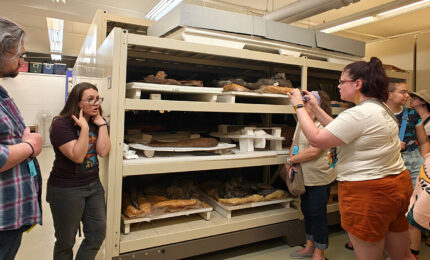
Most museumgoers will never step inside the Alcohol House, which serves as a research facility and is accessible to visitors only during select tours or programs. But through The Stories We Keep: Bringing the World to Pittsburgh, some of those jars—and the behind-the-scenes labor of collection managers like Marques—have come into view. The exhibition, which runs through January 2027, is located in the R.P. Simmons Family Gallery on the third floor of the museum. It features rarely seen objects and the everyday work of their care at the center of the experience, allowing visitors to examine jars of amphibians, fossil crates, insect drawers, conservation tools, and more.
“This exhibition is about showing visitors what usually stays out of sight,” says Kathy Hollis, director of collections care and access. “If a visitor ever wondered about specimens or objects they saw on a previous visit and what it is like to care for a museum collection, this exhibition helps to inform those questions.”
Collections Uncovered
The Museum of Natural History cares for more than 22 million objects, yet only a fraction makes it into the galleries. Bringing the World to Pittsburgh turns the view inward to the collections themselves. The exhibition is the second installment of The Stories We Keep, a multiyear series that explores the museum’s role as both steward and storyteller of global heritage.
The first chapter, Conserving Objects From Ancient Egypt, opened in 2024 and invited visitors to explore objects from the museum’s ancient Egyptian collection, including observing specialists restore a 4,000-year-old funerary boat inside a visible conservation lab. The enthusiastic response to that exhibition proved there was an appetite for more stories from behind the scenes, says Sarah Crawford, director of museum experience. “Visitors loved those hidden stories,” she says. “They wanted more transparency about how museums work.”
Bringing the World to Pittsburgh expands the view beyond the walls of labs and storage facilities, into the global expeditions, field notes, and collecting legacies that built the collections in the museum’s care. It features more than 275 objects, ranging from a tray of freshwater mollusks to an Indonesian puppet. Hundreds more objects and specimens will pass through the lab in real time as collections work unfolds.
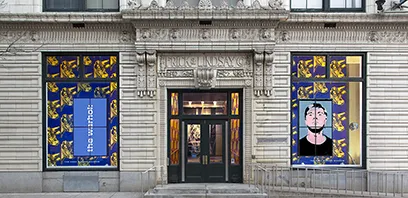
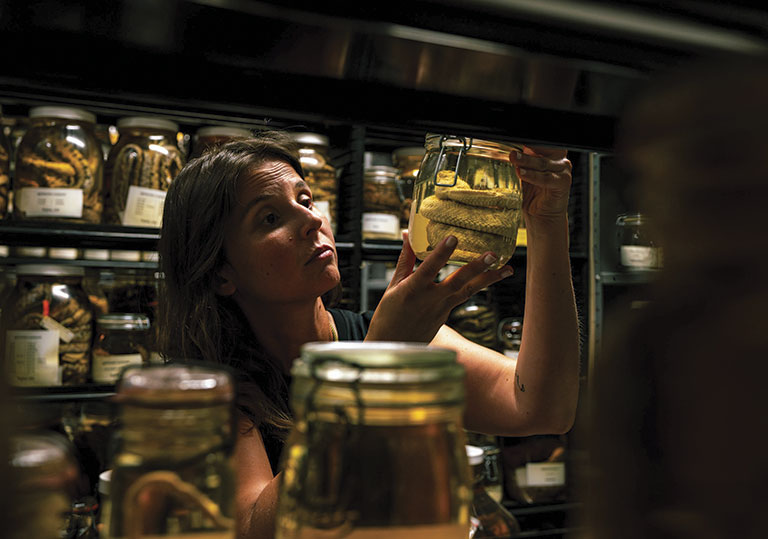 Photo: Warhol Creative
“One moment, a visitor may see a delicate bird mount; the next, a drawer of beetles,” Crawford says. “It’s a reminder that the life of the museum is in motion.”
The museum collections encompass nine areas of study. Accompanying the displays is the Visible Lab, a continuing feature from the previous iteration of the exhibition that pulls back the curtain on collections care.
Enclosed by 8-foot-tall glass walls, the 1,900-square-foot space allows visitors to watch the museum’s collections, research, and conservation staff at work as they photograph, clean, stabilize, and study objects and specimens from across departments. A sliding glass window opens during designated hours for visitors to talk with staff.
Conservation Technician Jenna Anderson first discovered this career path by chance, through a YouTube video of someone restoring a painting. The precision and patience of the work fascinated her, and it led her to switch her college major to pursue conservation.
Anderson enjoys sharing her passion with visitors, even if she’s still getting used to this close engagement.
“It can feel vulnerable,” she admits, “but it’s also rewarding. Visitors are curious, and I love coaxing questions from the shy ones.”
Rediscovering Angola
Two Angolan reptiles on display show how museum collections continue to inspire new scientific discoveries.
In 2020, Marques and research associate Luis Ceríaco used specimens collected in 1930 to describe Queen Nzinga’s tropical gecko (Hemidactylus nzingae), displayed in a glass jar of ethanol in the exhibition. Nearby, the Angolan grass lizard appears as a glowing micro-CT image, revealing the inner skeleton, which helped museum researchers confirm it as belonging to a previously unknown species.
Both specimens trace their roots and owe their identities to the “Pulitzer Expedition” of 1930, when Carnegie Museum ornithologist Rudyerd Boulton and his wife, Laura, traveled across Angola in search of the giant sable antelope. The 1930s team assembled what Marques calls “unparalleled testimonies of the Angolan landscape a century ago”—from reptiles and birds to fossils, field notes, and film reels.
“It feels like walking through history. Being the steward of a collection is a huge responsibility, but also one of the best jobs in the world.”
Mariana Marques, Carnegie Museum of Natural History collection manager for amphibians and reptiles
Nearly 100 years later, Marques continues that journey of discovery. Her connection began in 2018, when she first studied the expedition’s specimens as a graduate student. “It was like walking into a biodiversity library filled with an irreplaceable collection of spatial and temporal data,” she recalls.
Now she manages the very same collection and leads new fieldwork in Angola with Ceríaco—retracing the expedition’s paths to study how landscapes and species have changed over time.
“Each discovery,” Marques says, “is a conversation across generations—between the explorers who came before us and the scientists who carry their work forward.”
Guided by the Land
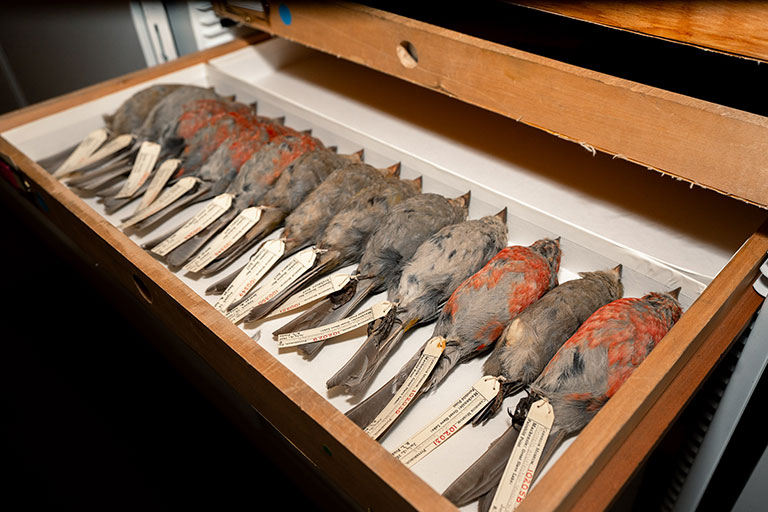
Not all stories come from far-off places. Alongside specimens from Angola, the Section of Birds preserves specimens gathered closer to home, including material from early 20th-century expeditions in northern Canada. Between 1901 and 1958, Indigenous guides Paul Commanda (Nbisiing) and George Carey (Omuskego) led museum scientists across Ontario, Quebec, and Labrador. Their knowledge of waterways, seasons, and wildlife made such journeys possible.
The exhibition recognizes these collaborations with artwork, a display of bird specimens collected during those journeys, and an interactive digital map tracing an expedition route. “They aren’t just the result of a lone explorer,” says Crawford. “They’re the product of collaboration, of knowledge shared and passed down.”
Every specimen is a record of life on Earth and a document of biodiversity, serving as a valuable resource for understanding and addressing the health of the planet, says Serina Brady, collection manager for birds.
“They’re records of life at a specific time and place,” she explains.
 | The Warhol Creative
Sometimes, those records reveal more than their collectors could have imagined. Bird specimens collected during the height of industrialization, for instance, now help scientists trace the history of air pollution by analyzing “soot” deposited on feathers.
That idea connects directly to We Are Nature: The Anthropocene Archives, a podcast that accompanies the exhibition. The second season explores how the museum’s 22 million objects and specimens reflect the Anthropocene—the era in our geological history, beginning in the mid-20th century, when humans began significantly shaping their environment. Visitors can also enjoy the podcast at a listening station in the gallery beside objects like Trinitite, Borneo frogs, and nurdles, and hear researchers explain what these artifacts reveal about nuclear fallout, biodiversity, and plastic pollution.
Crawford says the listening station is designed to mirror the sweep of the Anthropocene itself: “You can move from nuclear history to frog calls to plastic pollution in the space of half an hour. But that’s the point: The Anthropocene touches everything.”
The Big and the Small
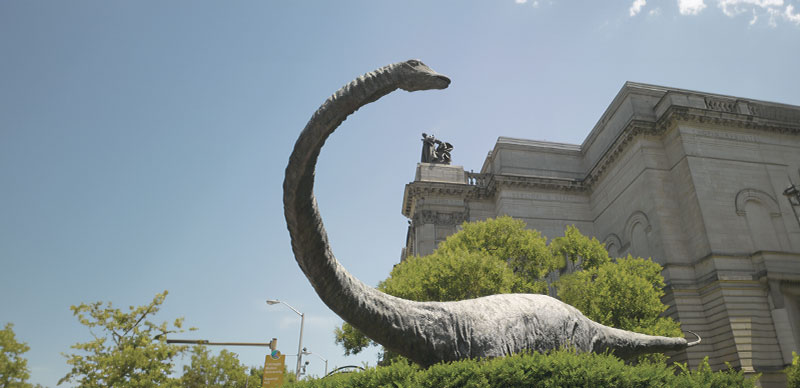
William J. Holland, the director of Carnegie Museum of Natural History from 1898 to 1922, transformed the institution into a museum of international standing. He was responsible for bringing the original name-bearing fossil of Diplodocus carnegii to Pittsburgh—which became an icon of the museum’s global reach. Yet, as a trained lepidoterist, Holland studied smaller specimens. Visitors to the exhibition encounter one of his meticulous butterfly sketches, proof that his naturalist’s eye was as attentive to fragile wings as it was to towering giants.
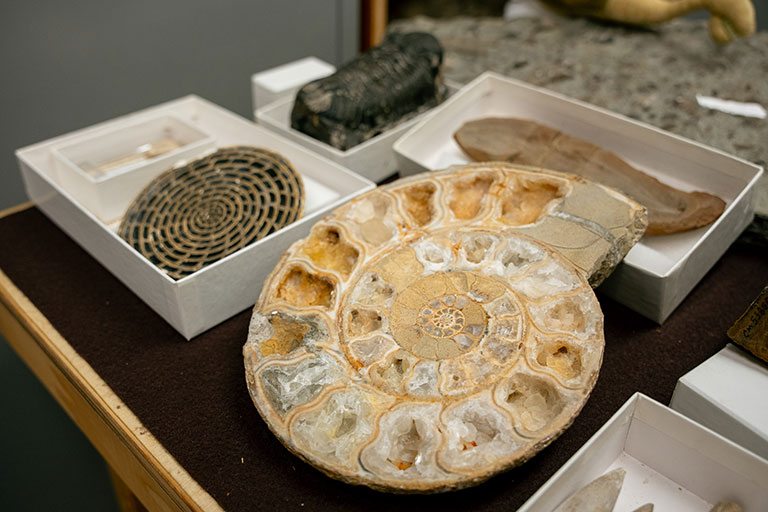
Holland also oversaw the acquisition of the Baron Ernest de Bayet fossil collection, a trove of tens of thousands of fossilized invertebrate and vertebrate specimens that was described by field experts as “the most perfect fossil gathering of extinct European life ever collected.” Holland purchased the collection for $25,000 in 1903 from Baron de Bayet, secretary to the cabinet of Leopold II of Belgium.
 The Warhol Creative
Hollis says the Bayet fossils illustrate the dual nature of museum holdings. “They’re a direct record of the world millions of years ago,” she says, “but they’re also a record of the people who built that collection.”
In the exhibition, some of these fossils are displayed inside replica shipping crates, evoking the journey they once made across the Atlantic.
The exhibition also illuminates Holland’s letters and papers—more than 15,000 documents now being carefully conserved and digitized. In them, he wrestles with what it meant to build a museum: how to collect responsibly, how to fund discovery, and how to make knowledge public.
Taken together, these records reveal a man driven by wonder and ambition, shaping a museum that sought to bring the world to Pittsburgh. As Holland himself once wrote in 1901, “There are vast territories of knowledge which yet remain in this little world of ours to be explored.”
Insects, Squid, and Scale
If dinosaurs impress by size, insects overwhelm by sheer number. The museum’s invertebrate zoology collection tops 13 million specimens, one of the largest in the country, and its contents are well represented in the new exhibition.
Pinned insects appear alongside nets and traps, while a hands-on activity invites visitors to match species with the methods used to collect them.
“We have specimens we collected for our own research, using our favorite weird techniques,” says Ainsley Seago, associate curator of invertebrate zoology. “I don’t get to talk about the joy of rotting squid traps enough, so it was a real treat to illustrate one for the ‘Collecting Methods’ activity.”
Rotting squid, she explains, is irresistible bait for carrion and burying beetles. “It’s very gross, but it works like a charm.” (Thankfully, the gallery includes only her illustration, not the stench.)
Seago insists insects are anything but ordinary. Most visitors recognize a monarch butterfly, a cicada, or even a lanternfly from their backyards. In the summer, she and her team often raise plump caterpillars, irresistible to kids and adults alike.
She also sees the collection as a lesson in legacy. Pittsburgh became home to one of the nation’s largest insect archives because Andrew Carnegie chose to invest in natural history in the 1890s. That decision seeded a collection more than 150 years deep, allowing researchers today to track ecological change across the decades. As Pittsburgh’s landscape has changed from belching smokestacks to clear skies, the resulting changes in insect populations have been tracked in the museum’s collection.
“It could be a reminder to today’s billionaires that wealth can be leveraged into a lasting scientific legacy,” Seago says.
That sense of legacy continues in the museum’s present. Hollis often reminds visitors that a drawer unopened for 50 years is a drawer of lost stories, and making those collections accessible is just as important as preserving them. Bringing the World to Pittsburgh opens those drawers, revealing the everyday labor of care that keeps the past alive.
Support for The Stories We Keep: Bringing the World to Pittsburgh is provided by The Robert S. Waters Fund of The Pittsburgh Foundation.