 Photo: Kahmeela Adams
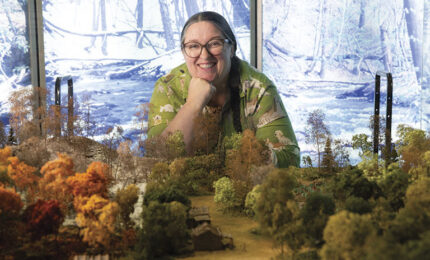
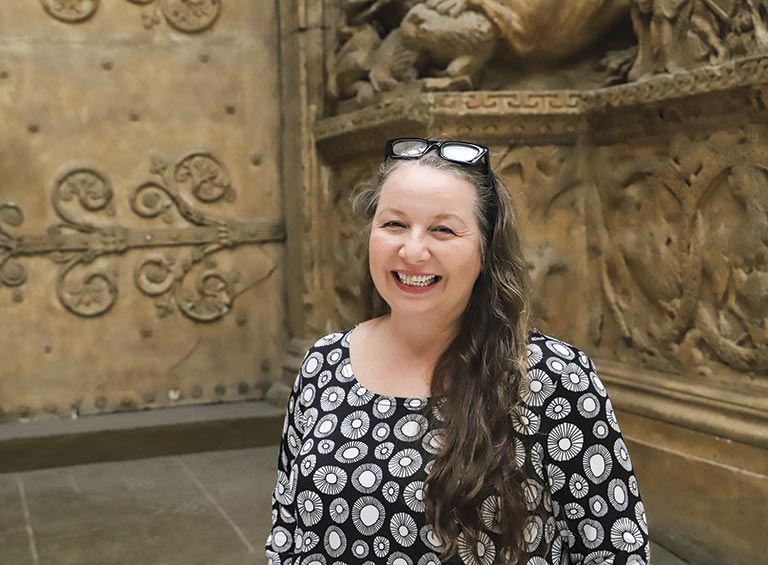
Lucy Stewart believes art can unlock a person’s mind, no matter their age or abilities.
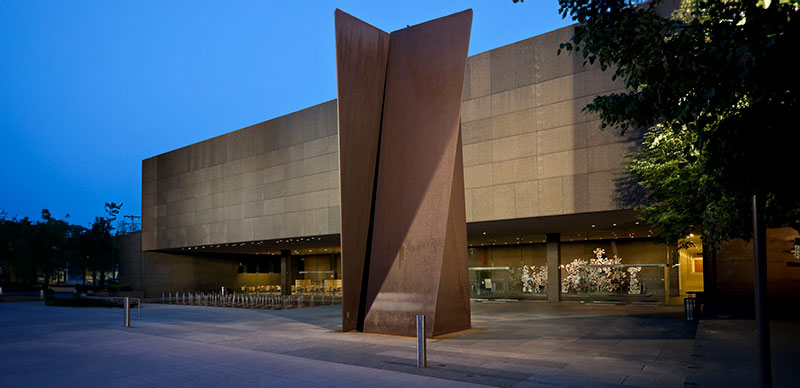
She’s seen it firsthand, both as a fifth grade student attending Carnegie Museum of Art’s Saturday morning art classes in the late ’70s, and currently in her role developing educational programs as the museum’s senior manager of lifelong learning.
“I’ve had so many people email me and say, ‘I was reluctant to try artmaking, but I’m so glad I did, because here’s what I learned.’”
Stewart, who hails from Apollo, Pennsylvania, is responsible for fostering these lifelong learning opportunities at the Museum of Art, where she’s built her career over three decades. Beginning in a part-time assistant role with the museum’s conservation team, Stewart soon moved into educational programming and now oversees the museum’s thriving docent program and classes for older visitors.
In 2017, she assumed responsibilities for the award-winning In the Moment initiative, which offers tours designed for people living with Alzheimer’s disease and dementia. In 2022, Stewart created the popular Mindful Museum program, which hosts hundreds of visitors aged 55+ on Wednesday mornings to enjoy yoga, artmaking, art tours, and guided meditations before the museum opens.
A trained artist herself (she has a bachelor’s degree in studio arts from Penn State University, and an MFA in printmaking and metal arts), Stewart sees her charge as more than just fostering an appreciation for art. She wants to create connections.
“If people open themselves up to being here, they are often surprised that they are having a good time,” she says. “It builds empathy among people. And if you can build empathy, that translates out into the world as well.”
Q: Your relationship with the Museum of Art goes back to elementary school when you attended Saturday art classes. What did you get out of that experience?
A: Everything. I always say that this is the place where I learned to draw, but it’s also the place where I learned about the world, where I made friends, and where I learned about myself.
Q: You started the Mindful Museum program four years ago. What do you most want people to get out of this experience?
A: It goes back to those first moments of having Saturday morning art classes here and realizing that the learning never ends. You’re never too old to keep learning. That’s what I hope to share with people. I want them to feel like this museum is for them and is a place to meet people, to learn to draw, to learn about the world, to have conversations, to not be alone.
Q: What’s your biggest takeaway from Mindful Museum?
A: Loneliness is one of the contributing factors to the mortality rate of seniors. I started the program when I turned 55, and I’ve been thinking about what people my age and older want for the next part of our lives. The loneliness factor contributes to everything—increased stress, anxiety, and it manifests itself physically through illnesses. There are other programs across the country that I’ve studied widely, and all show that art is a contributing factor to a positive life.
Q: You’ve intentionally designed programs that make the museum more accessible to everyone, especially seniors and people with cognitive impairments. How do you educate yourself about what those audiences need?
A: I always say that if something is good for one person, it’s better for everyone. So I teach myself by going to classes, learning about [requirements under the Americans With Disabilities Act], learning about other abilities, learning about people with dementia and Alzheimer’s, and working with those groups of people through observation and on-the-spot training.
Q: What have you learned from working with people who are experiencing cognitive decline?
A: It has made me extremely aware of the abilities that people still have. They still have so much to do and so much to contribute. So we’re here to support that through art, and how art can unlock those ideas and those feelings in people.
Q: Is there a place in the museum where you most like to go?
A: The Hall of Architecture is probably my place. I drew a lot there when I was a kid, especially in front of the façade of St. Gilles. It’s still mind-boggling to me. There were so many craftsmen working in the South of France to make that, to put clay around the facade of that building, make that cast, put the pieces into crates, ship them over here so that we can enjoy them. How does that happen? There is just a feeling I have when I walk in there, a familiarity, an enjoyment. It’s memories and it’s all of those things that I’ve experienced here.