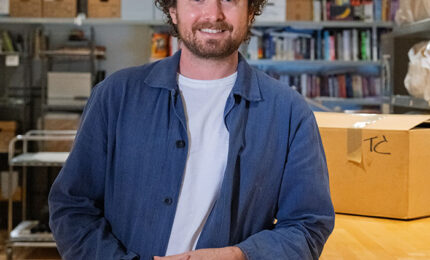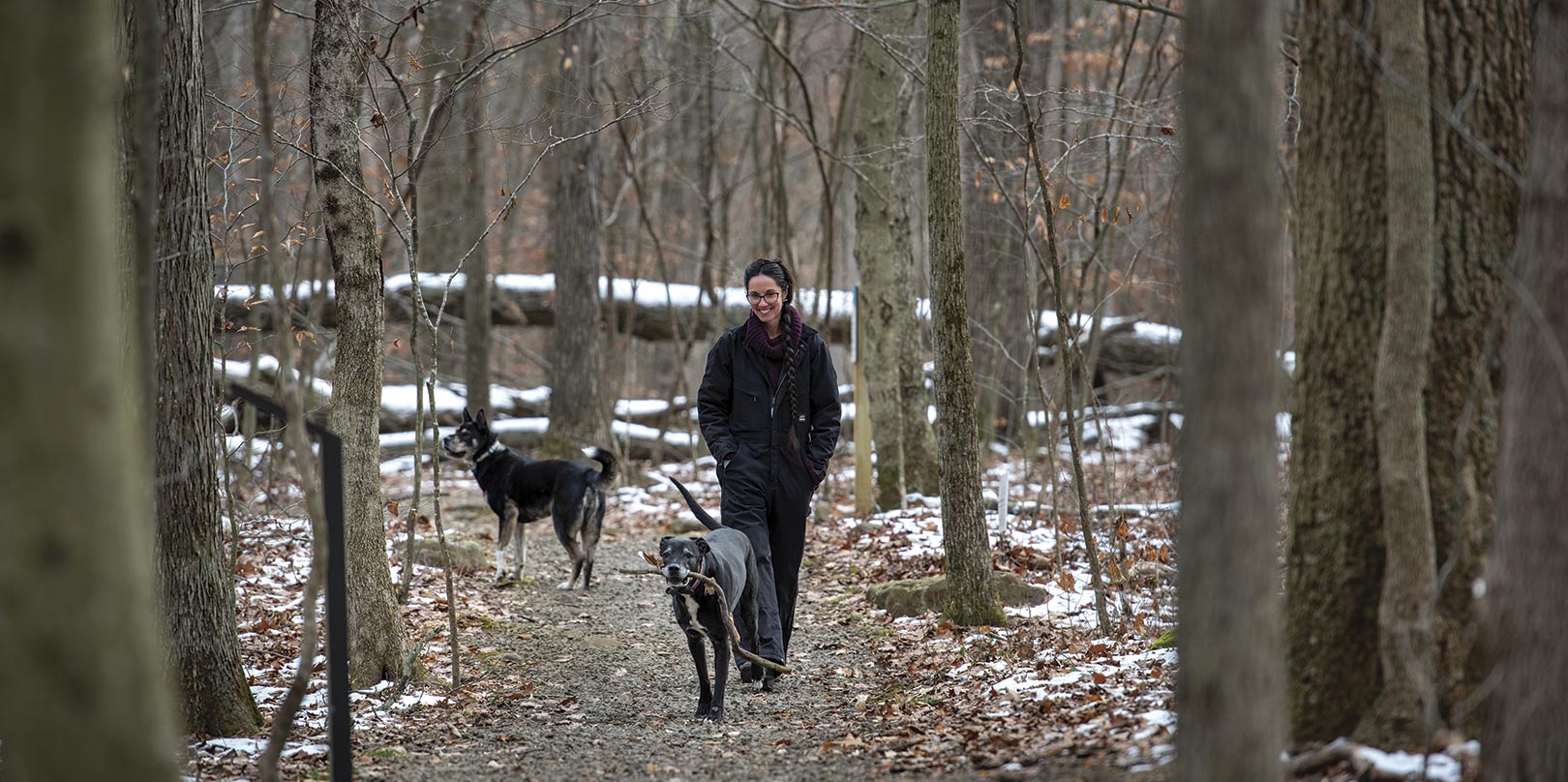
Flanked by her mixed-breed dogs, Rio and Niko, Mary Janecka strides among the bare oaks, poplars, and birches along the Porcupine Ridge Trail at the Powdermill Field Station and Nature Reserve, Carnegie Museum of Natural History’s environmental research center in the Laurel Highlands.
It’s a chilly, overcast Monday in early December. The snowy woods are quiet this time of year. The migratory songbirds left months ago for warmer climes. Even the forest floor is still, as salamanders, frogs, and millipedes overwinter under fallen leaves until springtime.
And yet, there is plenty for Janecka to explore. The outdoors is her inspiration and laboratory.
“I’ve always gone to the woods for peace and to ask questions,” Janecka says.
Janecka hikes the nature reserve’s trails with the familiarity of someone walking in their own home, confidently skirting around rocks and tree roots. She brings the same sure-footedness to her new role as director of Powdermill.
Located an hour’s drive east of the Museum of Natural History, Powdermill’s 2,200-acre campus includes a nature center with classrooms and ecological exhibits, the Richard P. Mellon Avian Research Center (opened Sept. 30, 2022) and miles of trails that have regularly attracted biologists, bird-watchers, and naturalists since Powdermill was founded in 1956.
“Protecting Powdermill’s natural resources feels pressing to me, not just because it’s beautiful, but because urbanization doesn’t go away. Pennsylvania was once a huge wilderness.”
Mary Janecka, Director, Powdermill Field Station and Nature Reserve
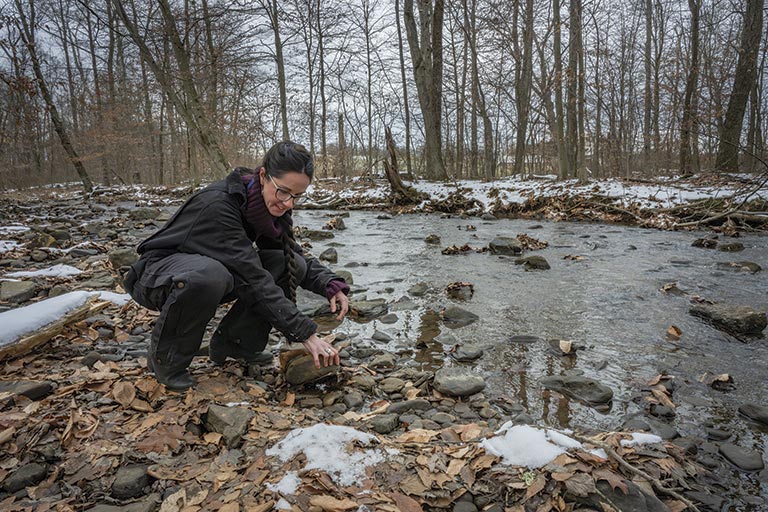 Photo: John Schisler
Janecka is the first parasitologist to lead or work at Powdermill; as a scientist, she studies parasites and their relationship with their hosts. As Powdermill’s director, she’s responsible for overseeing the institution’s 12 full-time employees, public education offerings, research efforts, and larger vision as a nature reserve.
Janecka views her work through the lens of conservation. Before taking the helm at Powdermill, Janecka worked as a park ranger in Kansas, supported black-footed ferret reintroduction on Colorado public lands, and monitored avian populations in Texas and Missouri. These experiences continue to inform her research on sustainable land use, habitat restoration, and parasites infecting native animals in western Pennsylvania.
“Protecting Powdermill’s natural resources feels pressing to me, not just because it’s beautiful, but because urbanization doesn’t go away,” she says. “Pennsylvania was once a huge wilderness.”
New pathways for research
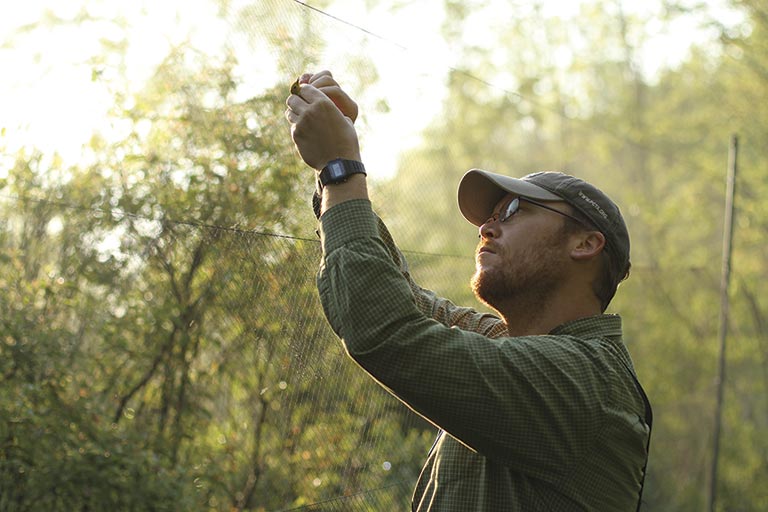
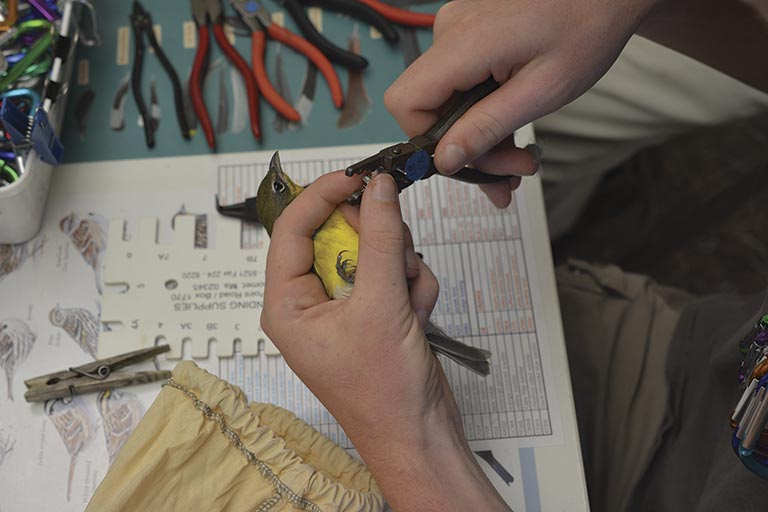
Since its founding, Powdermill has primarily been known for its avian research. At 65 years old, the longest-running bird-banding station in the United States is operated by the Powdermill Avian Research Center. Each year, up to 15,000 birds are captured, tagged, released, and cataloged at the site, producing invaluable long-term datasets that have contributed insights into migration, color change in feathers, and environmental health.
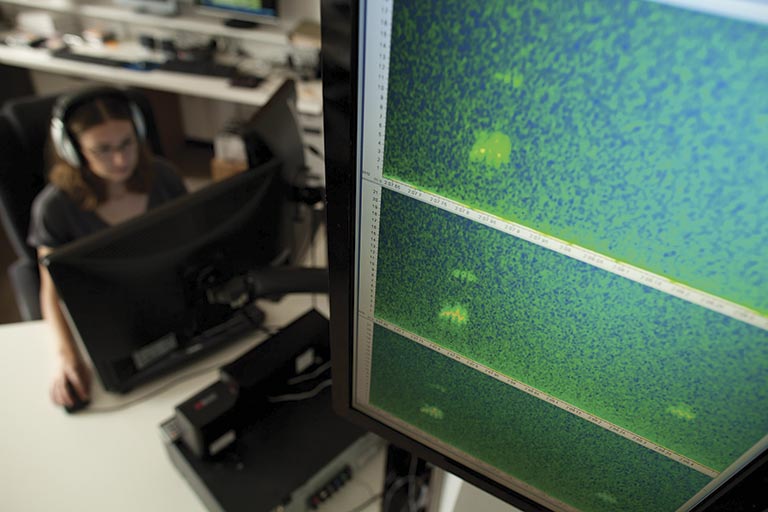
Ornithologists aren’t the only scientists who flock to the nature reserve’s fields, streams, ponds, and forests. Those varied habitats lend themselves to an array of research at Powdermill. In the last five years alone, researchers have published articles in major scientific journals spotlighting the reproduction practices of grassland snakes, fluctuations in salamander populations, and the impact of trail construction on the spread of non-native species.
There’s a synergy between the scientific research at Powdermill and the exhibits and collections that comprise Carnegie Museum of Natural History.
“The curators at the museum are able to take a long view of science, cataloging and studying organisms, taxonomy, and ecology,” notes Luke DeGroote, Powdermill’s avian research coordinator. “What Powdermill brings is the capacity to collect data on living things as the world changes, responding to climate change and other changes.”
Previous Powdermill directors have contributed their own unique research interests to the role. The first director, M. Graham Netting, was a herpetologist who developed datasets on turtles and frogs. Janecka’s immediate predecessor, Rose-Marie Muzika, was a forest ecologist.
As a parasitologist, Janecka aims to understand how hosts, parasites, and terrain intersect and influence parasite transmission and conservation genetics; that is, applying the scientific discipline of genetics to limit the risk of population and species extinctions.
“The more I work on parasites, the more I fall in love with them. Parasites are everywhere, and many can be seen with the naked eye,” explains Janecka. “They are the most diverse group of organisms in the world, and they do amazing things.”
“The curators at the museum are able to take a long view of science, cataloging and studying organisms, taxonomy, and ecology. What Powdermill brings is the capacity to collect data on living things as the world changes, responding to climate change and other changes.”
Luke DeGroote, Powdermill’s avian research coordinator
Until her appointment, the Museum of Natural History didn’t have a strict parasitologist, says Mason Heberling, curator in the Section of Botany at Carnegie Museum of Natural History and a member of the search committee that interviewed Janecka. Having studied such a diverse group of organisms, Janecka can take a more global view of the research efforts happening at the nature reserve, finding connections and opportunities to integrate them within the larger goals of the institution.
“Mary is contributing to the breadth of science performed at the museum. Parasitologists have a broad expertise across different organismal groups,” Heberling says. “That’s who we needed to lead the future of research conservation and education—someone with an integrated, multifaceted perspective. Powdermill is not just plants, it’s not just reptiles and amphibians and birds—it’s all of that.”
This spring, Janecka is supporting the ongoing work of Andrea Kautz, Powdermill’s research entomologist, who conducts macroinvertebrate surveys to evaluate stream remediation efforts. Janecka is exploring how gill lice, a parasite, are transmitted within those same streams. Local trout are susceptible to the invasive gill lice. While they aren’t fatal to the fish, they can affect a fish’s respiratory system and shorten its life.
Western Pennsylvania’s cold and wet climate may seem like an odd fit for a native from the desert plains of West Texas. But in 2020, when she was home from periodic research trips to Trinidad for her postdoctoral fellowship, Janecka brought her children on weekends to Powdermill, where she also helped colleagues with their research. Those visits to the Laurel Highlands proved impactful.
Her strolls along Pennsylvania streams sparked a question she eventually pursued in her research: How does the shape of streams impact an organism’s evolution within them?
Janecka recalls the elation she felt when undertaking her study.
“I realized that only the parasites and I, because of the data I generated, knew the answers to my questions.”
A Childhood Spent Outdoors
Janecka is one of five siblings raised by a single mother, first in El Paso and later in central Texas outside Lampasas, in the 1990s, a time when children had more freedom to roam outdoors than they do today.
“Like most biologists, I had an early fascination with nature that never went away,” Janecka says.
The pack of brothers and sisters made the nearby cow pastures, ponds, and ephemeral creeks their playground: catching grasshoppers to use as bait for their fishing expeditions, putting old plywood boards out in the pasture to attract snakes and lizards in the shade beneath, searching for scorpions under rocks and dry cow patties, and pulling rat snakes out of chicken coops and birds’ nests. It was a childhood defined by curiosity about the natural world and a fearlessness to get her hands dirty.
Janecka even kept a collection of black widow spiders, captured under the concrete stairs of her apartment complex, in jars lining her kitchen’s windowsill and she reveled in watching the arachnids devour the bugs she fed them. Her mother supported her passions, even when those interests lived indoors with the family.
Decades after Janecka’s childhood, she’s still comfortable wading in muck.
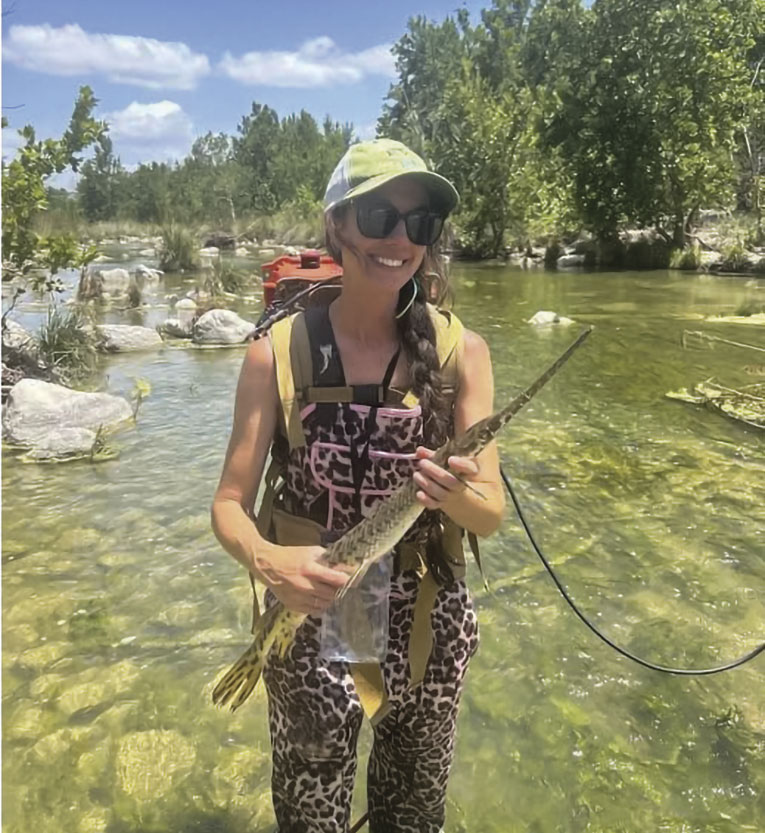
“Mary is this down-to-earth, open-minded person, who will crawl through waist-deep sludge and mud in pink, leopard-print, neoprene chest waders to find the perfect sampling spot for fish,” says Roberto Gomez, a member of her lab team and a PhD student in molecular and evolutionary biology at Duquesne University.
Gomez has been with her, wading in the Pecos River in western Texas, studying the effects of habitat changes and invasive species on endemic fish, including the Pecos pupfish. Gomez first became Janecka’s student when she was a professor at the University of Texas at El Paso, and he followed her to Pittsburgh.
He credits Janecka with nurturing his own scientific curiosity and helping him build his career.
“Having a mentor who supports their students’ curiosity and desire to keep learning things in the scientific world is what pushed me to continue to work with Mary,” says Gomez.
Encouraging Young Scientists
For Janecka, a career in science was not always in the cards.
Coming of age, her interest in biology wasn’t always encouraged and supported by her teachers, and she received messages to “aim low” and “stay in her lane,” she explains.
The summers of her youth spent backpacking and hiking with her grandparents outside Rocky Mountain National Park in Colorado inspired her to become a park ranger, which felt reachable to her because she was already familiar with their work—she hadn’t yet spent much time around scientists.
But once in college at Emporia State University in Kansas, a few of her professors encouraged her to pursue a science track. She took their advice and eventually earned a PhD in biology at Texas A&M University, though she admits she struggled early on to believe she was really a scientist.
“Becoming a scientist seemed like it was for other people, people who were wealthy, people who had a different background than mine, who looked different than me, and had different life experiences,” says Janecka.
“I realize it’s fairly common for people to feel that way about science,” she adds. “But the reality is anybody who loves it can be a part of it.”
The opportunity to provide children with the kind of formative outdoor experiences she had growing up was one of the attractions of the Powdermill job for Janecka. She wants to create gateways for children to interact with nature, to educate them about what they encounter, and to bring them into the world of conservation.
“Becoming a scientist seemed like it was for other people, people who were wealthy, people who had a different background than mine, who looked different than me, and had different life experiences.”
Mary Janecka
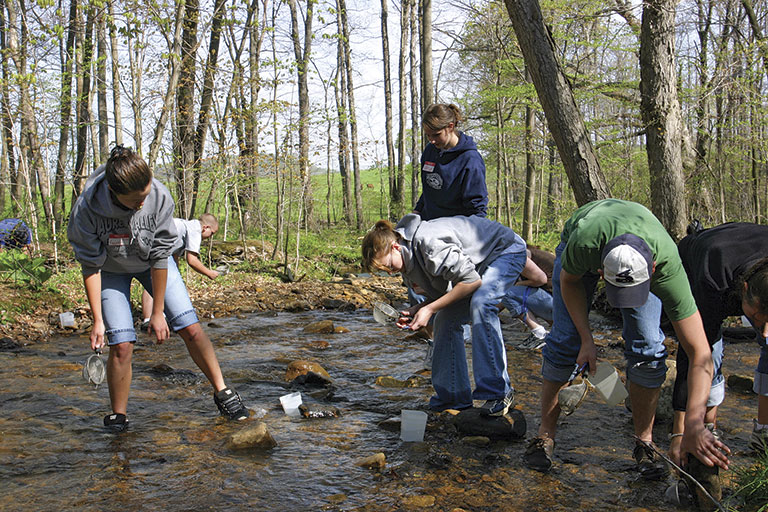
Powdermill frequently hosts school groups; last year, 866 students visited Powdermill during camps and other programming. Those students watch bird-banding demonstrations but don’t gain hands-on experience banding the birds themselves.
That’s where Janecka’s affinity for streams and rivers comes in. Why not recreate the bird-banding experience with fish, an animal young people can safely capture and track?
“Research should be something that young people can be a part of,” she says.
Hands-On Science
As a mother of two children, she’s seen firsthand the confidence instilled when kids are encouraged to participate in scientific studies. Both Orin, her son, and Eowyn, her daughter, are unofficial members of her lab team and experts in fish identification, natural history, and fieldwork, she says.
This spring and summer, Janecka plans to expand Powdermill’s data-collection methodology through youth programming for fifth graders and older by introducing a fish capture-mark-recapture curriculum. Students will catch and track sunfish in the nature reserve’s pond by injecting captured fish with a Passive Integrated Transponder tag, about the size of a grain of rice. These tags function similarly to pet microchips, identifying and tracking individual fish. Before returning the fish to the pond, participants also record the size and species of their catch and note the presence of parasites.
The experience of collecting and studying fish harkens back to Janecka’s Texas childhood explorations, but the students will move beyond observation to learn about data collection and scientific practices.
Annie Lindsay, the Avian Research Center’s bird-banding program manager, likens the potential benefits of teaching children about fish tracking to those of bird banding.
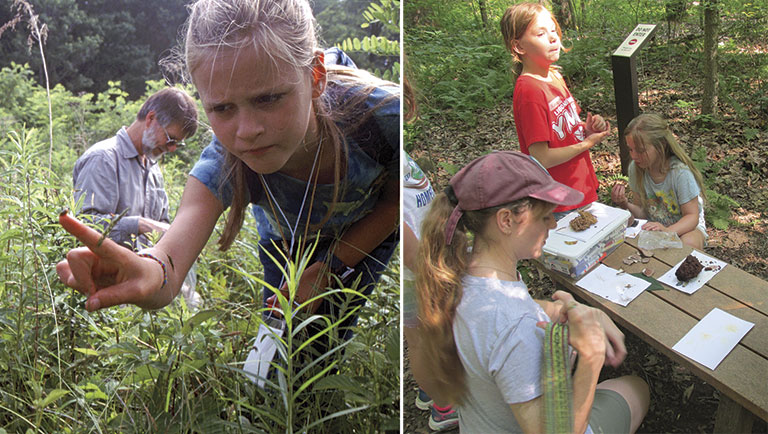
“When people first go to Powdermill’s Avian Research Center, they say, ‘I had no idea there were this many kinds of birds right here.’ Learning how to identify species helps people appreciate nature overall,” she says.
“Through bird banding, we’re showing them what we do up close; it creates a passion for conservation,” adds Lindsay.
The knowledge gained through the fish capture-mark-recapture program has real-world applications, too.
“Over time, students will have collected enough fish-related data to start asking questions about how sunfish are growing and how parasites interact with the fish’s development,” Janecka explains. She’ll incorporate the student-produced data into her current studies of parasites in western Pennsylvania.
“The excitement of learning new things still hasn’t gotten old,” she says.
Janecka doesn’t take for granted that she’s joining a lineage of renowned researchers who, like her, also wandered the forested woods of the Laurel Highlands to ask and investigate scientific questions.
“The museum has this prestigious legacy of all of these great scientists of the past, and it makes me feel proud to be a part of that,” she says. “Powdermill researchers may not be in the [Oakland] building, but we’re contributing, too.”