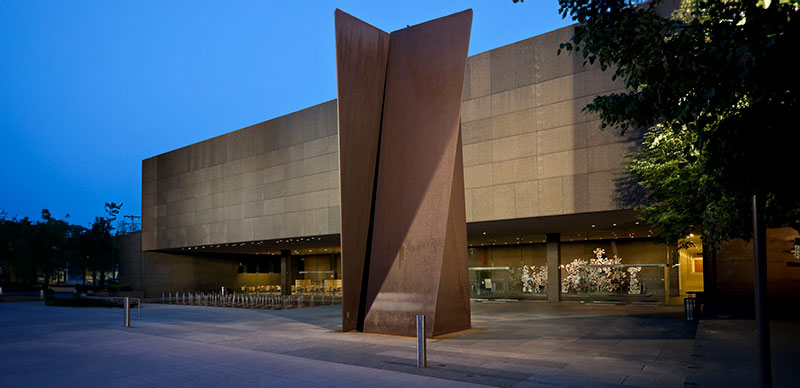
It’s a quiet Tuesday morning at Carnegie Museum of Natural History, a day when the institution is closed and Jim Richardson can wander alone in a darkened Wyckoff Hall, revisiting memories from four decades ago.
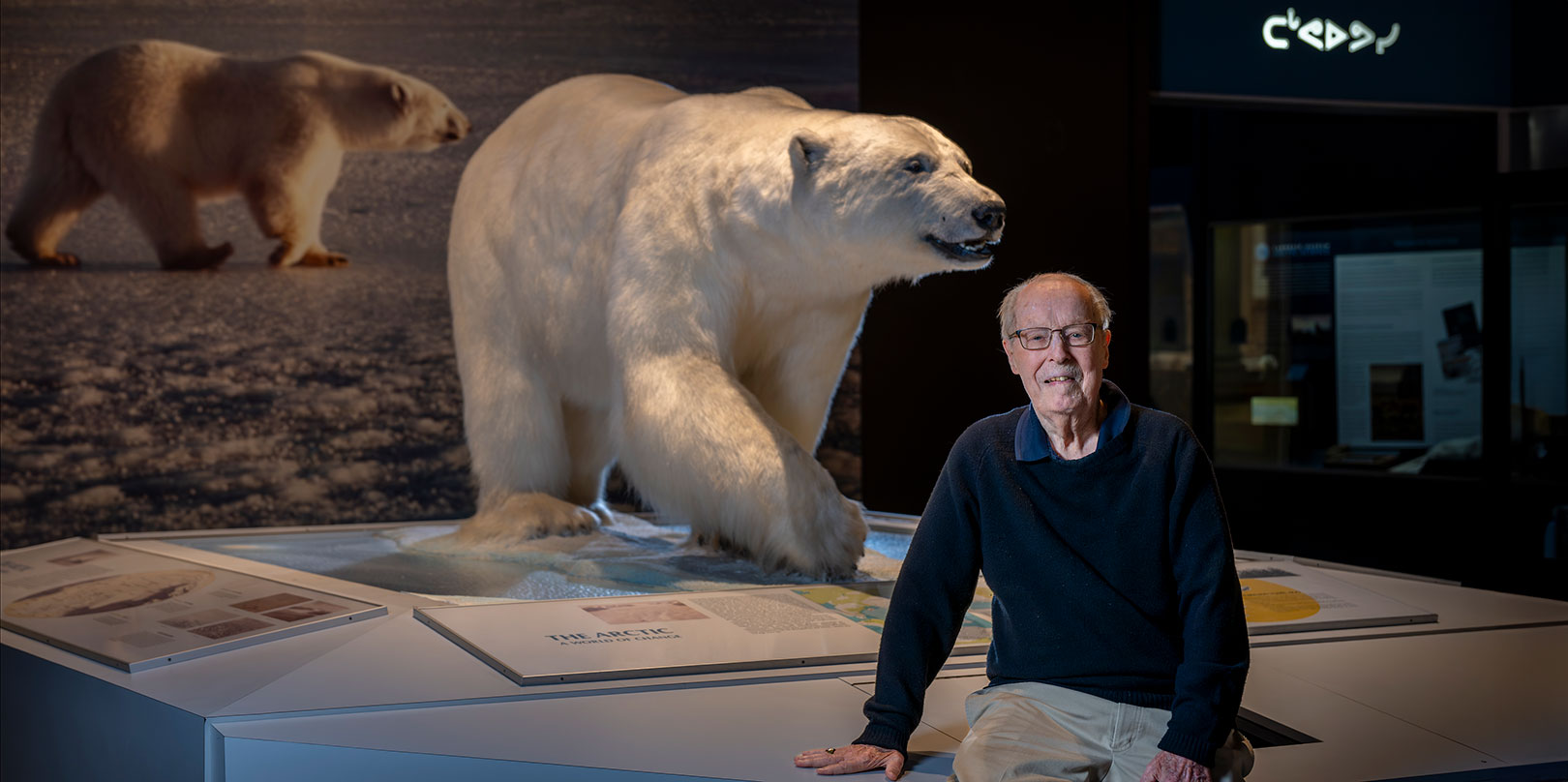
Richardson, who is curator emeritus in the museum’s Section of Anthropology, strolls by the massive prowling polar bear he helped procure for Polar World, the groundbreaking exhibition about life in the Arctic that opened in 1983.
How does one obtain a polar bear? Good timing and luck, mostly. He placed a hopeful call to the Alaska Department of Fish and Game, and was rewarded with the hide of a “nuisance” polar bear that had been posing a safety threat in an Alaskan community.
“They called me ‘Collecto,’” Richardson joked about his knack for locating the right item at the right time.
Every object in Polar World holds a story. The retired curator recalls transporting the full body mounts of two sled dogs from the Field Museum of Chicago, leaving a tollbooth operator baffled by the huge dogs standing motionless in the back of his van.
Richardson quickly navigates past the lifelike mannequins depicting Inuit hunting practices to a corner of the 8,450-square-foot hall with maritime relics he personally curated.
Even the floorboards he stands on, which mimic the deck sheathing of America’s last whaling ship, were informed by him. He traveled to the Mystic Seaport Museum in Connecticut where the real ship was being restored to measure the boards and nails, just so museum technicians could faithfully replicate them.
Such was the care that Richardson and more than 40 museum researchers and staff took in assembling the exhibition about life in the Arctic.
“My interaction with some 30 Arctic anthropologists as consultants was a marvelous experience in learning, in depth, the life and culture of the Inuit over time,” he recounts.
With its life-size dioramas and more than 200 objects and specimens collected during expeditions to the Arctic, Polar World has educated generations of Pittsburghers about the history of the region and the culture of the Inuit people. Now, Polar World is scheduled to close on June 28 to make way for the next groundbreaking exhibition—Egypt on the Nile— that brings more wonders of the world to Pittsburgh.
“My interaction with some 30 Arctic anthropologists as consultants was a marvelous experience in learning, in depth, the life and culture of the Inuit over time.”
Jim Richardson, curator emeritus, Carnegie Museum of Natural History’s section of Anthropology
It’s a much-needed refresh to the third floor gallery, notes Deirdre Smith, curator of museum studies and art. Many aspects of Polar World have long become dated and the specimens in need of conservation. “When something’s been around for 40 years, there are so many memories of it, which makes change hard,” she says. “But it’s a good opportunity to remind ourselves that museums are constantly changing and bringing in new ideas. We have an obligation to visitors to keep our exhibits updated.”
A Showcase for Research
Polar World was the culmination of the Museum of Natural History’s long history of research trips in the Canadian Arctic.
“I think people assume our collections are a warehouse where things go and nobody ever looks at them again, but we are a very active research institution,” says Amy Covell-Murthy, the museum’s archaeology collection manager.
The museum conducted 48 expeditions north from 1901 to 1983, amassing a diverse collection of mammals, birds, and botanical specimens. In the 1970s, plans to develop an Arctic exhibition around that bank of research took shape.
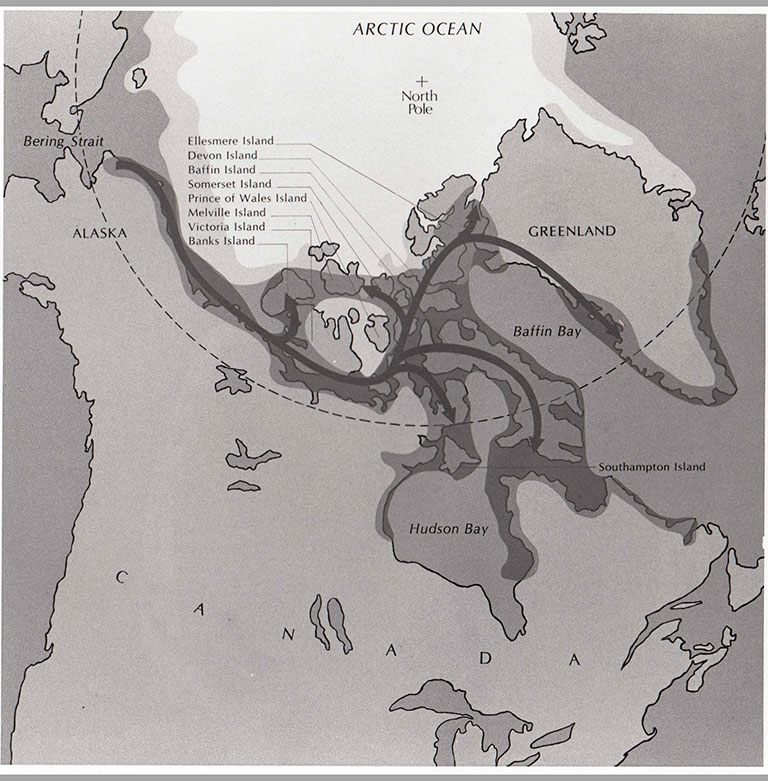
The initial research proposal called for cataloging the complete collection, studying 57 whaling logbooks to determine how that industry interacted with and affected Indigenous people, and observing life in a community that primarily relied on polar bears, seals, caribou, and fish to survive.
Prominent businessman, philanthropist, and museum trustee George W. Wyckoff Jr. joined the museum’s 1972 expedition to the northeast coast of Baffin Island, traveling with mammals curator J. Kenneth Dutt to the Inuit town of Clyde River.
The pair met up with George Wenzel, a doctoral student at McGill University who had already experienced the severity of the Arctic. He’d been living there for several months and “had frozen his feet earlier in the year, while hunting, and lost four toes,” according to a 177-page diary Wyckoff kept during their travels.
They trekked by sled—pulled either by dogs or Ski-Doo—on seal and polar bear hunting trips with Inuit hunters, documenting the grueling lifestyle of Davidee Piungnituq, who raised nine children with his wife near Eglinton Fiord. Piungnituq was among the last Inuits to live off the land, hunting as his ancestors did and traveling into town only to trade seal and polar bear skins.
Following Wyckoff’s death in 1975, a number of his friends and museum associates determined to dedicate the core exhibition in his honor in recognition of his care for the people of the Canadian Arctic.
Recreating a Feeling
When museum staff again visited Canada in 1982, exhibits preparator Pat Martin was part of the entourage. Trained in interior design, Martin never envisioned that he would one day recreate a snowhouse and travel to the Arctic wilderness to do it.
“After I went on a field trip, I tried to recreate the feeling that I had when I was there,” says Martin, who retired in 2000.
Many of Polar World’s set pieces and displays are the products of Martin’s handiwork. He went so far as to take silicon casts of three adult Inuit individuals’ faces to use in Polar World, paying each of them to use their likeness.
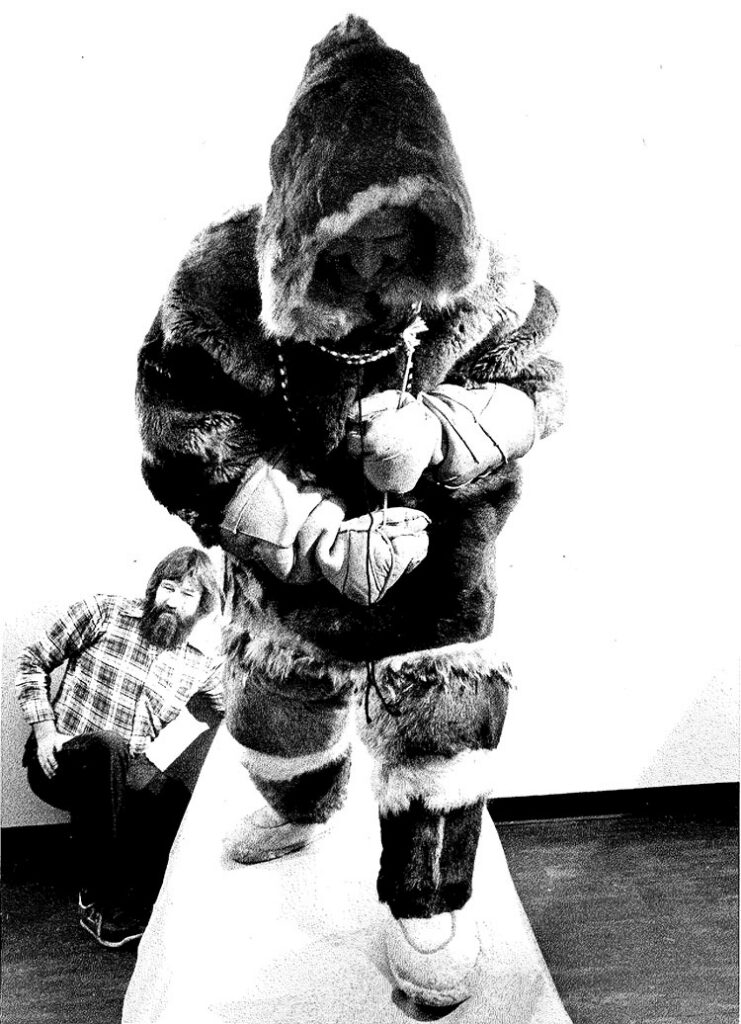
To practice his technique, Martin turned to Billy May, an electrical and AV technician at the Museum of Natural History in the 1980s.
“He used my face to see how he would mold their faces,” May recalls. “I had straws in my nose and had a hell of a time breathing.”
May is also “featured” in several dioramas. He served as the body model when Martin sculpted a man poised to spear a walrus from a canoe, and casts of his hands were used in a diorama of an Inuit man pulling a seal from icy waters. May also helped Martin cast items he brought back from the Arctic to create realistic models of everything from rocks to fish.
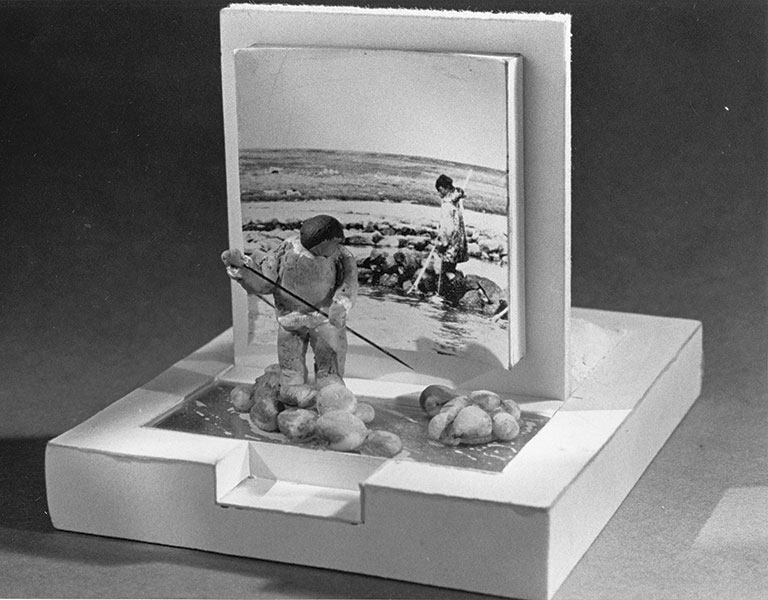
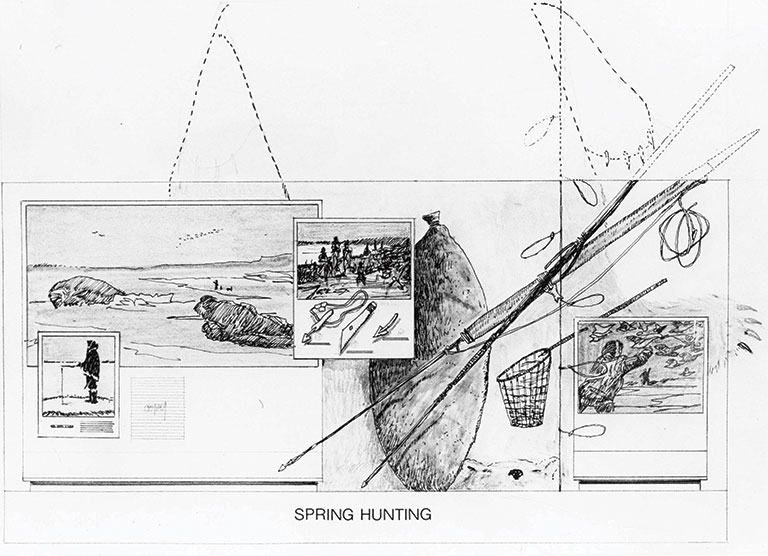
“It was a lot of fun doing it,” May reminisces. “We had a lot of talent in our department.”
In addition to the Arctic expeditions, museum researchers consulted with Inuit author, translator, and elder Mini Aodla Freeman. She read all the signage and inspected the displays before installation. Her keen eye caught at least one major oversight: The snowhouse needed a hole in the center of the roof for ventilation.
Time for Change
The architects of Polar World were progressive in partnering with Inuit communities to inform the exhibition, but museums today strive for even more inclusivity.
“While this exhibit was exceptionally forward-thinking for when it was made, it’s more than 40 years old and is missing two generations of voices between then and now,” Covell-Murthy says. “In anthropology, our aim is to allow communities to tell authentic stories. We want current stories, multigenerational stories, and personal stories.”
“When something’s been around for 40 years, there are so many memories of it, which makes change hard. But it’s a good opportunity to remind ourselves that museums are constantly changing and bringing in new ideas. We have an obligation to visitors to keep our exhibits updated.”
Deirdre Smith, curator of museum studies and art, Carnegie Museum of Natural History
Centering Indigenous perspectives could have helped avoid some aspects of Polar World that haven’t aged well, such as the use of the word “Eskimo.”
Those who make their homes in the Canadian Arctic identify as Inuit, meaning “people” in their native tongue, according to the Alaska Native Language Center. The term “Eskimo” is a controversial label believed to have been given to the community by Europeans.
“In the 1980s, the term ‘Eskimo’ was already known to be disliked by the Inuit community,” Smith explains. “Now, it is considered by some to be akin to using a slur.”
References to European colonizers are dated as well, using words like “explorer” and “visitor.” Conversely, says Smith, “Today, we might use the term ‘colonist’ to get at the violence implied there.”
Some Inuit figures are displayed behind glass, contributing to a feeling of “otherness” that Smith says museum studies courses at the University of Pittsburgh explore today.
“The exhibition uses third-person language through a scholarly lens, which is inherently objectifying,” Smith notes. “Anthropology exhibits today strive to offer communities more opportunity to decide how they are represented, and to quote people directly in first-person language.”
Caring for Collections
While dramatic scenes of Inuits hunting walrus, seals, and fish dominate Polar World, Richardson relishes the smaller details. From soapstone carvings, to snow goggles fashioned from caribou bone, to a recording of Inuit throat singing, the exhibition’s variety has been part of its broad appeal.
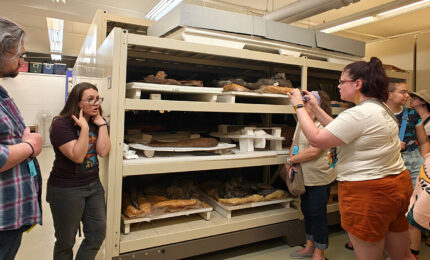
After the exhibition closes, the museum’s conservation and collections teams will evaluate and make a detailed report of each item’s condition. Objects requiring cleaning, repair, or stabilization will head to the collections lab in the Simmons Gallery nearby, where visitors can view their work. (A visible conservation lab has anchored the first two installments of The Stories We Keep, a multiyear exhibition series that explores the museum’s role as steward and storyteller of global heritage.)
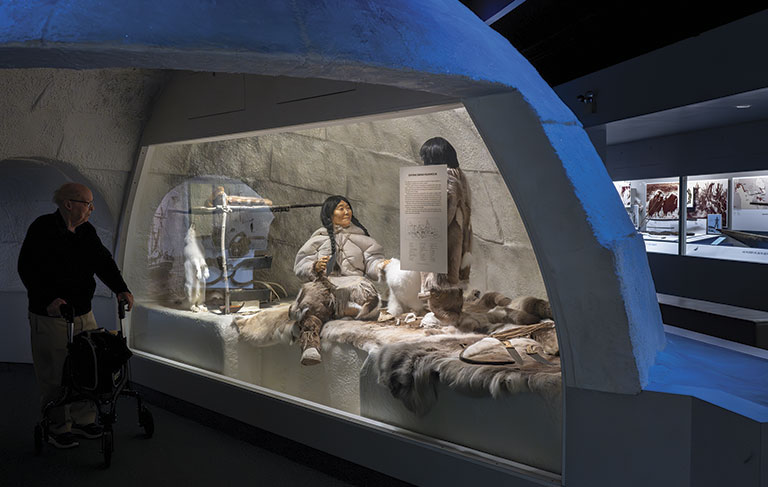 Photo: John Schisler
Items on loan from other institutions will be returned, and a few pieces may be displayed elsewhere in the museum, including the polar bear, which will find a new home in the Art of the Diorama exhibition on the second floor. Most other pieces will go into off-site collection spaces, according to Exhibitions and Design Project Manager Sarah Vernau.
Additionally, Covell-Murthy is working with Inuit communities to see if they’d like any items. While the material in Polar World is not subject to the Native American Graves Protection and Repatriation Act, the museum is developing a relationship with the communities represented and offering voluntary repatriation, she says.
“The material in Polar World was acquired specifically for the exhibit with input from the communities represented in the hall, so there aren’t any items these communities may consider sacred or sensitive,” Covell-Murthy explains. “However, they may still want items from Polar World.”
Covell-Murthy will also consult with Inuit representatives to ensure items that remain in the museum collections are cared for the way the community desires.
A New Era of Exhibition Technology
Much has changed in exhibition design since Polar World debuted in 1983, says Sarah Crawford, senior director of museum experience. That’s especially true of media technology.
For example, the Building the Snowhouse film was first shown on analog video, then became digitized over the course of Polar World’s run. Today’s technology is more immersive.
“Nowadays, you’re trying to think, ‘What can we hear in the exhibit? What can we touch in the exhibit? What can we do? How can I learn about this through full-body movement?’” Crawford explains.
The exhibition that will replace Polar World, the much-anticipated Egypt on the Nile, will challenge visitors to think more deeply about concepts by touching, doing, and using all their senses, with interactive media playing a starring role.
Polar World’s signature snowhouse was ahead of its time in creating that immersive atmosphere, and it remains a fan favorite, Covell-Murthy says. Smith walks through Polar World daily en route to her office, always enjoying the joyous shrieks of children making their way to the “igloo.”
Creating an exhibition that accurately represented Inuit life and culture while engaging families to learn is still a point of pride for Richardson.
“Over the years, when in the hall, I’d talk to families, and they said they brought their children frequently,” he says. “Some parents went to Polar World as kids and now they bring their kids.”
Richardson still maintains a museum office. Recently, he’s been reaching out to the remaining members of the team that created Polar World, sharing memories as he writes his own history of its development and celebrates its longevity.
“All of the old exhibits that were up when I came to Pittsburgh in ’67 are all gone now—every one except the Bird Hall,” he says. “It’s hard to believe Polar World has been up for 42 years or so. It had a pretty good run.”