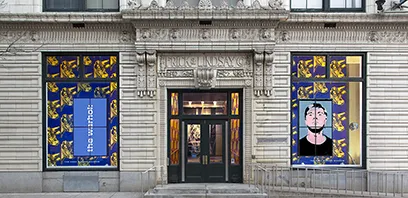
Carnegie Museums invites you to become a part of Carnegie Music Hall’s incredible history by naming a seat.
The historic renovations to our city’s iconic hall ensure that future generations will enjoy everything the space has to offer year-round and for centuries to come. Complete with a new HVAC system, accessibility features, and seating, the restoration both increases accessibility and enhances the experience of all who attend concerts, performances, or celebrations in this beautiful space. The talented teams of builders, architects, engineers, and conservators have maintained the Hall’s original splendor and kept the renowned majesty of the Music Hall preserved. Past beauty meets modern improvement in the next chapter of Carnegie Music Hall’s rich legacy!
Learn more about the most significant renovation in Carnegie Music Hall’s 128-year history.
Your Impact
Andrew Carnegie’s dream was to create a cultural hub for Pittsburgh, stating “The success of Library, Art Gallery, Museum, and Music Hall — a noble quartet in an immense building — is one of the chief satisfactions of my life.” The Take Your Seat! Campaign presents a once-in-a-generation opportunity to become a part of Carnegie Music Hall’s incredible legacy. When you name a seat, you leave a lasting mark on one of Pittsburgh’s most iconic cultural institutions and guarantee its lasting vitality. Your support will be commemorated by an engraving of your name, or the name of someone you wish to honor, on the seat of your choice.
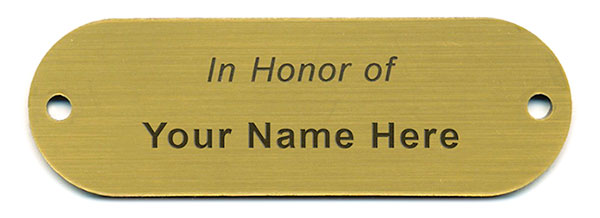
Note: Character limits for the plaque engravings are no more than 20 characters per line, up to three lines.
Take your seat!
Contact Beth Brown at brownb@carnegiemuseums.org or 412-622-8859
FAQS
What do I receive when I make a gift to Carnegie Music Hall’s Take Your Seat! Campaign?
Each seat donation is commemorated with a personalized, engraved brass plaque on the seat(s) you choose in Carnegie Music Hall when making your donation.
What does my gift support?
Your donation helps Carnegie Museums fulfill its vital mission to preserve and expand the resources of art and science as agents of personal growth and social advancement in Pittsburgh and beyond.
What will be on my plaque?
Each plaque has space for a max of 25 characters per line and up to 2 lines of text. You can personalize it with your name, or the name of a relative, friend, or organization. Naming must be within the character limit and is subject to the approval of Carnegie Museums.
Where will the plaque be placed? How long will the plaque be in place?
Each plaque will be centered on the back of the seat. Plaques will be placed and maintained for the usable life of the seat.
May I choose the seat?
Yes.
Will the seat I name become my seat for the events I attend in Carnegie Music Hall?
No. The Take Your Seat! campaign is a naming opportunity only and does not include tickets or seat assignments for performances or events. The seat may be available for reservation for a particular event on a first-come first-serve basis.
How long will it take for the plaque to be installed?
Plaques are installed on a rolling basis. After naming your seat, please give us approximately 1 month for the plaque to be engraved and then installed.
Will I be notified when my plaque is installed?
Yes. You will receive a letter at the mailing address provided at checkout informing you that your plaque has been installed.
Is purchasing a seat plaque tax deductible?
Carnegie Museums is a 501[c]3 nonprofit organization, and donations to the Carnegie Music Hall Take Your Seat! Campaign are tax-deductible to the full extent allowed by law.
A Brief 128-Year History

November 5, 1895 – The Music Hall is dedicated in addition to Carnegie Library, Carnegie Museums of Art and Natural History, and the Lecture Hall. The first organ is installed, built by the Farrand & Votey Organ Company.

April 18, 1896 – 50th public organ recital, presented by Music Director Frederic Archer. Organ recitals were offered for free, twice a week. The year also marks the Art Society of Pittsburgh’s founding of the Pittsburgh Orchestra. Carnegie Music Hall acts as its home venue, and Frederic Archer is appointed Conductor.

1901 – Frederic Archer passes away. His position as Music Director is filled by Edwin H. Lemare, a nationally lauded organist. Lemare’s likeness is included in a series of Will’s Cigarettes collectible cards. These cigarette cards are the predecessor of contemporary baseball cards.
1905 – A giant, wooden fan is installed in the Music Hall to cool the space during the spring and summer.

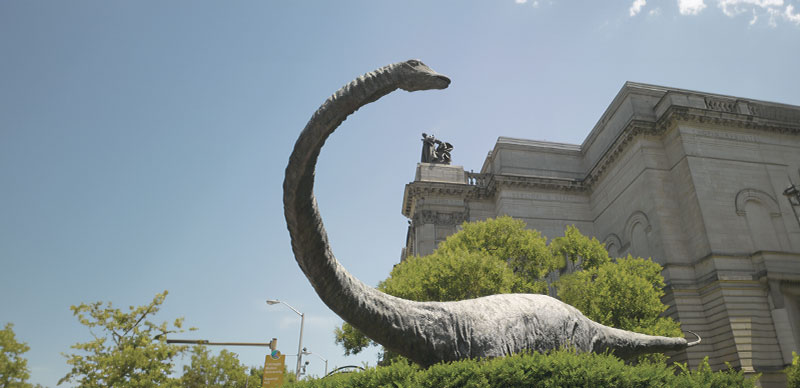
1907 – The Oakland campus is significantly expanded to include a new dinosaur hall, the instantly recognizable foyer to the Music Hall, and Halls of Sculpture and Architecture. Newly appointed Music Director, Charles Heinroth, publicly laments the already antiquated state of the Music Hall organ and begins searching for contractors to renovate the instrument.

1910 – The original architectural design of the Music Hall changes with the removal of two exterior towers and the enclosure of the original curved entryway. The Pittsburgh Orchestra dissolves due to lack of funding. Charles Heinroth hires Herman Skinner to renovate the organ. Skinner adds several new pipes, refurbishes existing brass-work, and builds a new console.
1917 – Herman Skinner returns for additional work on the organ. Most of the original pipework is completely overhauled, and he adds several new “ranks” (rows of vertical pipes that play the same tone at different pitches). His changes are so thorough, the organ now bears his company’s name: The Ernest M. Skinner Company.
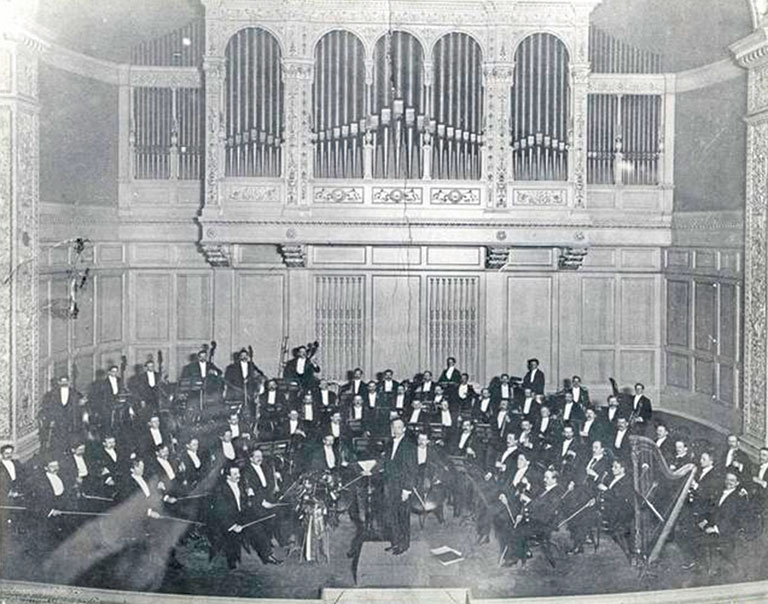
May 2, 1926 – A combination of private seed funding and public support sees the creation of the new Pittsburgh Symphony Orchestra. The ensemble plays its inaugural show on this date.
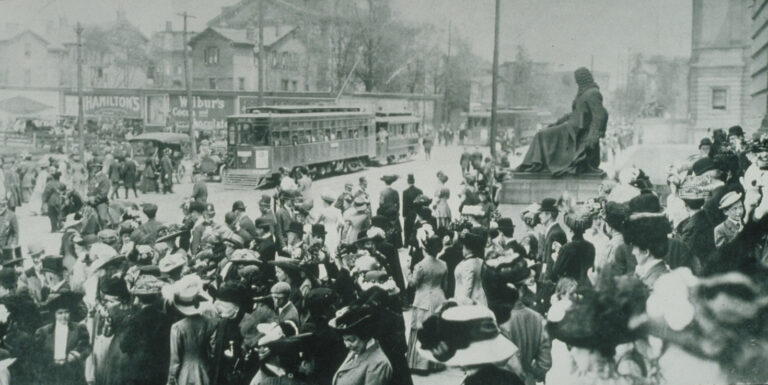
April 24, 1927 – Building on public fervor for live entertainment, the Symphony’s board of directors organizes a Sunday music series. The following day, nine of the board members are arrested in violation of Pittsburgh’s Blue Laws, which banned secular music and public performances on Sundays. Ironically, some of these Blue Laws are still in place but were rendered legally unenforceable by the Supreme Court in 1978.
1933 – The Music Hall’s organ is rebuilt again, with several ranks and percussive elements added. The organ is considered one of the finest in the United States.
1936 – The first national broadcast of the Pittsburgh Symphony Orchestra is held.
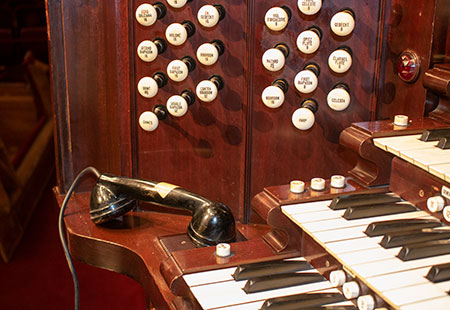
1950 – The Music Hall’s organ is renovated again. Stops, ranks, and further improvements are added.
1961 – The Pittsburgh Symphony Orchestra is widely considered one of the best in the country. It is the only American symphony that sells out every performance.
1981 – The last free public organ recital is held. The organ will lay mostly silent for another 29 years.
2008 – Jeanette-based organist and conservatist, Robert Copeland, completes three renovation stages of the Skinner Organ. His restoration brings the organ back to semi-working function.
2010 – The Skinner Organ is played for the Organ Historical Society’s 2010 convention in Pittsburgh. It is the last time the organ is played for the public.
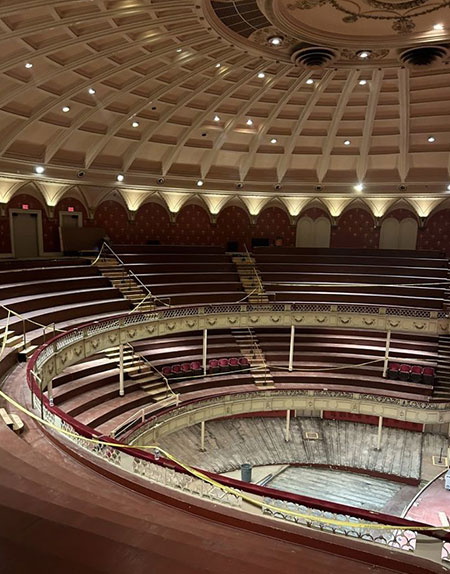
2023 – Renovations start.
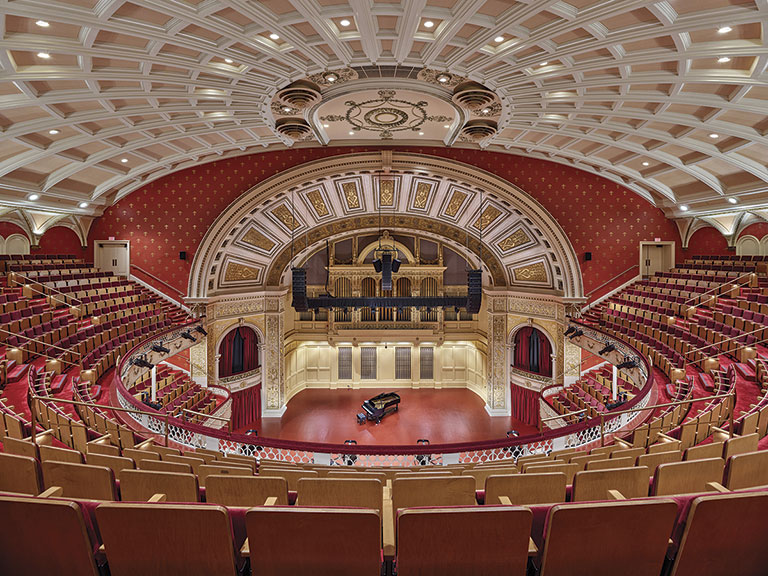
2024 – Renovations end.
Seat Pricing
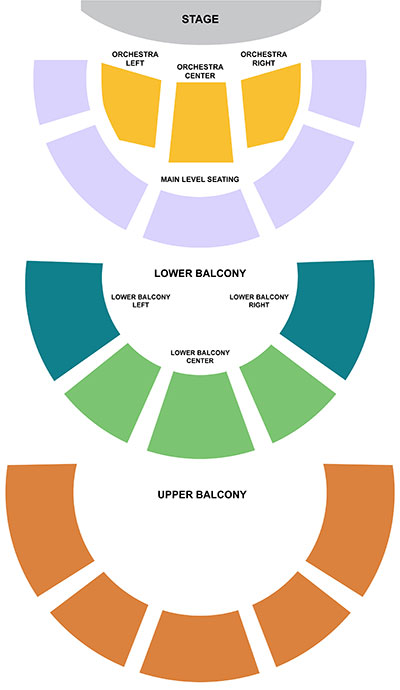
Orchestra & Main Level
Orchestra Center – $3,000
Orchestra Left and Right – $2,000
Main Level Seating – $1,500
Lower Balcony
Lower Balcony Center – $1000
Lower Balcony Left and Right – $700
Upper Balcony
All seats – $600