As a high school student in Iowa, Hannah Klemm led guided tours of the abstract expressionist gallery in the University of Iowa’s art museum. She didn’t know it at the time, but the experience would prove revelatory, setting her on a two-decade-long career path to helping others understand and interpret modern art.
“I realized that talking and thinking about art was so fun,” Klemm says of her experience leading tours. “But, I still didn’t really understand that this could be a career.”
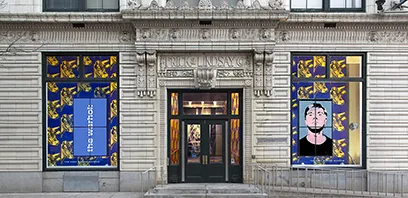
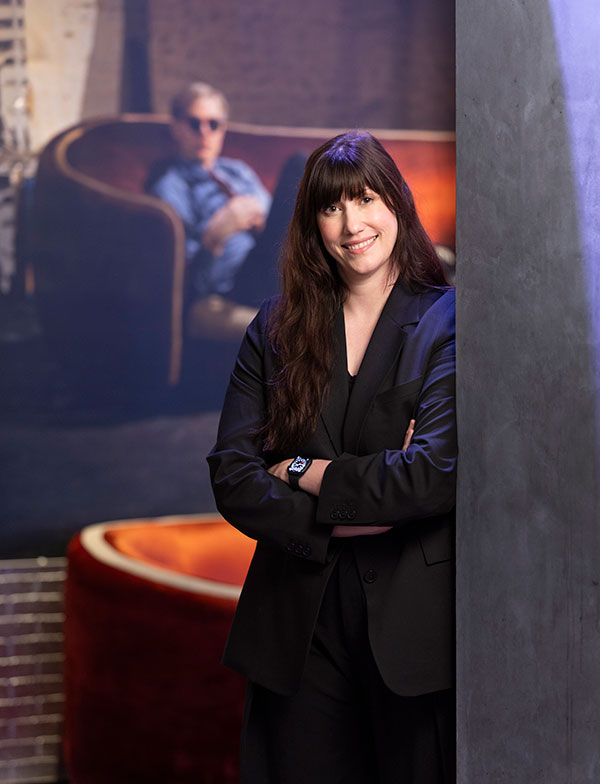
Klemm would go on to study art history at Sarah Lawrence College and earn advanced degrees in the subject, including a doctorate in art history from the University of Chicago. Her career journey took her to Missouri and Texas before ultimately bringing her to Pittsburgh where, this summer, Klemm joined The Andy Warhol Museum as its Milton Fine Curator of Art.
Innovation and technology have been a focus of Klemm’s curatorial work. In her last role as curator of modern and contemporary art at The University of Texas’ Blanton Museum of Art, she curated an exhibition of digital works that used data, coding, and artificial intelligence to showcase and question technology. Klemm intends to take a similarly innovative and expansive approach at The Warhol. She says she plans to highlight the eclectic elements of Warhol’s artistic practice while also introducing contemporary artists who are looking at visual materials, technology, and social concerns in new ways today.
The role of art curator requires one to “zoom in and out,” Klemm notes—balancing deep research with broader thinking about how the public wants art to be presented.
“I think that showcasing many different voices is really important,” she says. “I think it also allows us to expand on many different elements of Warhol’s practice, when we look to a global network of artists and a wide variety of mediums and materials to showcase those connections.”
Q: What excites you most about your new role?
A: I’m just really excited about all of the possibilities with The Warhol. I am drawn to the way the museum considers Warhol as a continuing influence. I think that just provides so many amazing ways to think about how a museum can function within a community and within the broader art world.
Q: You recently said one of your first priorities would be learning more about Warhol, including his early days in Pittsburgh. How are you doing that?
A: We have incredible resources here at The Warhol. We have his archive, which is amazing. We have a really robust exhibition program, so some of the projects are already forcing that exploration to happen. Like, how do we interpret some of Warhol’s early works? I’m getting to dive into that period of the 1940s and ‘50s in a way that is fascinating. Really brilliant people work here who know Andy Warhol’s practice. So, talking to people. Asking a lot of questions. Reading.
Q: How would you explain your feelings toward Pop art?
A: With Pop, it’s interesting to have conversations about the ways that art and design infiltrate our lives and visual culture. Pop found a way to interpret and collapse our visual landscape, from the commercial booms of the 1950s and ‘60s all the way through how we continue to find relevance in conceptually deciphering the modes of commerce and capitalism around us. It’s a visual system that allows us to understand the world that we’ve created as humans in this capitalist society.
Q: How will your background in contemporary and modern art inform your work at The Warhol and the exhibitions you want to curate?
A: I am interested in seeing broader networks and expansive legacies of Warhol’s practice. And I think that being able to contribute to The Warhol’s exhibition program by bringing in artists from Andy’s time, as well as contemporary artists, allows the museum to have so many different touchpoints for people.
Q: How far afield from Warhol himself do you want to go with the exhibitions you curate?
A: I don’t think it ever goes too far afield. That’s the magic of Warhol. My feeling is that we’re never going to stray from Warhol. He’s the North Star. But how do we make those connections, and how do we bring people along on that journey?
Q: Having visited Pittsburgh often while living in other cities like St. Louis and Austin, what’s your perspective on Pittsburgh as an art town?
A: I think there’s such an amazing system of institutions. The Carnegie system is one of the world’s best. But then, also, there are all these wonderful avant-garde spaces; and then, having amazing universities helps. And artists can stay here, they can live here, and they can work here. That’s what cities need.