 Photo: Joshua Franzos
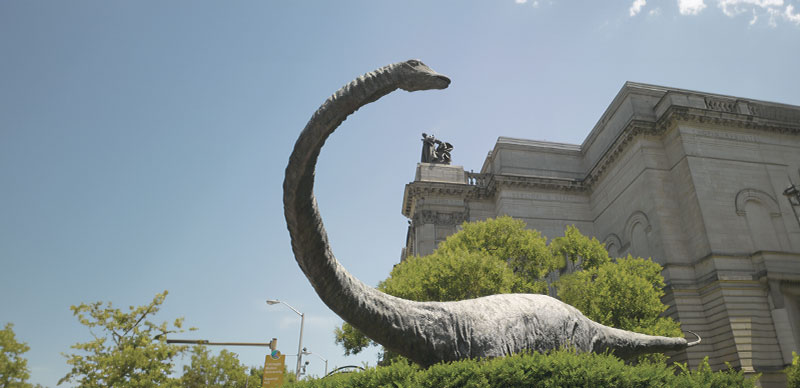
For several months this fall, crews outside my office have been sandblasting the 1907 façade of our Oakland facility, removing years of accumulated dust and mold and revealing the bright stone surfaces that must have delighted the museums’ earliest visitors. Over the next few years, this act of restoration will be matched by a transformation of the external landscape, replacing overcrowded hedges of non-native plants with a design that welcomes visitors rather than signaling that the treasures inside are meant to be cordoned off or concealed.
These projects bring to mind one of the most striking features of the 1907 façade: the stately bronze statues of Shakespeare, Michelangelo, Bach, and Galileo. This “Noble Quartet” of seated figures—complemented by female figures standing atop the building and holding the tools and objects particular to each discipline—still serves to represent the combination of arts and sciences that was a distinguishing feature of Carnegie Museums from the start.
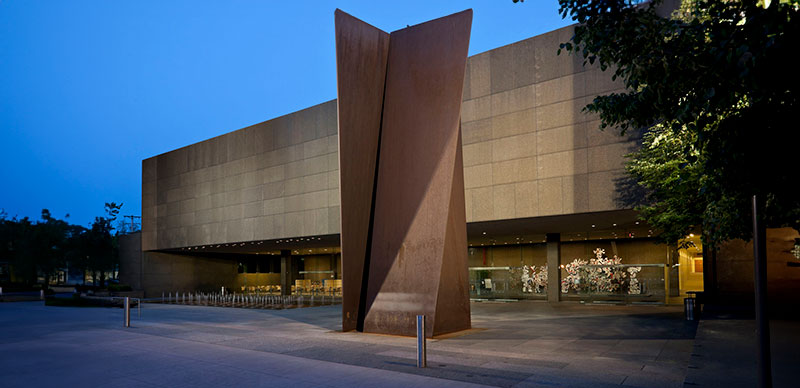
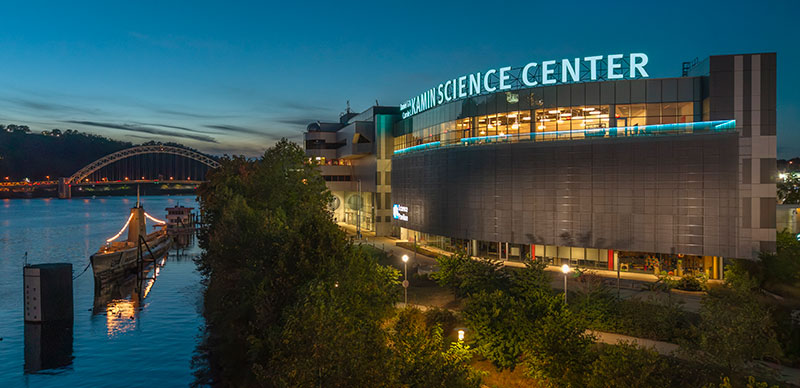
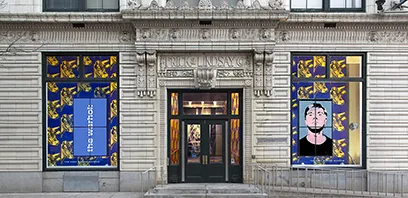
When Andrew Carnegie pioneered the idea of housing the arts and sciences under a single roof in 1895 and again in 1907, he couldn’t have imagined what that would come to mean, as we added, in 1956, Powdermill Nature Reserve, the Museum of Natural History’s environmental field station in the Laurel Highlands; expanded our Oakland campus in 1974 to include the Sarah Scaife wing, home to the Museum of Art’s main galleries; advanced into the North Shore in 1991 by incorporating the Buhl Planetarium and Institute of Popular Science to create what is now Kamin Science Center; and, only three years later, celebrated the legacy of Pittsburgh’s most famous artist by establishing The Andy Warhol Museum, the nation’s largest museum devoted to the works of a single artist.
“When Andrew Carnegie pioneered the idea of housing the arts and sciences under a single roof in 1895 and again in 1907, he couldn’t have imagined what that would come to mean.”
Carnegie Museums continues to build on the vision of its founder, and, as he expected when he established his museums without a supporting endowment, our museums have continued to enjoy the support of many thoughtful, generous, and forward-looking people. On October 21, we had the pleasure of inducting six new members into the Carnegie Noble Quartet Society, established sixteen years ago to celebrate those current members of our giving community who have distinguished themselves through their extraordinary generosity. These are individuals, families, foundations, and corporations—one hundred forty-two as of this year—with not only the means but also the vision to help ensure that Carnegie Museums will pursue its many-faceted mission for generations to come.
In countless ways, all of you are an essential part of that legacy and that mission. You are the modern builders of the monument to learning and creativity that is today’s Carnegie Museums.